Author name: Nathan Baws

Business & Entrepreneurship

Creator Economy Powered by AI: The Smarter Editing Solution Beyond the Hardware Arms Race

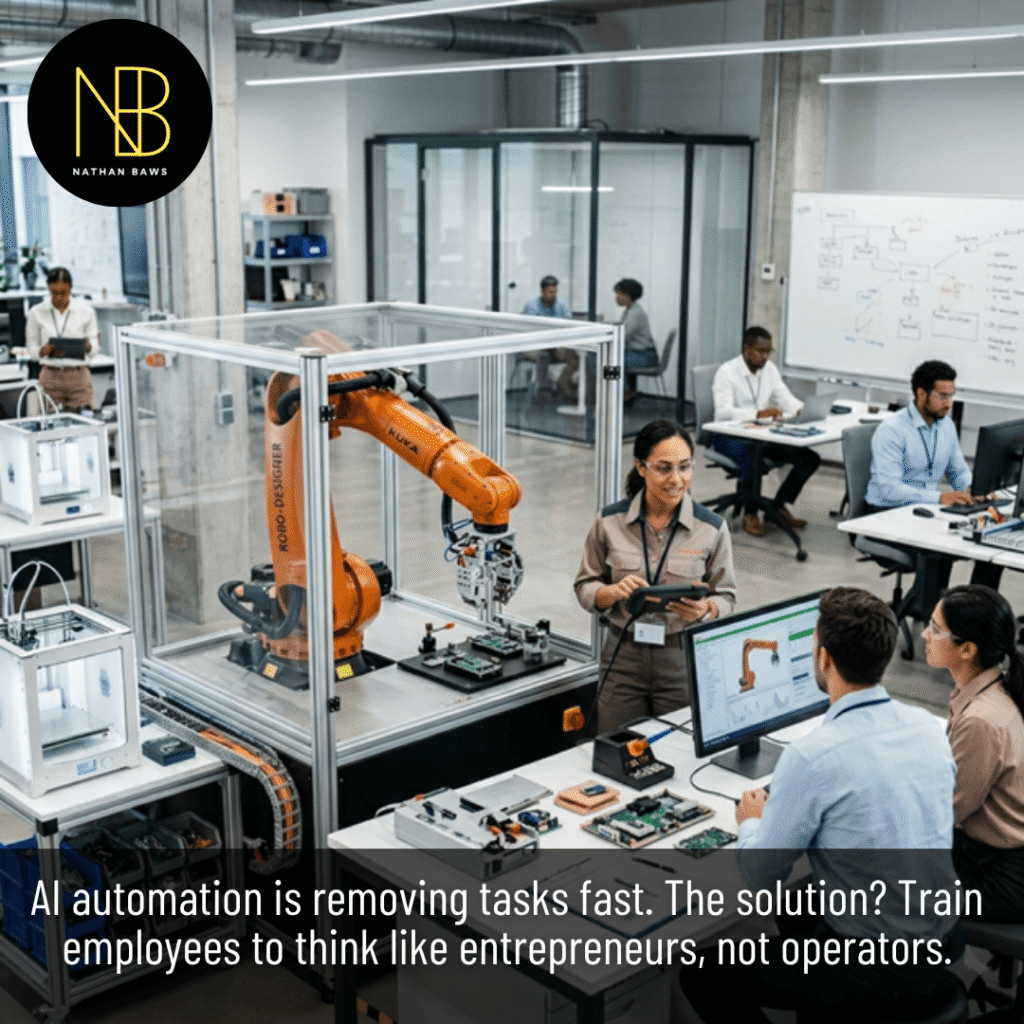
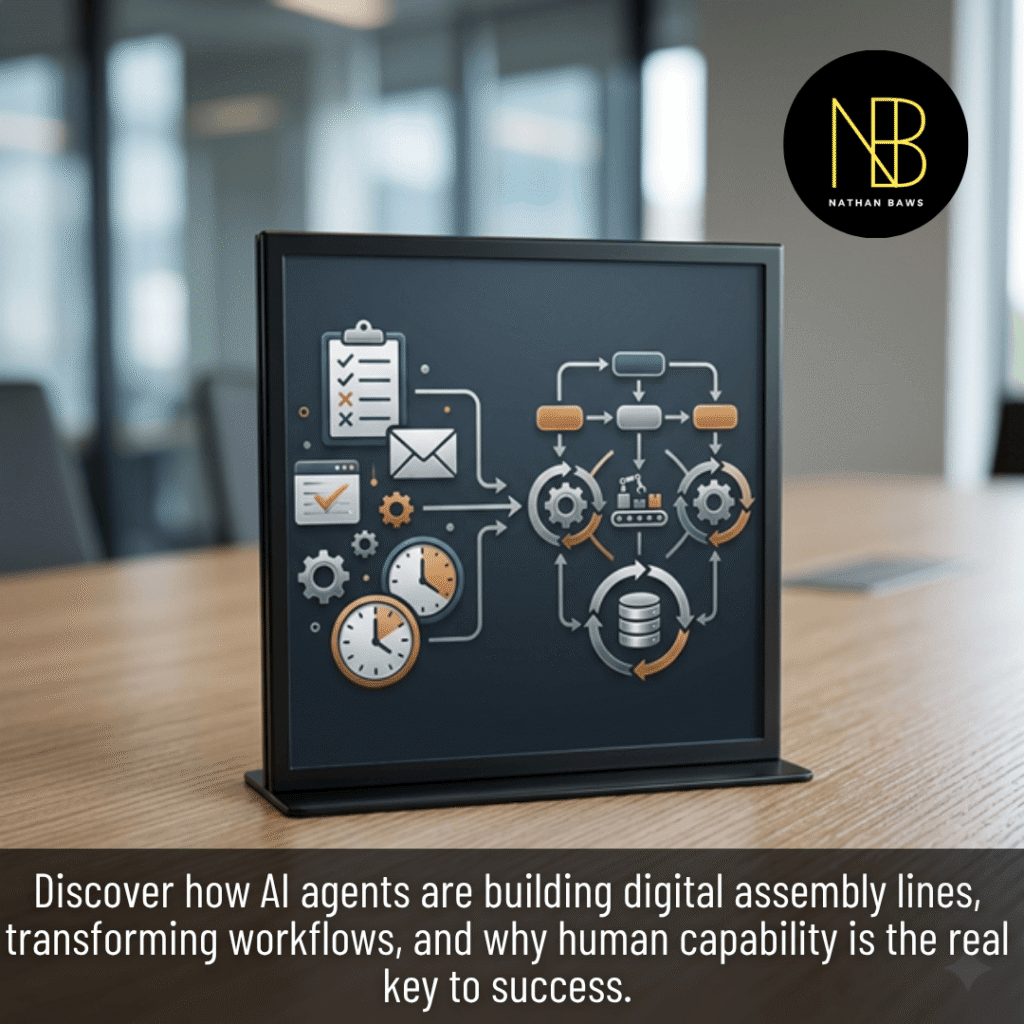
Introduction The creator economy powered by AI is no longer a future trend, it is the present reality. Millions of creators are now using artificial intelligence to script, edit, and distribute content faster than ever before. What once required teams, expensive software, and hours of manual work can now be done in minutes. However, a recent article by TechRadar highlights a critical issue that most creators are only beginning to feel: AI is pushing devices beyond their limits. Smartphones, laptops, and even mid-range production setups are struggling to keep up with the processing demands of modern AI tools. This has triggered what can only be described as a hardware arms race – where creators are forced to constantly upgrade their gear just to remain competitive. But this raises an important question: If AI is meant to simplify content creation, why is it making the process more expensive and technically demanding? The answer lies not in AI itself, but in how it is currently being used. And more importantly, it points toward a smarter, more sustainable solution. The Problem: When AI Outgrows the Creator The promise of AI was accessibility. It was supposed to level the playing field and allow anyone with an idea to become a creator. In many ways, it has delivered on that promise. But beneath the surface, a new barrier is forming – one that is less visible but equally limiting. As outlined by TechRadar, AI-powered tools are becoming increasingly resource-intensive. High-resolution video processing, real-time rendering, and advanced editing features demand more computing power than standard devices can comfortably provide. This creates a frustrating reality for creators. On one hand, they have access to powerful AI tools that can transform their content. On the other hand, they lack the hardware required to fully utilise those tools. The result is slower workflows, frequent crashes, storage limitations, and ultimately, a reliance on expensive upgrades. What was meant to democratise content creation is now quietly introducing a new form of inequality – one based on access to hardware. The Real Issue Isn’t AI – It’s the Workflow It is easy to blame AI for this shift, but that would be missing the point. The real issue lies in the way current systems are structured. Most AI editing tools still follow a traditional model. They require users to install software, manage large files locally, and manually guide the editing process. Even widely used platforms like Adobe Premiere Pro and CapCut, despite their AI enhancements, still depend heavily on the user’s device and technical input. This means that while AI has improved certain aspects of editing, it has not fundamentally changed the workflow. Creators are still expected to think like editors, manage timelines, and navigate complex interfaces. In other words, the burden has not been removed – it has simply been reshaped. The Solution – Zero-Storage, Prompt-Based AI Editing To truly unlock the potential of the creator economy powered by AI, a more radical shift is required. Instead of improving existing workflows, the entire process needs to be reimagined. The most practical and scalable solution is what can be described as zero-storage, prompt-based editing. In this model, the creator no longer interacts with editing tools in the traditional sense. There is no need to download software, manage files, or rely on the performance of a personal device. Everything happens within a browser, powered by cloud infrastructure. The role of the creator shifts from execution to direction. Rather than manually cutting clips or adding effects, they simply describe the desired outcome. The AI interprets these instructions and produces a finished piece of content. This approach removes the technical barrier entirely and replaces it with something far more intuitive: intent. A Workflow Built on Simplicity Imagine recording a video on your phone and uploading it directly to an online platform. Instead of opening an editing timeline, you are presented with a simple prompt box. You type a request – something like creating short-form clips with captions and dynamic pacing. Within minutes, the system delivers multiple finished outputs, ready to publish across platforms. There are no intermediate steps, no rendering delays on your device, and no need to understand editing techniques. The complexity is handled entirely behind the scenes. Why Removing Storage Changes Everything One of the most overlooked challenges creators face is storage. High-quality video files are large, and managing them quickly becomes overwhelming. Devices fill up, performance slows down, and workflows become fragmented. By removing storage from the equation, this new model eliminates a major source of friction. Files are processed and stored in the cloud, meaning the creator’s device is no longer a limiting factor. A basic smartphone becomes more than sufficient because it is only used for capturing content – not producing it. This shift alone significantly reduces the need for constant hardware upgrades. The End of the Learning Curve Traditional editing requires time and effort to master. Even with AI assistance, there is still a learning curve that discourages many potential creators. Prompt-based editing removes this barrier entirely. It replaces technical knowledge with natural language, allowing creators to focus on ideas rather than execution. This opens the door for a much broader range of people to participate in the creator economy without feeling overwhelmed. Why This Solves the Hardware Arms Race The insight from TechRadar becomes far more actionable when viewed through this lens. The hardware arms race exists because processing is tied to the user’s device. The moment that dependency is removed, the entire dynamic changes. Creators no longer need to chase better cameras, faster processors, or larger storage capacities just to keep up. Instead, they can rely on scalable cloud systems that handle these demands more efficiently. This not only reduces costs but also ensures that access to high-quality content creation is no longer limited by financial resources. The AppSumo-Style Opportunity The rise of platforms like AppSumo has shown that creators value simplicity and accessibility over complexity. They are not looking for more tools – they are

AI Speaker
Business & Entrepreneurship

Speaker Warns Costly AI Spending Flip Needs Training

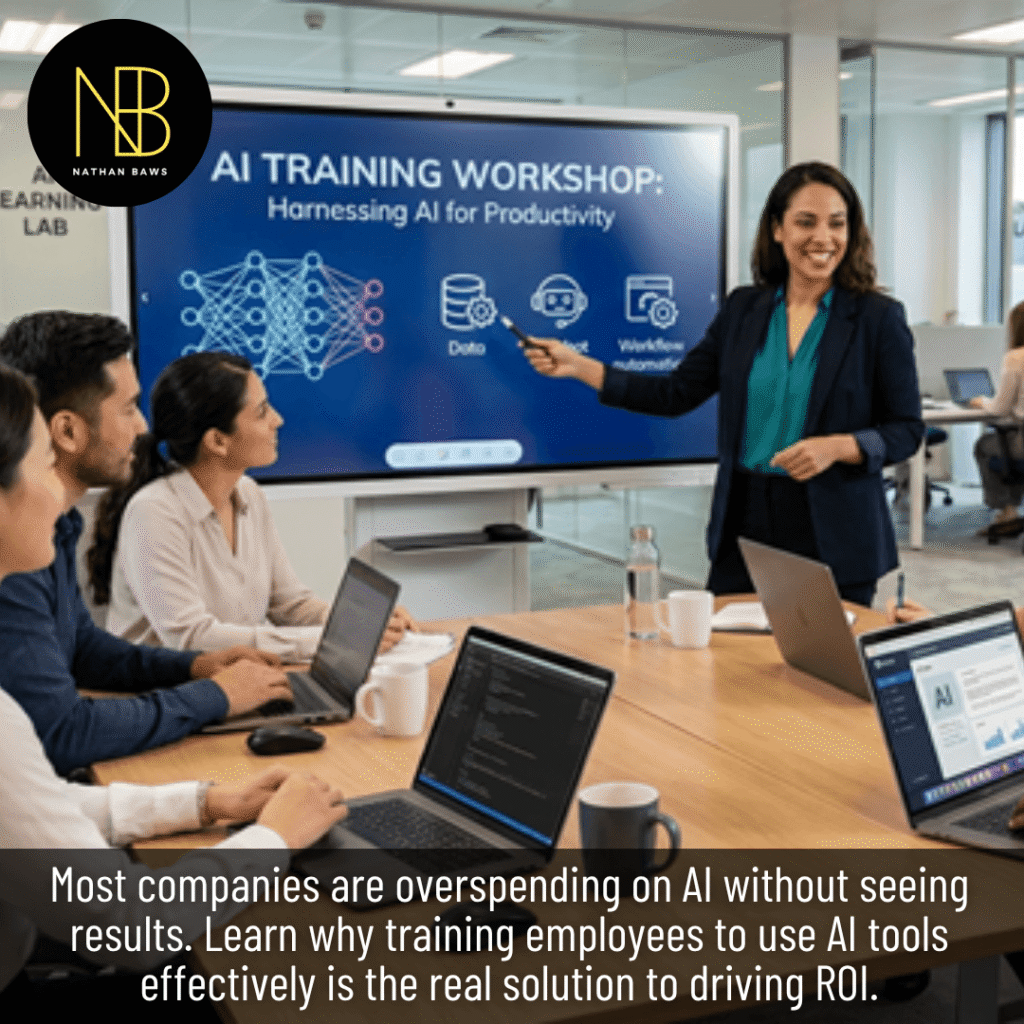
Introduction Artificial intelligence has moved from hype to budget line. Across industries, businesses are investing heavily in tools like ChatGPT, expecting faster workflows, reduced costs, and scalable output. On paper, the promise is compelling. In practice, the results have been far less consistent. Recent reporting from Axios highlights a growing disconnect: companies are increasing their AI spending, yet many still struggle to link that investment to tangible returns. This shift has been described as the “AI spending flip”, a moment where spending continues to rise, but confidence in outcomes begins to waver. At the centre of this problem is not the technology itself, but how it is being used. What Is the AI Spending Flip? The AI spending flip reflects a widening gap between investment and impact. Businesses have moved quickly to adopt AI tools, often across multiple departments at once, without fully understanding how those tools fit into existing workflows. The assumption has been straightforward: better tools will naturally lead to better results. But that assumption is proving flawed. AI does not operate effectively in isolation. It depends heavily on the quality of input, the clarity of instruction, and the judgement applied after output is generated. Without those elements, even the most advanced tools produce inconsistent or low-value results. What we are seeing now is a correction in mindset. Companies are beginning to realise that access to AI is not the advantage but effective usage is. Why AI Tools Alone Don’t Deliver Results The expectation that AI can be simply “plugged in” and left to perform is one of the biggest reasons companies are underwhelmed by their returns. In many organisations, employees are using AI without clear guidelines or training. Prompts are written differently from person to person, outputs vary in quality, and time is often spent correcting or rewriting what AI produces. Instead of accelerating work, it creates friction. At the same time, some businesses fall into the opposite trap, over-reliance. They allow AI-generated content or decisions to move forward without proper review. This introduces risk, whether in the form of inaccuracies, poor communication, or misaligned messaging. There is also the issue of under-utilisation. Most teams only scratch the surface of what AI tools are capable of. Without structured training, they default to basic use cases, leaving significant efficiency gains untapped. In all of these scenarios, the problem is not the tool. It is the absence of capability behind it. The Real Solution: Train Employees to Use AI Effectively The businesses seeing meaningful returns from AI are not necessarily the ones spending the most. They are the ones investing in their people. AI performs best when it is part of a system that combines machine efficiency with human judgement. It can generate ideas, draft content, and process information at speed, but it still requires direction, context, and refinement. This is where trained employees make the difference. As Nathan Baws, a public speaker, motivational speaker, business growth motivational speaker, inspirational speaker, keynote speaker and business strategist, explains: “AI is only as powerful as the person using it. The businesses that win won’t be the ones with the most tools, but the ones with the most capable teams behind them.” That distinction is critical. The competitive advantage is no longer tied to access to technology, but to the ability to use it effectively. How to Build AI Capability Inside Your Team Training employees to use AI does not require complex programs or long certifications. What it requires is structure and consistency. The first step is ownership. When AI adoption is left to individuals to figure out on their own, usage becomes fragmented. Assigning responsibility within each team creates clarity and direction, ensuring that knowledge is developed and shared rather than scattered. From there, training must be tied to real work. Teaching features or general functionality has limited value. Employees need to understand how AI applies directly to their daily responsibilities, whether that is communicating with clients, generating leads, or processing information more efficiently. Consistency also plays a major role. Short, focused training sessions delivered regularly are far more effective than one-off initiatives. Over time, these incremental improvements compound into genuine capability. Equally important is the creation of internal systems. When teams document what works, whether in the form of prompts, workflows, or templates, AI usage becomes repeatable. This reduces variability and increases both speed and quality. Finally, human oversight must remain central. AI should support decision-making, not replace it. The most effective workflow is one where AI generates the initial output, and a human refines it to ensure accuracy, relevance, and alignment with business objectives. Why This Approach Works AI tools are becoming increasingly accessible. What was once considered advanced is quickly becoming standard. As a result, the technology itself is no longer a differentiator. What separates businesses now is execution. Companies that prioritise training create teams that can extract more value from the same tools others are underutilising. They reduce errors, improve efficiency, and generate outputs that are both faster and more reliable. In contrast, businesses that continue to rely solely on acquiring tools will find themselves adding cost without improving performance. Conclusion The AI spending boom is not slowing down, but the way businesses approach it must change. The focus can no longer be on acquisition alone. It must shift toward capability. Training employees to use AI effectively transforms it from an expense into an asset. It ensures that tools are used with purpose, outputs are aligned with business goals, and investments translate into measurable results. Ultimately, AI does not replace people. It amplifies them. And the businesses that understand this will be the ones that turn the AI spending flip into a genuine competitive advantage. FAQs What is the AI spending flip? The AI spending flip refers to the gap between rising AI investment and weak business results. Companies are spending more on tools but struggling to see measurable returns. This highlights a shift from buying AI to needing to use it effectively. Why are companies

Business & Entrepreneurship

Speaker Delivers Game-Changing School Fix for AI Jobs

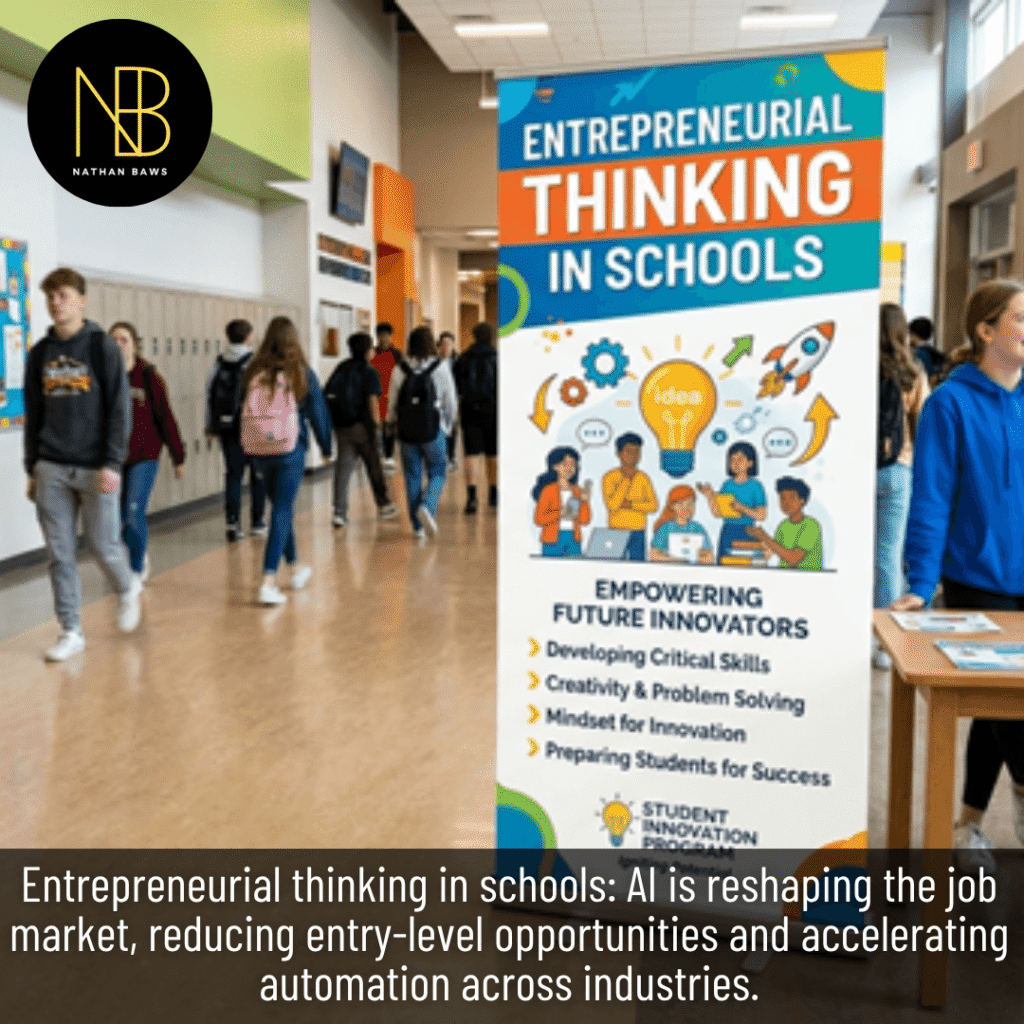
Introduction AI is no longer a future disruption, it is already actively reshaping how work is structured. Across industries, companies are using automation and machine learning to increase productivity, reduce costs, and streamline tasks that once required entire teams. While major financial research from institutions like Goldman Sachs and Morgan Stanley suggests that the overall unemployment impact is still relatively modest, the deeper shift is structural rather than statistical. Jobs are not simply disappearing, they are being redesigned. Routine tasks are being automated. Entry-level roles are shrinking. And traditional career pathways are becoming less predictable. This creates a critical question: if the job market is changing this quickly, why is education still preparing students for a static version of it? The answer is clear – it shouldn’t be. AI Is Reshaping Work, Not Just Removing It AI does not operate as a simple replacement mechanism. Instead, it redistributes work across three areas: First, it automates repetitive and structured tasks that previously required human labour. Second, it enhances existing roles by increasing productivity and reducing time spent on basic execution. Third, it creates entirely new categories of work tied to AI systems, infrastructure, and oversight. Research shows the net effect on employment is still relatively small in aggregate terms, but the internal composition of jobs is shifting rapidly. In particular, industries exposed to AI are already seeing changes in how entry-level work is structured. The result is not collapse – it is reorganisation. But reorganisation still creates friction, especially for those entering the workforce. The Entry-Level Problem No One Is Addressing Properly For decades, entry-level jobs acted as the foundation of career development. They provided experience, exposure, and progression into more advanced roles. AI is now absorbing many of those foundational tasks. Activities such as basic reporting, administrative coordination, research summarisation, and data processing are increasingly automated or AI-assisted. These were once the training ground for new workers. This means fewer traditional “starting points” into careers. And that creates a deeper issue: if the first rung of the ladder is disappearing, the entire structure of career progression needs to be reconsidered. Education Has Not Kept Up With Economic Change Most education systems were designed for a world where: That world no longer exists in the same form. Today, industries can change in months, not decades. Skills become outdated quickly. And employers expect immediate productivity from new hires. Yet education is still heavily focused on: This creates a mismatch between how people are trained and how the modern economy actually functions. The Solution: Entrepreneurial Thinking in Schools The solution is not to abandon education or traditional careers – it is to expand the definition of preparation. Schools must begin teaching entrepreneurial thinking, which focuses on the ability to create value, solve problems, and adapt in uncertain environments. This does not mean every student must become an entrepreneur. It means every student should learn how opportunity is created, not just how employment is applied for. Entrepreneurial thinking develops: In an AI-driven economy, these are not optional skills- they are essential survival skills. Real-World Education Already Moving in This Direction This shift is already being introduced in parts of Australia through school-based entrepreneurship programs and incursions. One example is Nathan Baws, an entrepreneur, public speaker, motivational speaker, business growth motivational speaker, inspirational speaker and a keynote speaker who delivers school incursions focused on entrepreneurship, financial literacy, and real-world business thinking. He also draws on his experience as a business builder and his Shark Tank Australia background to engage students in practical discussions about opportunity creation and mindset. In his work with schools, he focuses on exposing students to how businesses are built in practice and how ideas become real-world outcomes. He also contributes to broader efforts around financial literacy education for young people, reinforcing the idea that understanding value creation is as important as traditional academic learning. This type of exposure helps bridge the gap between classroom theory and real-world economic behaviour. Why This Matters More in an AI Economy AI dramatically reduces the cost of execution. Tasks that once required teams can now be completed by individuals using AI tools. This shifts the economy in three important ways: In this environment, relying solely on structured employment becomes increasingly risky. Those who can identify opportunities, build solutions, and adapt quickly to change will be significantly more resilient. Entrepreneurial thinking is what enables that shift. Conclusion AI is not simply removing jobs – it is reshaping how work is created, distributed, and valued. While the overall employment impact is gradual, the structural changes are already visible, particularly at the entry level. The real challenge is not technological change – it is educational alignment. If schools continue preparing students only for employment in its traditional form, they risk preparing them for a system that no longer exists in the same way. The solution is clear: educamajor financial research on AI employmeAI employment impact researchnt impacttion must evolve toward entrepreneurial thinking, where students learn how to create value, adapt quickly, and operate effectively in uncertainty. In an AI-driven economy, the most important skill is no longer just employability. It is adaptability and creation. FAQs Is AI currently causing major job losses? Not on a large-scale statistical level. Most research shows AI’s overall unemployment impact is still modest, though changes are visible in specific roles and industries. Which jobs are most affected by AI? Roles involving repetitive, structured, or administrative tasks are most exposed, particularly entry-level positions. Why are entry-level jobs shrinking? Because many entry-level tasks are now being automated or accelerated by AI systems, reducing the need for traditional training-ground roles. What is entrepreneurial thinking? It is the ability to identify opportunities, solve problems, and create value independently rather than relying only on predefined job roles. Do students need to become entrepreneurs? No. The goal is not to force business creation, but to develop mindset skills that allow independence, adaptability, and value creation. How does Nathan Baws contribute to this space? Nathan Baws is an entrepreneur

Business & Entrepreneurship

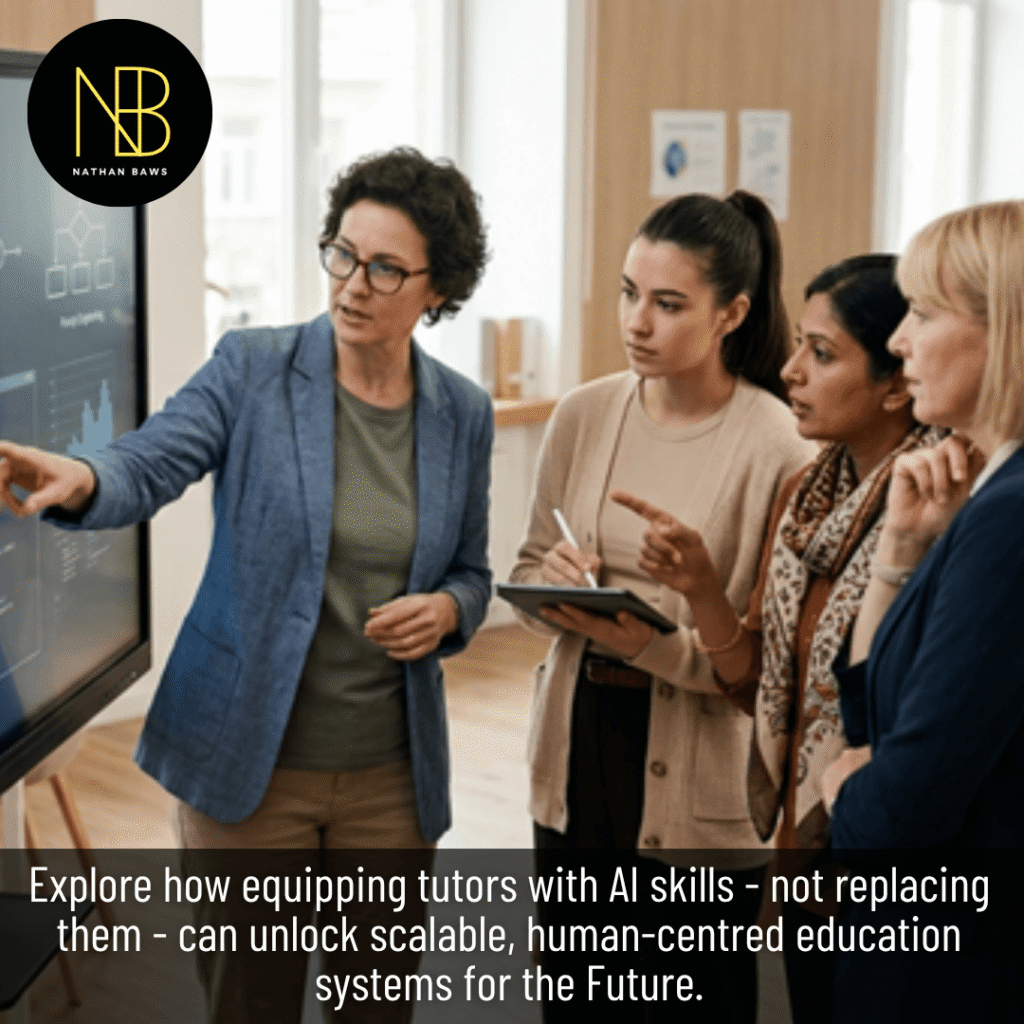
Bridging the AI Education Gap as Per the x-pilot report: Why Training Tutors in AI Skills Is the Real Key to Scalable Personalized Learning

Introduction AI-powered personalized tutoring is rapidly becoming one of the most disruptive forces in education. Across classrooms, online learning platforms, and corporate training environments, artificial intelligence is reshaping how knowledge is delivered, absorbed, and reinforced. These systems are no longer experimental. AI tutors can now adapt lessons in real time, detect knowledge gaps, and personalize entire learning pathways for individual students at scale. According to recent education technology trends, AI-driven tutoring systems are expected to become a core part of global education infrastructure within the next few years. However, beneath this rapid innovation lies a critical challenge that is often overlooked. The problem is not that AI is lacking capability.The problem is that human educators are not being equipped fast enough to use it effectively. This has created what many experts now describe as an AI adoption gap in education – a widening divide between available technology and the people expected to implement it. And the most practical solution is not replacing educators with AI. It is upgrading them. The Real Challenge: When Innovation Outpaces Human Readiness AI tools in education are advancing at an extraordinary pace. From automated grading systems to adaptive learning platforms, the technology is already capable of reducing teacher workload and improving student outcomes. Yet in many institutions, these tools remain underused or misapplied. This is not a technology problem. It is a training problem. Educators are often introduced to AI platforms without sufficient guidance on how to integrate them into real teaching environments. As a result, AI becomes an add-on rather than a core part of the learning process. The outcome is predictable: The system is not failing because AI is weak.It is failing because adoption is uneven. Why Personalized AI Tutoring Is Growing So Quickly Despite these challenges, personalized AI tutoring continues to expand rapidly. The reason is simple: traditional education systems were never designed for individualised learning at scale. In a typical classroom, one teacher may be responsible for dozens of students, each with different learning speeds, comprehension levels, and attention spans. AI solves this structural limitation by introducing dynamic adaptation. AI tutoring systems can: This level of personalization was previously impossible at scale. However, as these systems grow more advanced, the need for human oversight becomes even more important – not less. The Core Insight: AI Alone Cannot Fix Education A common misconception is that AI will eventually replace educators entirely. In reality, the evidence points in a different direction. AI is extremely effective at: But it is still limited in areas that define meaningful education: Education is not just about transferring information. It is about shaping thinking, confidence, and curiosity. This is why purely AI-driven systems, while efficient, are incomplete on their own. The real opportunity lies in combining human intelligence with machine intelligence. The Solution: Equipping Tutors With AI Skills Instead of positioning AI as a replacement for educators, the most scalable solution is to transform educators into AI-augmented professionals. This means training tutors to use AI as a co-pilot in their teaching practice. With the right training, tutors can: In this model, AI does not replace the teacher. It amplifies them. What This Looks Like in Practice In an AI-augmented education system, the role of the tutor evolves significantly. Instead of spending hours marking assignments or preparing repetitive lesson content, tutors can redirect their energy toward high-value interactions. For example: This creates a continuous feedback loop between student, AI, and tutor. The result is a system that is both scalable and deeply human. Industry Perspective Public speaker and entrepreneur Nathan Baws, who advocates for practical AI adoption in business and education, emphasises the importance of human-AI collaboration rather than replacement. As a motivational speaker, business growth motivational speaker, inspirational speaker and keynote speaker, he argues that the real competitive advantage in the AI era is not access to technology, but the ability to apply it effectively in real-world systems. As Baws puts it: “AI is not here to replace human capability – it is here to multiply it. The real winners will be the ones who learn how to work with it, not against it.” His perspective reflects a growing shift in how leaders view AI: not as a substitute for human intelligence, but as a force multiplier for it. This aligns directly with the education challenge. The institutions that succeed will not be those that adopt the most AI tools, but those that train educators to use them effectively. Why This Approach Solves the Adoption Gap The AI adoption gap in education exists because systems focus heavily on technology deployment but lightly on human enablement. Equipping tutors with AI skills directly addresses this imbalance. It ensures: Instead of forcing a structural overhaul of education systems, this approach strengthens the existing foundation. Conclusion Personalized AI tutoring is not just a trend, it is a structural shift in how education will function in the coming decade. But technology alone is not enough. The real constraint is human readiness. The most effective solution is not to replace educators with AI systems, but to empower educators to use AI effectively. As the industry evolves, the winning model will be clear: AI provides scale. Humans provide meaning. And when both are combined, education becomes not only more efficient – but fundamentally more powerful. FAQs Will AI replace human tutors in the future? No. While AI can automate many teaching tasks, it cannot replace the emotional intelligence, mentorship, and adaptability that human tutors provide. The future is hybrid, not fully automated. What is the biggest problem in AI education today? The biggest challenge is the adoption gap. Many educators do not have sufficient training to integrate AI tools effectively into their teaching workflows. How does AI improve personalized learning? AI adapts content in real time based on student performance, ensuring each learner receives material tailored to their individual level and pace. Why is training tutors in AI skills important? Because it ensures AI tools are actually used effectively in real classrooms, turning theoretical

Coaching for Small Business Owners Grow, Scale and Lead with Confidence
Business & Entrepreneurship

Coaching for Small Business Owners: Grow, Scale and Lead with Confidence

Introduction Welcome. If you’re searching for practical, joyful and professional support, our coaching for small business owners blends strategy, systems and leadership development to help you achieve sustainable growth. We understand the unique challenges of Australian small businesses and bring targeted expertise to help you overcome obstacles, increase profits and build lasting momentum. Small business ownership is rewarding but demanding. Effective coaching for small business owners turns overwhelm into clarity, giving you a structured path to better cash flow, stronger teams and scalable systems. We focus on practical strategies you can implement immediately and behavioural shifts that last a lifetime. Throughout this article, we will explain how coaching for small business owners works, what to expect and how to partner with us to deliver tangible results. Key Takeaways Understanding Coaching for Small Business Owners What coaching for small business owners actually is Coaching for small business owners is a structured partnership in which a coach helps you identify goals, remove barriers, and create a clear action plan. It is different from consulting: rather than telling you what to do, we guide you in building your own solutions with support and accountability. How coaching differs from consulting and mentoring Consultants typically deliver answers and implementation. Mentors share experience and advice. Coaching for small business owners combines reflective questioning, strategic frameworks, and operational tools so you develop capacity and achieve results. Who benefits most from coaching for small business owners Coaching for small business owners is ideal if you are ready to commit to change, open to feedback and willing to implement recommended actions. Businesses at any stage benefit from startups, as established firms look to scale or improve profitability. Core Benefits of Coaching for Small Business Owners Improved financial performance With focused coaching for small business owners, we identify revenue drivers, optimise pricing and reduce waste. We help you create predictable cash flow and margin-improvement plans that lead to measurable profit growth. Better time management and productivity Coaching for small business owners uncovers time drains and helps you design processes that reclaim hours. We introduce tools to prioritise high-impact work and delegate effectively. Stronger leadership and team culture Leadership is central to sustainable growth. Our coaching for small business owners helps you develop leadership skills, nurture high-performance teams, and create a culture that retains talent. What to Expect from a Coaching Engagement Initial discovery and goal setting Our coaching for small business owners begins with a discovery session to map your current state, clarify goals and set success metrics. We listen, ask targeted questions and co-create a roadmap for the next 90 days and beyond. Regular coaching sessions and accountability Coaching for small business owners includes scheduled sessions focused on progress review, problem-solving and next-step commitments. Accountability is a core element that we use to track actions and outcomes and ensure steady momentum. Practical tools, templates and frameworks We provide templates for financial forecasting, SOPs, performance reviews and more. These resources make coaching for small business owners immediately actionable and scalable. How We Deliver Coaching for Small Business Owners Tailored packages and flexible formats We offer bespoke coaching for small business owners via one-on-one sessions, group workshops and intensive sprints. Packages are designed around your priorities: growth, operational efficiency or leadership development. Blended delivery: in-person and virtual Our coaching for small business owners blends face-to-face workshops with virtual coaching to suit your schedule. This hybrid approach ensures continuity and flexibility without compromising results. Measurement and continuous improvement Every coaching engagement for small business owners includes measurable KPIs. We regularly review outcomes and adapt the program to ensure progress is consistent and aligned with your wider business goals. Practical Frameworks Used in Coaching for Small Business Owners Profit-first and cash flow optimisation We integrate principles that prioritise profit and healthy cash flow. Coaching for small business owners focuses on revenue levers, cost controls and predictable payment systems to strengthen financial resilience. SOPs and systems for scale Systems are the backbone of growth. Our coaching for small business owners helps you document processes, implement automation and maintain quality as you scale. Leadership and delegation models We teach delegation frameworks and leadership models to empower teams while maintaining strategic oversight. This coaching for small business owners approach reduces bottlenecks and builds capacity. Implementing Change: Step-by-Step Plans 90-day action plan Our 90-day coaching plan for small business owners sets focused milestones, weekly priorities, and accountability checkpoints. It is designed to create momentum and deliver visible wins quickly. 30-minute daily habit routines We recommend short daily habits to sustain progress. Coaching for small business owners includes routines for priority setting, cash flow management, and team communication that compound over time. Quarterly reviews and strategy resets Regular strategic reviews ensure coaching for small business owners remains relevant. We reassess objectives, refine tactics and plan the next quarter’s initiatives. Case Studies: Real Results from Coaching for Small Business Owners Retail business: revenue growth and inventory control One retail client engaged our coaching for small business owners to simplify pricing and stock turnover. Within six months, they increased gross margin by 12% and reduced dead stock by 35%. Service business: streamlined operations and higher utilisation A professional services firm used coaching for small business owners to standardise client onboarding and scheduling. Billable utilisation rose by 18%, and client satisfaction improved significantly. Trade business: team development and scalability In the trade business, coaching for small business owners focuses on leadership and training. Apprenticeship pathways and clearer role definitions reduced downtime and improved job completion rates. Pricing, Packages and How to Choose the Right Coaching for Business Owners Starter package for new businesses Our starter coaching package for small business owners includes a discovery session, four coaching calls, and core templates to establish immediate priorities and systems. Growth package for scaling businesses The growth coaching for small business owners package includes weekly sessions, strategy workshops and implementation support to scale revenue and teams. Executive package for leadership development Our executive coaching for small owners package focuses on leadership, succession planning

Business Growth Advisor and Consultant Practical Business Growth Consulting
Business Growth Strategies

Business Growth Advisor and Consultant: Practical Business Growth Consulting

Introduction Growing a business is exciting and challenging. As trusted business growth advisors, we guide business owners through strategic decision-making, practical execution, and financial management to help them scale sustainably. In this article, we explain how a business growth advisor works, what to expect from business growth consulting, and how our approach at Nathan Baws blends hands-on support with measurable outcomes. Whether you seek operational improvements, sales acceleration or advisory on financial performance, we provide tailored steps to help your business thrive. Key Takeaways Why Work with a Business Growth Advisor: Business Growth Consulting Benefits Clear strategic direction A business growth advisor helps set a clear strategy that aligns with measurable goals. We work with business owners to create a roadmap that balances ambition with operational reality. Hands-on implementation Business advisors don’t just recommend; our business growth consulting includes implementation support. From sales processes to systems integration, we provide practical guidance to deliver results. Improved financial performance Financial management is central to growth. A business growth advisor analyses cash flow, margins and investments to ensure growth is sustainable and profitable. How a Business Advisor Helps Business Owners: Advisor Helps with Strategy and Execution Initial assessment and diagnostics We begin with a rigorous assessment to identify strengths, gaps and growth opportunities. This diagnostic phase sets the foundation for targeted consulting services. Custom growth plans Every business is different. Our business growth advisor team creates customised plans that address marketing, sales, operations, and financial management, aligned with your priorities. Accountability and reporting Regular check-ins and performance dashboards keep the team accountable. An experienced business advisor ensures milestones are met and course corrections are made promptly. Core Services Offered by Business Advisors: Business Advisory Services and Consulting Services Strategic planning and market positioning Business advisory includes market research, competitor analysis and positioning strategies. Our business advisor helps you find and own your niche. Sales and marketing optimisation We refine lead generation, customer journeys and conversion tactics. A business advisor aligns marketing spend with ROI and long-term customer value. Operational efficiency and systems Streamlined operations reduce cost and improve delivery. Business growth consulting focuses on process improvement, technology adoption, and scalable systems. Financial Management with a Business Advisor: Financial Performance and Planning Cash flow and capital planning One of the priorities for a business growth advisor is to secure healthy cash flow and an appropriate capital structure to support growth initiatives. Profitability analysis We dissect margins, pricing and cost drivers. A business advisor works with you to enhance profitability without sacrificing growth potential. Investment and funding strategies Whether seeking debt, equity or internal funding, our business growth consulting services provide structured plans to finance expansion responsibly. Implementing Growth Plans: Growth Consultant Techniques and Best Practices Prioritisation framework Not all opportunities are equal. A business growth advisor helps prioritise initiatives that deliver the best mix of impact and ease of implementation. Pilot, measure, scale We recommend small pilots to validate ideas, measure outcomes, and scale successful initiatives. This reduces risk and accelerates learning in your business. Team capability and leadership Scaling requires the right people and leadership. Our business advisory approach includes capability assessments, leadership coaching and recruitment planning. Choosing the Right Business Growth Advisor: Expert Business and Consulting Services Look for measurable outcomes Choose a business growth consultant who defines clear KPIs and delivers regular performance reviews. We set milestones that are tied to tangible results. Industry experience and fit Industry knowledge matters. A business advisor with relevant experience can anticipate challenges and tailor solutions effectively. Collaborative working style Effective consultants work with your team, not around it. Our business advisor model emphasises collaboration, knowledge transfer and practical tools you can use long-term. Case Studies and Success Stories: Business Growth Consultant in Action SME retail growth We worked with a retail business to rethink customer acquisition and inventory management. The business growth advisor team restructured pricing and introduced targeted marketing, resulting in sustained margin improvements. Professional services expansion A professional services firm needed repeatable sales processes. Our business growth consulting introduced referral systems, clearer pricing and a CRM-driven approach to client management. Manufacturing scale-up For a manufacturer aiming to expand distribution, the business advisor developed operational plans and capital strategies that reduced lead times and improved gross margins. Practical Tools and Frameworks from a Business Advisor: Business Growth Consulting Services Growth scorecard We use a growth scorecard to track strategic priorities, financial metrics and operational KPIs. A business growth advisor tailors this to your business context. Customer value map Mapping customer value helps prioritise improvements that matter most. Our business growth consulting uses this map to align investments with customer outcomes. Implementation playbook Our playbook outlines steps, responsibilities and timelines. A business growth advisor ensures the playbook is practical and adapted to your team’s capacity. Pricing and Engagement Models: How Business Advisors Structure Their Services Project-based engagement For defined objectives, we offer project-based business growth consulting with clear deliverables and timelines. A business growth advisor provides structured milestones and outcomes. Retainer advisory services Ongoing advisory relationships work well for businesses in active growth phases. Our retainer model ensures continuous access to a business growth advisor for strategic guidance. Performance-linked arrangements We can structure fees linked to agreed performance metrics, aligning incentives between your business and the business growth advisor team. How to Connect with Our Business Growth Advisor Team at Nathan Baws: Help Your Business Thrive Initial consultation Start with a discovery call to outline goals, constraints and timelines. A business growth advisor from our team will assess fit and propose next steps. Proposal and roadmap We deliver a tailored proposal that includes a business growth consulting roadmap, expected outcomes, and the investment required. Kick-off and delivery Once agreed, our business growth advisor team kicks off with diagnostics, stakeholder alignment and an implementation schedule focused on rapid value. Measuring Success with a Business Growth Advisor: Business Growth Metrics Revenue and margin growth Revenue growth combined with margin improvement is the clearest sign that business growth consulting is working. A business growth advisor tracks

Nathan Baws Bespoke Motivational Consultant Services for Lasting Change
Motivational Speaker

Nathan Baws: Bespoke Motivational Consultant Services for Lasting Change

Introduction At Nathan Baws, we specialise as a motivational consultant practice focused on empowering individuals and organisations across Australia and beyond. As trusted consultants, we combine evidence-based psychology, practical coaching, and strategic planning to drive measurable progress. Our joyful, professional, and formal approach ensures clients receive tailored support designed to shift mindsets, boost performance, and sustain long-term motivation. Key Takeaways Understanding the Role of a Motivational Consultant Definition and Scope A motivational consultant supports behavioural change, goal setting and sustained action. As consultants, we assess current motivation levels, design interventions, and track outcomes to ensure continuous improvement. Who Benefits from a Motivational Consultant? Individuals seeking career direction, teams addressing engagement issues, and leaders aiming to develop resilient cultures all benefit from hiring a motivational consultant. We adapt our services to the workplace, education, and personal development contexts. Outcomes and Expectations Clients can expect clearer goals, improved productivity, reduced burnout, and measurable improvements in morale when engaging our consultant services. We define success metrics collaboratively and report on progress regularly. Our Methods and Approach Evidence-Based Techniques We draw on cognitive behavioural approaches, positive psychology, and motivational interviewing. As a motivational consultant, I use evidence-based techniques to ensure interventions are reliable and replicable. Custom Program Design Each client receives a tailored plan. Our role as consultants includes conducting assessments, co-designing goals, and sequencing interventions that align with individual learning styles and organisational rhythms. Measurement and Evaluation We track engagement, behavioural changes, and performance outcomes. Our consultant reports present clear KPIs, timelines, and recommendations for ongoing maintenance and scale. Services Offered by Nathan Baws, Motivational Consultant One-on-One Coaching Personalised coaching with a consultant helps clients overcome procrastination, set realistic goals, and develop coping strategies. We use structured sessions to build momentum and accountability. Team Workshops Our workshops, led by a consultant, focus on collective motivation, communication, and shared goal-setting. These sessions foster cohesion and clarify team purpose. Leadership Development Leaders learn how to inspire and sustain motivation across their teams. As consultants, we provide frameworks, coaching, and practical tools to elevate leadership impact. Practical Strategies We Use Goal Structuring and Microtasks Breaking goals into microtasks reduces overwhelm. As consultants, we teach clients to set achievable sprints, celebrate milestones, and iterate. Environmental Design We advise on workspace and routine adjustments that support consistent action. A consultant can recommend simple environmental cues that significantly increase follow-through. Accountability Systems Regular check-ins, peer accountability, and clear reporting increase responsibility. Our consultant packages include accountability structures aligned with client preferences. Tools and Resources We Recommend Assessment Instruments We use validated assessments to benchmark motivation, resilience, and engagement. As a consultant, these instruments underpin targeted interventions and objective progress tracking. Digital Tools and Apps Productivity apps, habit trackers, and shared platforms support consistent practice. A consultant integrates digital tools to streamline follow-through and monitor trends. Workbooks and Templates Practical templates for goal setting, reflection, and planning are central to our work. We provide workbook materials that a motivational consultant refines for each client cohort. Implementation Process Initial Consultation and Assessment The process begins with a comprehensive intake. As a motivational consultant, we gather context, aspirations, barriers, and readiness to change to inform an effective plan. Intervention Delivery We schedule coaching sessions, workshops, and follow-ups. A motivational consultant adapts pace and delivery mode to maintain engagement and accommodate constraints. Ongoing Support and Adjustment Long-term change requires adaptation. Our motivational consultant services include periodic reviews, maintenance coaching, and strategy refinement based on outcomes. Case Studies and Success Stories Corporate Team Turnaround A mid-sized firm engaged a motivational consultant to address low engagement. By redesigning goals, introducing microtasking, and coaching leaders, we increased team productivity and morale within three months. Individual Career Relaunch A client seeking a career change worked with a motivational consultant to build confidence, create a plan, and network strategically. The client secured a new role aligned with values and performance goals. School Wellbeing Program An educational institution partnered with a consultant to enhance student resilience and teacher wellbeing. The initiatives reduced absenteeism and improved classroom climate metrics. Measuring Impact and ROI Quantitative Metrics We measure outcomes such as productivity scores, retention rates, and goal-completion rates. As a consultant, presenting quantitative ROI supports continued investment. Qualitative Feedback Participant testimonials and manager observations provide context to numbers. Our consultant team synthesises qualitative data to refine practice and communicate value. Longitudinal Tracking We recommend follow-ups at 3, 6, and 12 months. A consultant uses longitudinal data to demonstrate sustained change and inform next steps. Pricing and Packages Introductory Sessions Introductory packages allow clients to experience our approach with minimal commitment. A motivational consultant offers discovery sessions and short-term plans for rapid insight. Comprehensive Programmes Our flagship programmes include assessment, coaching, workshops, and evaluation. As consultants, we design these packages for sustained impact and strategic alignment. Corporate Contracts We offer tailored corporate contracts covering large-scale roll-outs, train-the-trainer models, and executive coaching. Our consultant services scale to organisational needs. Why Choose Nathan Baws as Your Motivational Consultant? Experienced Practitioners Our team combines clinical knowledge and practical coaching experience. As a motivational consultant group, we bring proven methods and a track record of success. Client-Centred Design We co-create solutions with clients to ensure relevance and sustainability. A motivational consultant from our team listens deeply and aligns interventions with core values. Ethical and Evidence-Based Practice Ethics and efficacy guide our work. As motivational consultants, we prioritise client welfare, confidentiality, and research-supported practices. How to Get Started Initial Contact Reach out via our contact form or phone to arrange a consultation. A consultant will follow up to understand needs and propose next steps. Discovery Session We conduct a focused discovery session to identify priorities and co-design a plan. A consultant will present options tailored to your context. Agreement and Kick-Off Once terms are agreed, we begin the programme with clear milestones. Our motivational consultant team ensures smooth onboarding and immediate forward momentum. Common Misconceptions About Motivational Consulting Motivation is One-Size-Fits-All Motivation varies by person and situation. A motivational consultant customises approaches rather than using a

Speakers for Corporate Events Nathan Baws Guide to Inspiring Business Audiences
Speaker, Business Speaker, Motivational Speaker

Speakers for Corporate Events: Nathan Baws Guide to Inspiring Business Audiences

Introduction As professional event planners and business leaders, we know that selecting the right speakers for corporate events can transform a meeting into a moment of change. Nathan Baws brings a joyful, professional and formal perspective to this task, helping organisations choose speakers for events who inform, motivate and drive action. In this guide, we cover everything from brief development and speaker types to logistics, measurement and post-event follow-up, all with actionable insights so we can deliver outstanding results together. Key Takeaways Understanding the Role of Speakers for Corporate Events Why speakers for corporate events matter Speakers for corporate events do more than present information; they shape perceptions, motivate teams and articulate strategy. When we select the right person, we amplify organisational goals and create memorable experiences. Types of speakers for corporate events There are several categories: executive speakers, industry experts, motivational speakers, thought leaders and celebrity presenters. Each type of speaker for corporate events brings a different blend of credibility, entertainment and insight. Aligning speakers for corporate events with business objectives We always start with outcomes. Whether the goal is culture change, product launch or leadership development, choosing speakers for corporate events who align with those goals ensures measurable value. How to Brief Speakers for Corporate Events Creating a concise brief A strong brief for speakers at corporate events includes the audience profile, key messages, timing, and the desired call to action. We provide this to potential speakers so they can tailor content effectively. Sharing organisational context Context about the company’s strategy, recent milestones, and internal jargon helps corporate event speakers connect authentically with attendees. Defining success criteria Set clear metrics and share them with event speakers. Whether it’s NPS, engagement or sales uplift, clarity drives alignment and accountability. Finding and Selecting the Right Speakers for Events Research and shortlisting We use networks, speaker bureaus and online platforms to identify speakers for events. Shortlisting involves reviewing videos, references, and written materials to confirm a good fit. Evaluating live performance and delivery Watching speakers for events in live or recorded settings reveals their stage presence, pacing and audience rapport, critical elements for success. Budgeting considerations Fees for corporate event speakers vary widely. We balance investment with expected impact, factoring in travel, accommodation, and production costs into the total budget. Crafting Engaging Content with Speakers for Events Collaborative content development We collaborate with speakers for corporate events to co-create content that reflects the brand’s voice and meets audience needs. Workshops and storyboarding sessions are useful tools. Storytelling and structure Speakers for events who use narrative structure, setting the scene, presenting a challenge and offering resolution create deeper audience engagement. Interactive and multi-format delivery Incorporating polls, Q&A, live demos, and multimedia makes sessions with speakers for events more dynamic and memorable. Technical and Logistical Planning for Speakers for Events Audio-visual requirements Provide AV specs early so event speakers can plan visuals. Consider microphones, clickers, screens and streaming needs to ensure flawless delivery. Rehearsals and run-throughs We schedule technical rehearsals with speakers for events to test slides, sound and transitions. Rehearsals reduce risk and boost confidence. On-site coordination and stage management Assign a stage manager to support speakers on the day, handling cues, timing, and audience interactions. Designing Programmes Around Speakers for Corporate Events Keynote, breakout and panel balance An effective corporate event blends keynote speakers with practical breakouts and panels to cater to varied learning styles and objectives. Timing and pacing of sessions We design schedules that let corporate event speakers shine without causing audience fatigue, incorporating coffee breaks and networking windows. Inclusivity and accessibility Ensure speakers at corporate events provide accessible captions for content, microphones for Q&A, and clear visual contrast to include all attendees. Virtual and Hybrid Considerations for Speakers for Corporate Events Technical setup for virtual speakers for corporate events For virtual or hybrid events, corporate event speakers need high-quality cameras and lighting, as well as a stable internet connection. We offer checklists and tech rehearsals to support them. Audience engagement online Use chat moderators, live polls, and breakout rooms so event speakers can interact effectively with remote participants. Recording and repurposing content Record sessions with speakers for events for on-demand access and content marketing, enhancing long-term ROI. Evaluating the Impact of Speakers for Corporate Events Quantitative metrics Measure attendance, engagement rates, survey scores and behavioural KPIs to assess how speakers for events contributed to outcomes. Qualitative feedback Collect attendee testimonials and speaker debriefs to understand emotional resonance and practical takeaways from speakers for events. Long-term tracking Track behavioural change over months to determine the sustained influence of event speakers on culture and performance. Negotiating and Contracting Speakers for Events Key contract elements Contracts for event speakers should cover fees, deliverables, travel, intellectual property, and cancellation policies to protect both parties. Negotiation tips Be clear about budget and value expectations when negotiating with speakers for events. Flexibility on time or format can unlock better rates. Managing confidentiality and IP Agree on terms for recordings and material use so speakers for corporate events and clients understand rights and restrictions. Working with Nathan Baws to Book Speakers for Corporate Events Our approach We combine strategic briefing, careful selection and hands-on production to secure speakers for events who align with your goals and culture. Tailored speaker recommendations Nathan Baws and our team provide curated lists of speakers for events based on industry, audience profile and budget. End-to-end event support From contracting to onsite coordination, we partner with you to manage speakers for events and ensure seamless delivery. Budgeting and ROI for Speakers for Corporate Events Setting a realistic budget Budget for speaker fees, travel, AV and contingency. Our planning helps you allocate funds to speakers for events that deliver the greatest impact. Calculating return on investment Estimate ROI by linking speaker outcomes to revenue, retention or productivity metrics when evaluating speakers for corporate events. Cost-saving strategies Consider local speakers, hybrid formats or bundled sessions to reduce costs while retaining quality when booking speakers for events. Preparing Your Team and Audience for

Start Up Business Coach Perth Expert Business Coach in Perth for Small Business Growth
Business Growth Strategies

Start Up Business Coach Perth: Expert Business Coach in Perth for Small Business Growth

Introduction  If you are a small business owner in Perth looking to grow with clarity and confidence, working with a startup business coach in Perth can provide the structure and guidance needed to move from idea to sustainable profitability. A start up business coach Perth helps founders refine their business model, validate market opportunities, and build practical strategies for sales, marketing, and operations while avoiding common early-stage mistakes. With expert support, you gain accountability, clearer decision-making, and a roadmap tailored to your goals. In this guide, we explain how coaching accelerates growth, reduces risk, and delivers measurable outcomes, along with practical steps to engage with Nathan Baws and turn your business vision into a results-driven plan. Key takeaway How a Business Coach Perth Accelerates Startup Success Role of a start up business coach Perth A startup business coach in Perth helps founders define clear goals, test assumptions, and build repeatable systems. We focus on high-impact activities that move your business toward profitability and sustainable growth. When to engage a start up business coach Perth Engage a startup business coach in Perth when you need rapid clarity on product-market fit, cash flow management, or scaling. We prioritise critical milestones and reduce time-to-market for new ventures. Outcomes to expect from a start up business coach Perth Typical outcomes include refined business models, documented processes, improved sales conversion and better financial forecasting. We measure progress with clear KPIs and regular reviews. Personalised Coaching and Mentorship for Perth Small Business Owners Initial assessment and personalised plan We start with a diagnostic to identify strengths, gaps and immediate risks. A startup business coach in Perth then delivers a customised roadmap with milestones and accountability checkpoints. Ongoing mentorship and skill development Mentorship includes leadership coaching, sales training and operational improvements. Our startup business coach in Perth integrates skill-building into weekly or fortnightly sessions to embed new habits. Actionable templates and tools We provide templates for cash flow forecasting, sales scripts and marketing calendars. A startup business coach in Perth ensures these tools are tailored to your Perth business realities and customer base. Business Strategy and Planning with a Business Coach in Perth Defining a clear value proposition A startup business coach in Perth guides you in articulating customer problems and your unique solution. We test value propositions with customer feedback loops to validate demand. Strategic goal setting and KPIs Set quarterly and annual KPIs that align with revenue, customer retention and operational efficiency. A startup business coach in Perth helps translate strategy into measurable outcomes. Implementation roadmap and prioritisation We use a prioritisation framework to sequence initiatives based on impact and effort. A startup business coach in Perth keeps your team focused on the highest-value activities. Financial Management and Funding Guidance by a Perth Business Coach Cash flow and budgeting Cash flow is critical for startups. A start up business coach Perth helps build conservative forecasts, monitor burn rate and identify early warning signs to maintain runway. Pricing strategy and margin improvement We analyse cost structures and optimise pricing to improve margins without sacrificing demand. A start up business coach Perth supports testing pricing tiers and packaging offers. Funding options and investor readiness Whether bootstrapping or seeking investment, a startup business coach in Perth prepares pitch decks, financial models, and investor briefings to raise funds effectively. Marketing, Sales and Small Business Marketing Strategies Target customer profiling and messaging We identify high-value customer segments and craft clear messaging to increase conversion. A start up business coach Perth guides customer interviews and market validation tactics. Low-cost marketing channels and testing Start with inexpensive, measurable channels such as email, local partnerships and targeted social media. A startup business coach in Perth sets up experiments and tracks ROI for each channel. Sales process design and training Design a repeatable sales process with defined stages, conversion benchmarks and scripts. A startup business coach in Perth provides coaching to improve close rates and shorten sales cycles. Operations, Systems and Scaling with a Perth Business Coach Operational efficiency and systems Implement systems for operations, customer service and delivery to maintain quality while scaling. A start up business coach Perth helps map processes and remove bottlenecks. Team hiring and culture Hire selectively and build a performance-oriented culture. A startup business coach in Perth advises on role definition, interview scorecards, and onboarding practices. Technology and automation Leverage affordable tech to automate repetitive tasks and free up capacity for growth activities. A start up business coach Perth recommends tools suited to Perth small business needs. Growth Tactics and Business Mentor Support in Perth Local partnerships and community engagement Engage local networks, chambers and industry groups to accelerate awareness. A start up business coach Perth helps identify partnership opportunities within Perth that drive referrals and collaboration. Customer retention and lifetime value Focus on onboarding, customer service and upsell strategies to increase lifetime value. A start up business coach Perth develops retention playbooks and loyalty programs. Scaling strategies and expansion planning Plan scalable models and test new markets methodically. A start up business coach Perth creates phased expansion plans with defined success criteria and minimum viable metrics. Practical Action Steps for Engaging a Business Coach Perth Define immediate priorities List your three highest-impact problems and share them with your coach. A start up business coach Perth will convert these into an actionable sprint plan. Set rhythm and accountability Agree on session cadence, deliverables and reporting. A start up business coach Perth uses metrics and meeting agendas to maintain momentum and accountability. Measure progress and refine Review KPIs weekly and adjust tactics based on results. A start up business coach Perth emphasises iterative improvements and data-driven decisions. Why Choose Nathan Baws as Your Startup Business Coach Perth Local expertise and proven results Nathan Baws has hands-on experience with Perth startups and small businesses. We leverage local market knowledge to create practical strategies that work in Perth. Personalised, action-focused coaching Nathan offers tailored programs that combine mentoring, strategy sessions and execution support. Our approach ensures recommendations are implementable and

Business coach for small business Practical growth guidance from Nathan Baws
Business & Entrepreneurship, Business Growth Strategies

Business coach for small business: Practical growth guidance from Nathan Baws

Introduction If you run a small enterprise in Perth, a business coach for small businesses can accelerate your progress by clarifying goals, diagnosing bottlenecks and guiding execution. We combine strategic planning, operational improvements and leadership coaching to deliver measurable outcomes. Below are key takeaways to get started. As business coaches for small businesses in Perth, we help owners refine strategy, increase profits, and build teams with clarity and confidence. Key takeaway  Why engage a business coach for a small business? Clarify vision and strategy We start by clarifying the vision and long-term strategy your small business needs. A business coach for small businesses helps you set realistic milestones and prioritise initiatives based on impact. Improve operational performance Operational metrics and process mapping expose inefficiencies. Using standard frameworks, a business coach for small businesses establishes repeatable processes that reduce waste and increase margin. Develop leadership and team capability Leadership coaching and performance conversations are core to building resilience. Through regular sessions, a business coach for small businesses strengthens management skills and delegation. How a business coach for small businesses assesses your company Discovery and diagnostics We conduct a structured discovery to assess finances, customers and operations. A business coach for small businesses uses data-driven diagnostics to prioritise interventions. Financial health review Cashflow modelling and margin analysis reveal constraints. A business coach for small businesses proposes practical budget and pricing changes to improve profitability. Customer and market analysis Understanding customer lifetime value and acquisition cost guides smart marketing. A business coach for small businesses aligns your offers to the most valuable segments. Key services a business coach for a small business provides Strategic planning workshops We run focused workshops to convert vision into a 90-day plan. A business coach for a small business sets clear responsibilities, milestones and success metrics for execution. Systems and process design Documenting critical workflows reduces dependence on a single person. A business coach for small businesses implements tools and templates to ensure consistency. Weekly accountability and coaching Regular coaching keeps momentum and adapts plans to reality. A business coach for small businesses holds leaders to measurable commitments and course-corrects as needed. Practical tactics a business coach for a small business will use Revenue and margin levers We identify quick wins in pricing, upsells and cost control. A business coach for small businesses focuses on high-impact levers that immediately improve cash flow. Sales process optimisation Standardising lead qualification and follow-up shortens sales cycles. A business coach for small businesses trains teams to convert more leads predictably. Customer retention strategies Retention is often the fastest growth path. A business coach for small businesses implements onboarding, feedback loops and loyalty initiatives to increase repeat revenue. Leadership and culture development from a business coach for a small business Leadership skills assessment We evaluate decision-making, delegation and communication styles. A business coach for small businesses creates a personalised development plan to close gaps. Team alignment and structure Clarifying roles and responsibilities reduces confusion and conflict. A business coach for small businesses helps design an organisational chart that scales with growth. Performance management systems Goal setting, reviews and feedback loops increase accountability. A business coach for a small business sets up simple metrics to guide daily actions. Marketing and sales guidance from a business coach for a small business Positioning and messaging Clear positioning sets your small business apart in the local Perth market. A business coach for small businesses refines messaging to attract your ideal customers. Local digital presence Optimising local search and reviews drives footfall and enquiries. A business coach for small businesses outlines a practical plan for Google Business Profile, local SEO and social proof. Sales training and scripts Consistent conversations increase conversion rates. A business coach for small business develops sales scripts and objection handling tailored to your services. Operational resilience and systems a business coach for small business installs Standard operating procedures We document essential tasks to ensure quality and continuity. A business coach for small businesses helps you create SOPs that are easy to follow and review. Technology and automation Appropriate tools free up time for growth activities. A business coach for small businesses advises on CRM, workflow automation and integrations suited to small budgets. Risk and compliance planning Preparing for disruptions protects cash flow and reputation. A business coach for small businesses develops basic contingency and compliance checks for your operations. Financial management and cash flow tactics Cashflow forecasting Short-term cashflow forecasts prevent surprises and inform decisions. A business coach for small businesses teaches simple models to manage working capital effectively. Profit improvement initiatives We run profitability reviews to identify low-margin activities. A business coach for small businesses recommends product mix changes and cost reductions that preserve customer value. Pricing strategy Pricing aligned to value and market positioning increases margins. A business coach for small businesses helps test pricing and packaging to determine what customers will pay. Measuring success with your business coach for a small business Setting KPIs We select a small number of leading indicators that drive results. A business coach for small businesses ensures KPIs are visible and reviewed weekly. Review cadences Weekly, monthly and quarterly reviews keep plans on track. A business coach for small businesses guides these sessions to focus on actions rather than blame. Reporting and transparency Accessible dashboards align the team to results. A business coach for small businesses helps build straightforward reports that inform decisions. Working with Nathan Baws as your business coach for a small business Local Perth expertise Nathan understands the Perth small business landscape and regulatory environment. A business coach for small businesses who knows local networks accelerates connections and opportunities. Tailored coaching packages We offer flexible packages from short audits to ongoing coaching. A business coach for small businesses will recommend the best mix of workshops, coaching and implementation support. Proven outcomes and testimonials Nathan has helped small businesses improve turnover, margins and leadership capability. A business coach for small businesses brings practical, documented results to each engagement. Action plan: first 90 days

Shopping Basket
Scroll to Top
add_action('wp_ajax_nopriv_bawsome_lead', 'bawsome_lead_handler'); add_action('wp_ajax_bawsome_lead', 'bawsome_lead_handler'); function bawsome_lead_handler() { $name = sanitize_text_field($_POST['name']); $email = sanitize_email($_POST['email']); $to = "info@nathanbaws.com, arslan.kay1@gmail.com"; $subject = "New Bawsome Lead"; $message = "Name: $name\nEmail: $email"; wp_mail($to, $subject, $message); echo "success"; wp_die(); }