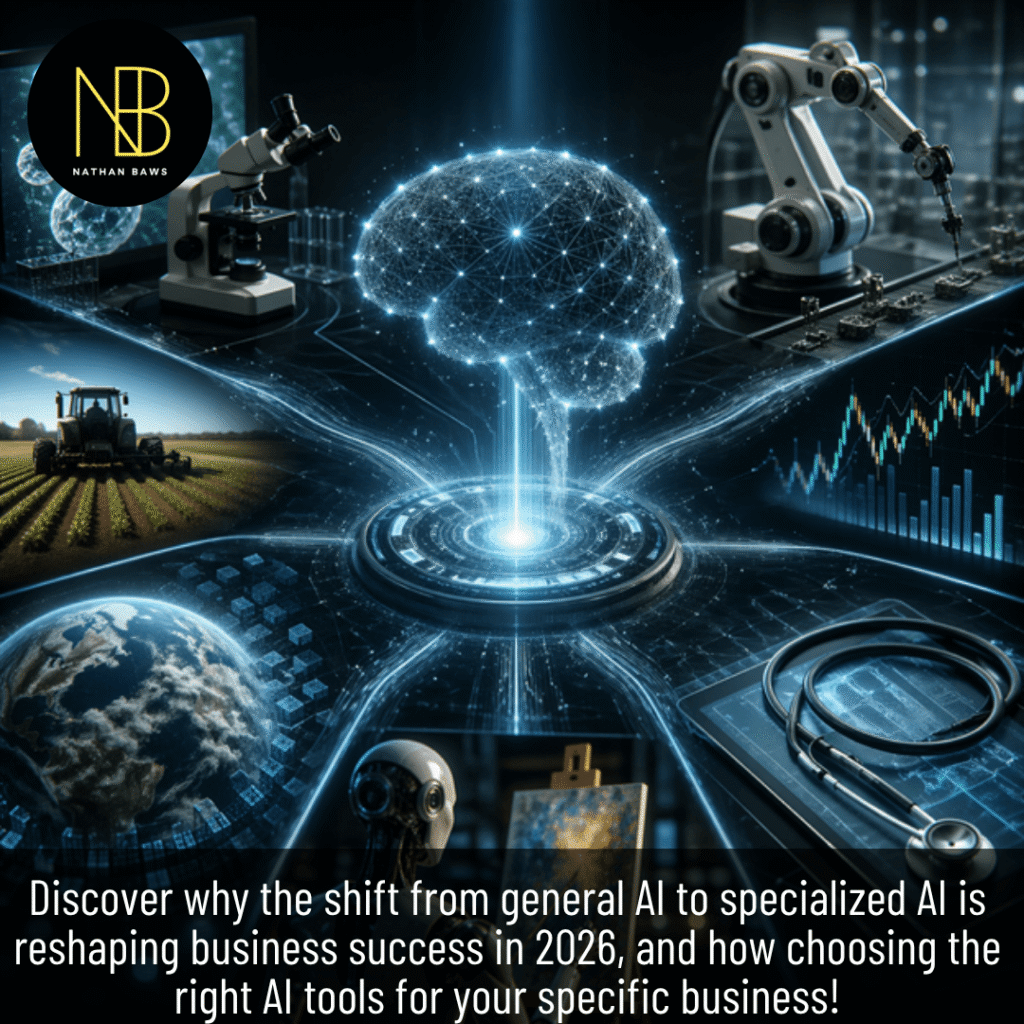
Introduction: AI Has Grown Up – And It’s Getting Specific
For years, businesses were sold the dream of general AI – tools that could supposedly do everything: write content, automate workflows, analyse data, and even make decisions. But as highlighted in a recent report by TechRadar, the narrative is shifting fast.
The original topic – the shift from general AI to specialized AI – is not just a trend. It’s a correction.
Because here’s the reality: What works brilliantly for one business can completely fail another.
That’s where most companies are going wrong. They’re chasing popular AI tools instead of implementing relevant AI solutions.
And that’s exactly what we’re fixing in this article.
The Problem: Businesses Are Using AI the Wrong Way
Let’s call it out.
Most businesses:
- Jump on trending AI tools
- Copy competitors blindly
- Expect instant results from generic platforms
The result?
Wasted budgets, poor outputs, and frustration.
General AI tools are designed for broad use cases, not specific business problems. That’s why they often feel “okay” but rarely transformative.
The Real Shift: From General AI → Specialized AI
According to insights from TechRadar, 2025 marked a turning point where AI stopped being experimental and started becoming practical.
And practicality demands precision.
What is Specialized AI?
Specialized AI refers to:
- Tools designed for a specific industry
- Systems trained for a specific function
- Automations tailored to a specific workflow
Think of it like this:
- General AI = A Swiss army knife
- Specialized AI = A surgeon’s scalpel
One is versatile. The other is precise – and precision is where money is made.
The Solution: Stop Copying – Start Customising
Here’s the blunt truth:
AI is not a plug-and-play magic wand.
The real solution is simple, but requires thinking:
Find the AI software, automation, or platform that fits YOUR business – and capitalise on it.
Not your competitor’s business.
Not a trending YouTube recommendation.
Not what’s “going viral.”
But your business.
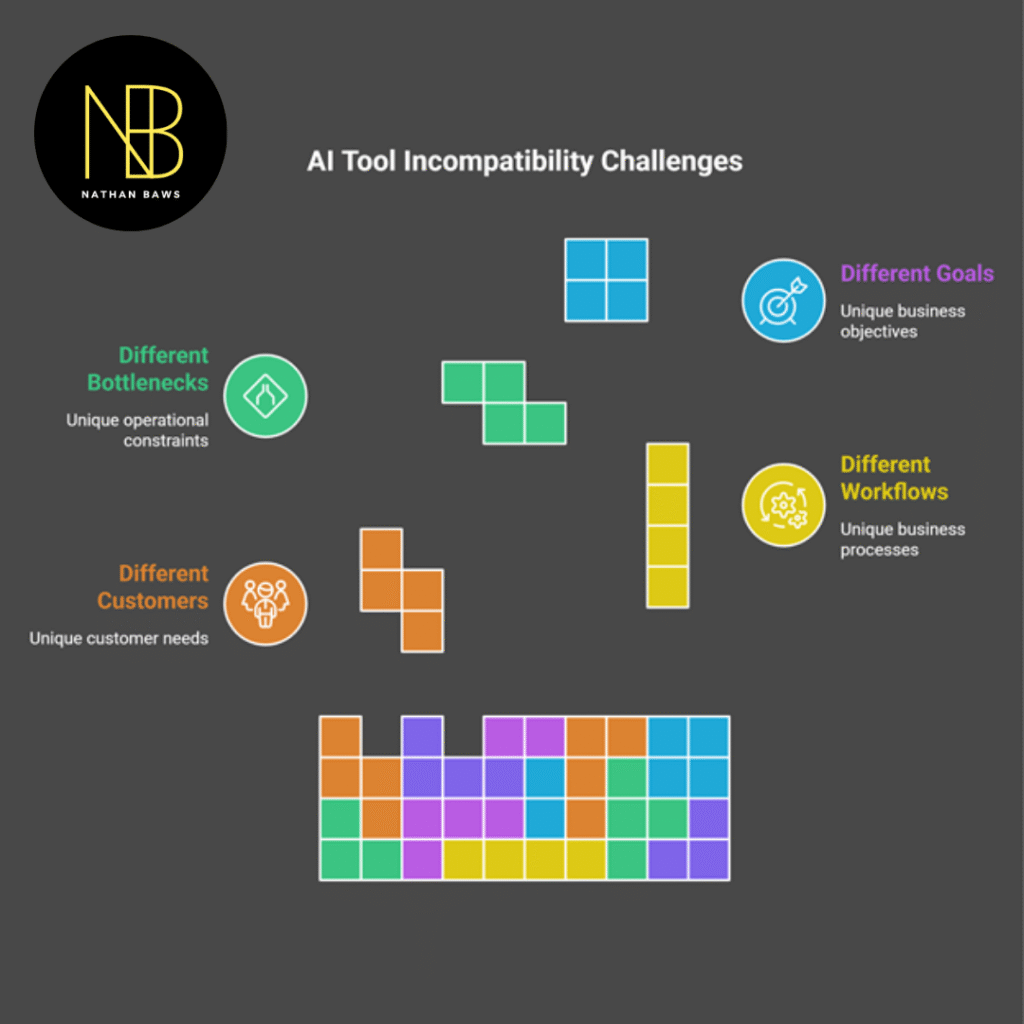
Why One AI Tool Will Never Fit All Businesses
Different businesses have:
- Different customers
- Different workflows
- Different bottlenecks
- Different goals
So why would they use the same AI stack?
Example: Same Tool, Different Outcome
A content agency using AI writing tools:
- Needs speed and SEO optimisation
An eCommerce store using AI:
- Needs conversion-focused product descriptions
A logistics company:
- Needs route optimisation and predictive analytics
Same category of AI – completely different requirements.
Nathan Baws’ Perspective: Think Like an Entrepreneur, Not a User
As Nathan Baws, a public speaker and entrepreneur known for scaling businesses through smart systems, puts it:
“AI isn’t here to replace your thinking – it’s here to amplify it. The businesses winning right now aren’t using more tools, they’re using the right tools.”
This is where most people get stuck.
They think adopting AI means using more platforms. In reality, it means using the right one effectively.
How to Identify the Right AI for Your Business
This is where strategy beats hype.
Step 1: Identify Your Bottleneck
Where is your business losing time or money?
- Marketing?
- Customer service?
- Operations?
- Lead generation?
AI should solve a specific pain point, not just “improve everything.”
Step 2: Match AI to the Problem (Not the Trend)
Instead of asking:
“What AI tools are popular?”
Ask:
“What AI solves THIS exact problem?”
That’s how you move from experimentation to ROI.
Step 3: Test Small, Scale Fast
Don’t overhaul your entire business overnight.
- Test one AI tool
- Measure results
- Optimise usage
- Then scale
This is how specialized AI becomes a profit driver, not a cost centre.
Step 4: Integrate, Don’t Isolate
The real power of AI comes from:
- Connecting tools
- Automating workflows
- Eliminating manual repetition
Specialized AI works best when it becomes part of your system, not a standalone tool.
The Competitive Advantage of Specialized AI
Businesses that get this right experience:
- Faster decision-making
- Higher accuracy
- Reduced operational costs
- Better customer experiences
But more importantly… They stop guessing.
What Happens If You Ignore This Shift
Let’s be clear – doing nothing is still a decision.
Businesses that stick to generic AI usage will:
- Fall behind in efficiency
- Struggle with inconsistent results
- Waste money on tools that don’t convert
Meanwhile, competitors using specialized AI will:
- Operate leaner
- Scale faster
- Deliver better outcomes
Conclusion: Precision Is the New Power
The shift from general AI to specialized AI isn’t just a tech upgrade – it’s a mindset shift.
Stop chasing what’s trending. Start implementing what’s relevant. Because the future of AI isn’t about who uses it…
It’s about who uses it correctly.
FAQs
What is the difference between general AI and specialized AI?
General AI is designed for broad, multi-purpose use, while specialized AI focuses on solving specific problems within a particular industry or function. Specialized AI typically delivers more accurate and efficient results because it is tailored.
Why is specialized AI becoming more important in 2026?
As AI matures, businesses demand better results, not just capabilities. Specialized AI provides precision, which leads to measurable ROI, making it more valuable than generic tools.
Can small businesses benefit from specialized AI?
Absolutely. In fact, small businesses can gain a major competitive edge by using targeted AI tools to automate tasks, improve efficiency, and compete with larger companies.
How do I know which AI tool is right for my business?
Start by identifying your biggest bottleneck. Then look for AI solutions specifically designed to solve that problem rather than choosing tools based on popularity.
Is it expensive to implement specialized AI?
Not necessarily. Many AI tools offer scalable pricing. The key is to start small, test effectiveness, and only invest more once you see results.
Can I use multiple specialized AI tools together?
Yes, and that’s often the best approach. Integrating tools into a seamless workflow can significantly improve productivity and efficiency.
What industries benefit the most from specialized AI?
Almost every industry – from healthcare and finance to marketing and logistics – can benefit. The impact depends on how well the AI is aligned with specific business needs.
Is general AI becoming obsolete?
Not entirely. General AI still has value for broad tasks, but it’s no longer enough on its own for businesses seeking high performance and competitive advantage.
How long does it take to see results from specialized AI?
Results can vary, but many businesses start seeing improvements within weeks when AI is applied to a clear, defined problem.
What is the biggest mistake businesses make with AI?
The biggest mistake is adopting AI without a strategy – using tools just because they’re trending rather than because they solve a real business problem.
Read Also: How Film and Music Industries Are Being Revolutionised and Why Businesses Must Adapt Now