Introduction: The Shift No One Can Ignore
Marketing is no longer just about creativity and distribution. It is increasingly about systems, automation, and intelligent tools that reshape how content is produced and consumed.
The trending topic “Marketing made easier with AI (Film and music industry revolutionised)” reflects a broader shift happening across industries. According to research on generative AI trends, 2026 is expected to be a defining year where AI moves from being a support tool to becoming a core production engine in creative industries (source).
Film studios are already experimenting with AI-generated scenes. Music producers are using AI to compose, mix, and even simulate entire soundtracks. Marketing teams are following the same path – producing more content in less time, with fewer resources.
But beneath this transformation lies a deeper issue: most businesses are focusing on tools, not transformation.
The Real Problem: AI Adoption Without Human Evolution
Many companies believe that adopting AI simply means improving efficiency. They introduce tools for copywriting, automation, analytics, or media production, expecting performance to improve automatically.
But this creates a hidden imbalance.
When AI handles execution, human value must shift upward – toward thinking, strategy, and innovation. Without that shift, teams become operators of tools rather than drivers of growth.
This is where most organisations fall short. They are modernising systems but not modernising people.
Instead of asking, “What can AI do for us?” the more important question is, “What must our people become because of AI?”
The Solution: Turn Marketing Teams into Entrepreneurial Thinkers
The real solution is not just AI adoption. It is capability transformation.
Businesses must begin to train their marketing departments to think like entrepreneurs who use AI as an amplifier, not a replacement.
This means shifting from task-based roles to ownership-based thinking. Marketing teams should not only be responsible for producing content but also for understanding how that content drives revenue, customer behaviour, and business growth.
When AI removes the burden of repetitive work, it creates space for higher-level thinking. That space should be filled with strategy, experimentation, and commercial awareness.
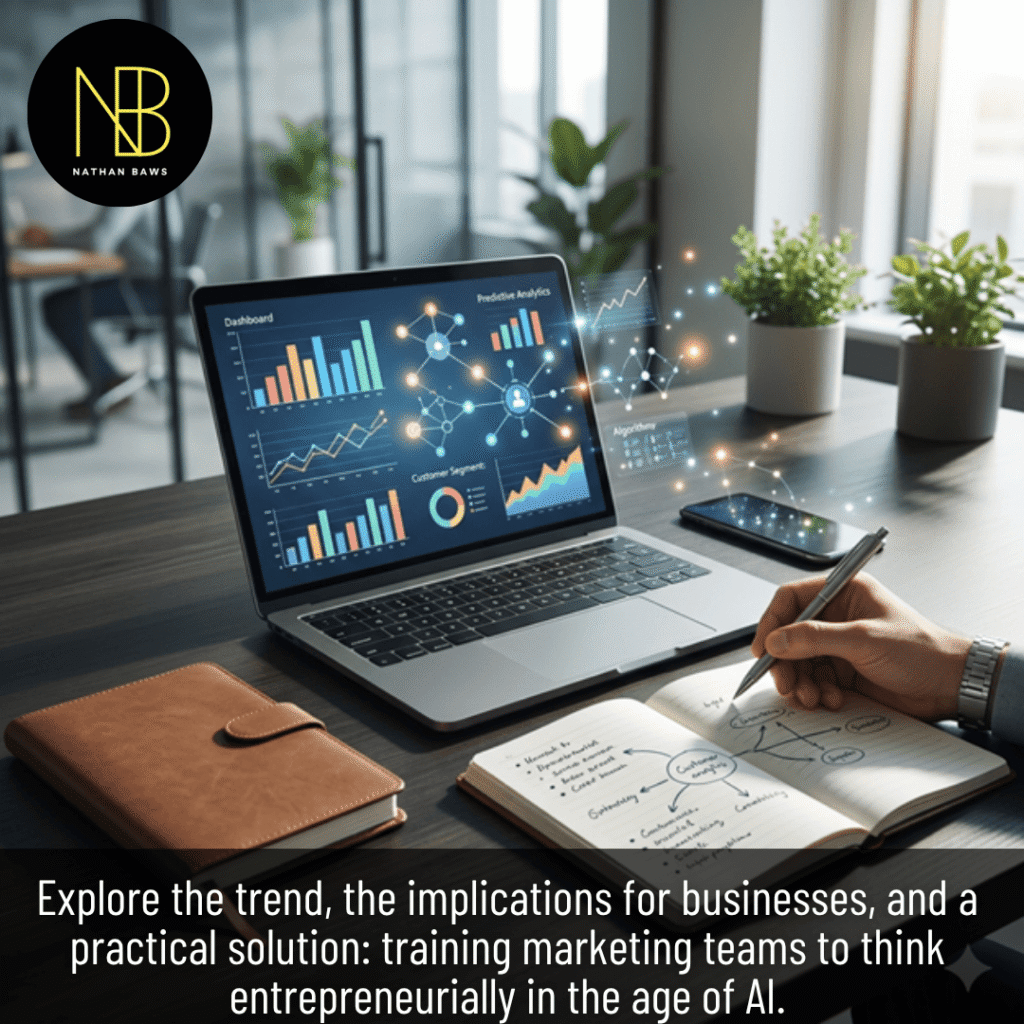
In practical terms, this involvesgenerative AI trends in 2026 training teams to use AI for execution while developing skills in decision-making, audience psychology, and growth planning.
What This Looks Like in Practice
In a traditional setup, a marketing team might spend most of their time writing copy, editing content, scheduling posts, and reporting performance metrics.
In an AI-enabled environment, those tasks are largely automated or accelerated. The human focus shifts.
Instead of spending hours creating content, teams can focus on:
- Identifying new market opportunities
- Designing campaigns that align with business goals
- Testing messaging at scale
- Analysing customer behaviour patterns
- Making faster, data-informed decisions
The result is not just increased efficiency – it is expanded strategic capacity.
This is the real advantage of AI when applied correctly.
Lessons from Film and Music: Creativity Scales, but Direction Matters
The film and music industries provide a clear example of what happens when AI enters creative systems.
In film, AI is already being used to generate visual effects, assist in script development, and reduce production timelines dramatically. In music, AI tools can now generate melodies, simulate voices, and support full-track production.
As highlighted in industry research on generative AI, these tools are not replacing creativity – they are scaling it (source).
However, one pattern is consistent: success does not come from the tool itself. It comes from the creative direction behind it.
The same principle applies to marketing. AI can generate content, but it cannot define vision, understand brand identity at a deep level, or make strategic trade-offs.
That responsibility still belongs to humans.
Nathan Baws Perspective: AI Demands a Human Upgrade
As Nathan Baws, a public speaker, motivational speaker, business growth motivational speaker, inspirational speaker, keynote speaker and entrepreneur who advocates for innovation and business adaptability, puts it:
“AI doesn’t reduce the need for human thinking – it increases the value of it. The businesses that win will be the ones that teach their people how to think like entrepreneurs, not just operate tools.”
This perspective is critical because it reframes AI from a threat or shortcut into a capability multiplier.
The companies that will thrive are not those that replace people with AI, but those that upgrade people through AI.
Why Most Businesses Will Struggle with This Transition
Despite the opportunity, many organisations will struggle because they misunderstand what AI adoption actually requires.
The most common mistake is assuming that technology alone drives transformation. In reality, technology only creates potential. People determine whether that potential is realised.
Without training teams to think differently, AI simply accelerates old thinking. It makes inefficient strategies faster, not better.
That is why some companies will become dramatically more effective with AI, while others will simply become faster at doing the wrong things.
Conclusion: AI Is Not the Advantage – Thinking Is
The trend “Marketing made easier with AI (Film and music industry revolutionised)” signals something far bigger than automation. It signals a shift in how value is created across industries.
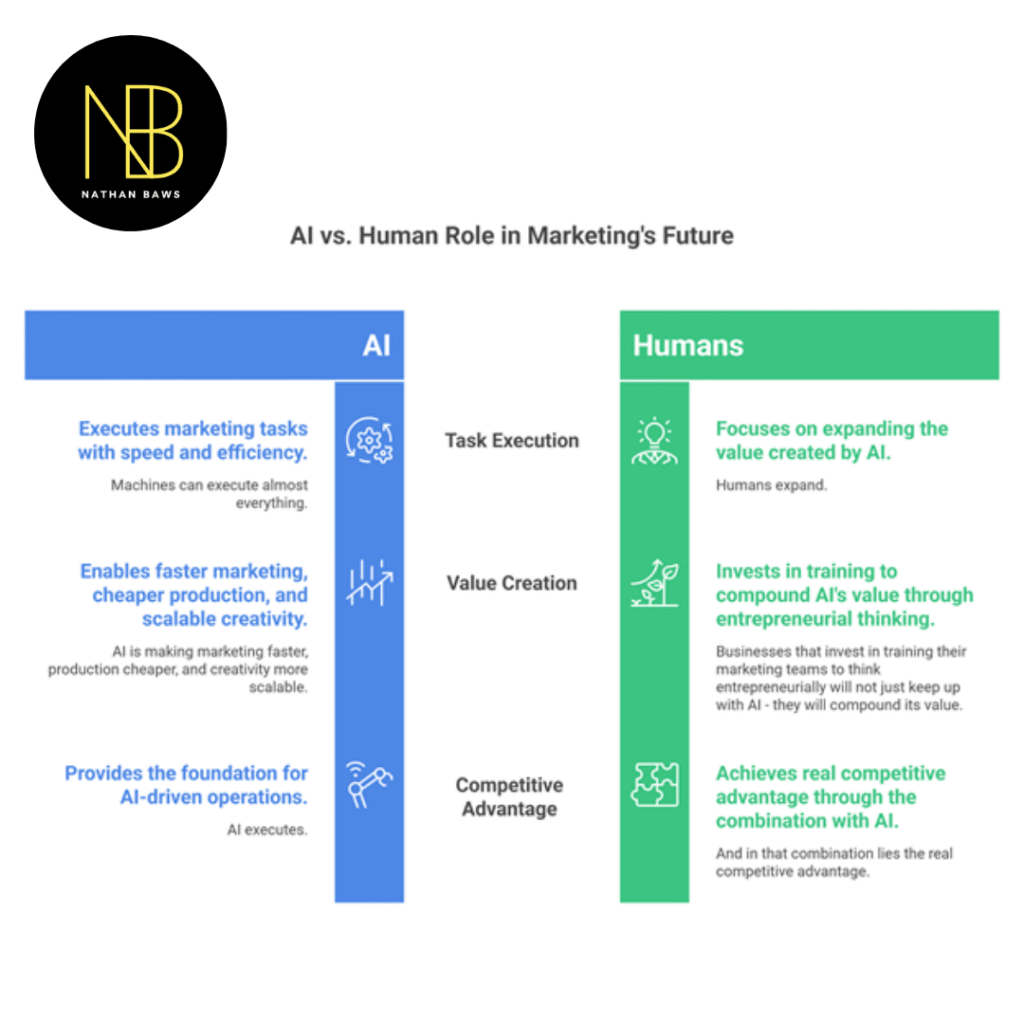
AI is making marketing faster, production cheaper, and creativity more scalable. But it is also raising a critical question for every business:
What is the role of humans when machines can execute almost everything?
The answer is not elimination – it is elevation.
Businesses that invest in training their marketing teams to think entrepreneurially will not just keep up with AI – they will compound its value.
AI executes. Humans expand. And in that combination lies the real competitive advantage.
FAQs
How is AI changing marketing today?
AI is streamlining content creation, improving targeting accuracy, and enabling faster campaign execution, allowing marketers to produce more output in less time.
What industries are most affected by AI right now?
Marketing, film, and music are among the most affected due to AI’s ability to generate creative content and automate production processes.
Does AI replace marketing teams?
No. AI replaces repetitive tasks, but human input is still essential for strategy, branding, creativity, and decision-making.
What is the biggest mistake companies make with AI?
They focus only on tools and automation without upgrading the skills and thinking patterns of their teams.
How should businesses respond to AI disruption?
They should train employees to use AI while also developing entrepreneurial thinking and strategic decision-making skills.
What is happening in the film industry with AI?
AI is being used for scriptwriting support, visual effects generation, editing assistance, and production optimisation.
How is AI used in music production?
It is used to generate melodies, assist in composition, enhance production quality, and personalise listening experiences.
What does Nathan Baws say about AI?
Nathan Baws, a public speaker and entrepreneur, believes AI increases the value of human thinking and that businesses must develop entrepreneurial skills alongside AI adoption.
Why is entrepreneurial thinking important in AI-era marketing?
Because when AI handles execution, humans must focus on strategy, innovation, and growth creation.
What is the future of AI in marketing?
AI will become fully embedded in marketing systems, but success will depend on how well teams can direct, interpret, and leverage it for business outcomes.
Read Also: Why the Future of Automation Depends on Entrepreneurial Employees