Introduction
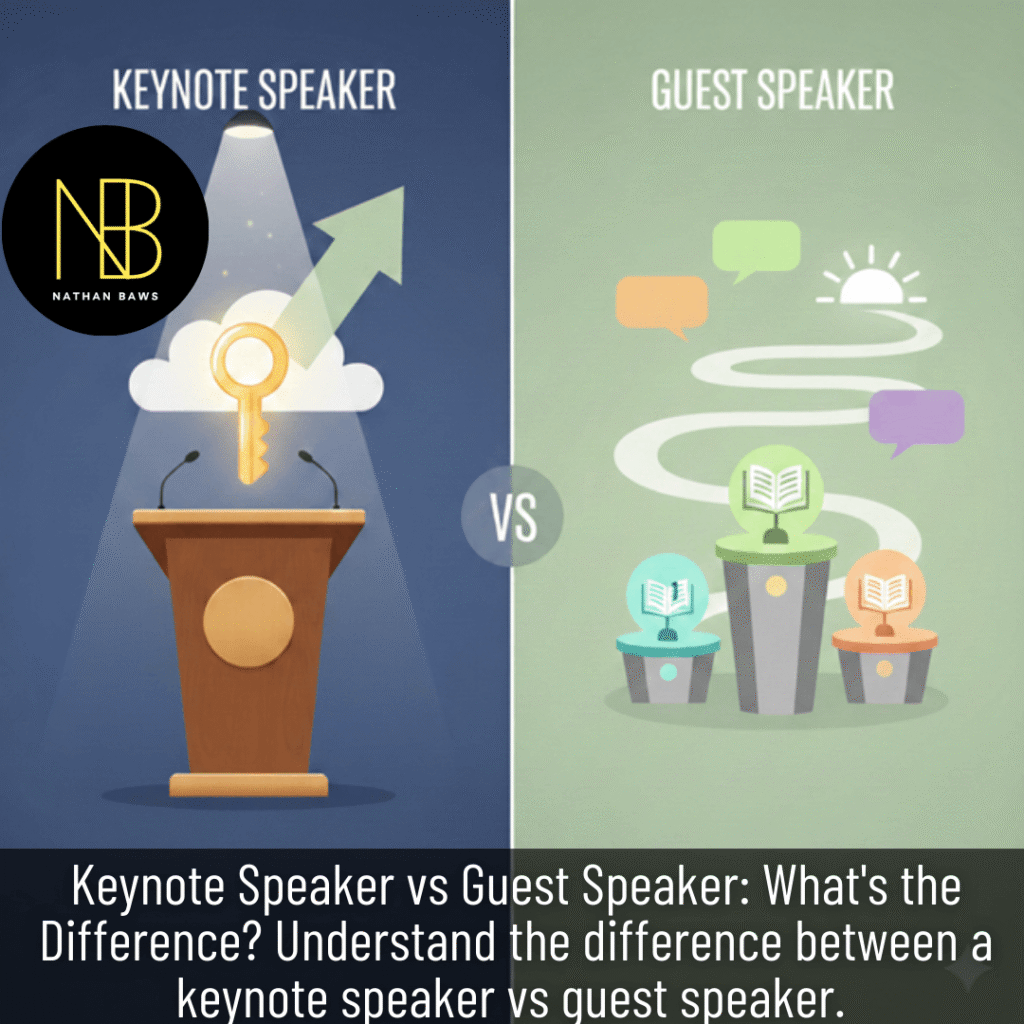
The difference between a guest speaker vs keynote speaker can shape your event, the audience experience, and the return on investment. If you are organising events in Perth or elsewhere in Australia, understanding these roles helps you choose the right person for your objectives. This guide explains the differences, practical selection steps, and how to work with a professional like Nathan Baws to get the best result.
Key Takeaways
- Clear definitions and practical differences
- How to match speaker type to event goals
- Budget, logistics, and promotional tips
- Questions to ask before hiring
What Is a Guest Speaker?
Role and purpose
A guest speaker is often brought in to deliver a specific topic to a smaller or focused part of an event. A guest speaker provides subject matter expertise, case studies, or specialised training tailored to a session. They add credibility and depth to the program without being the central figure for the whole event.
Typical session formats
Guest speaker sessions can be workshops, panels, seminars, or breakout talks. These formats allow interaction and detailed exploration of a topic relevant to a subset of attendees. They are ideal for targeted learning and engagement.
When to choose a guest speaker
Choose a guest speaker when your event needs deep subject expertise or a specific skill. Use them to support the main program with specialised content or interactive experiences. For conferences, training days, and seminars a guest speaker often delivers the most value.
What Is a Keynote Speaker?
Role and purpose
A keynote speaker sets the tone for an event and addresses the full audience with a central message. The keynote is designed to inspire, unify, and provide a memorable theme for the day. This role is strategic and often linked to the event’s main objective.
Typical session formats
Keynote sessions are usually larger, longer, and more formal than guest segments. They are placed at the opening or closing of an event and can include storytelling, big-picture thinking, and calls to action. Audience size and venue scale matter for keynote delivery.
When to choose a keynote speaker
Select a keynote speaker when you want a strong central message, high audience impact, or media attention. They are ideal for conferences, annual meetings, and large corporate events where cohesion and inspiration matter. The keynote often becomes the highlight remembered after the event.
Key Differences Between Guest Speaker vs Keynote Speaker
Scope and audience
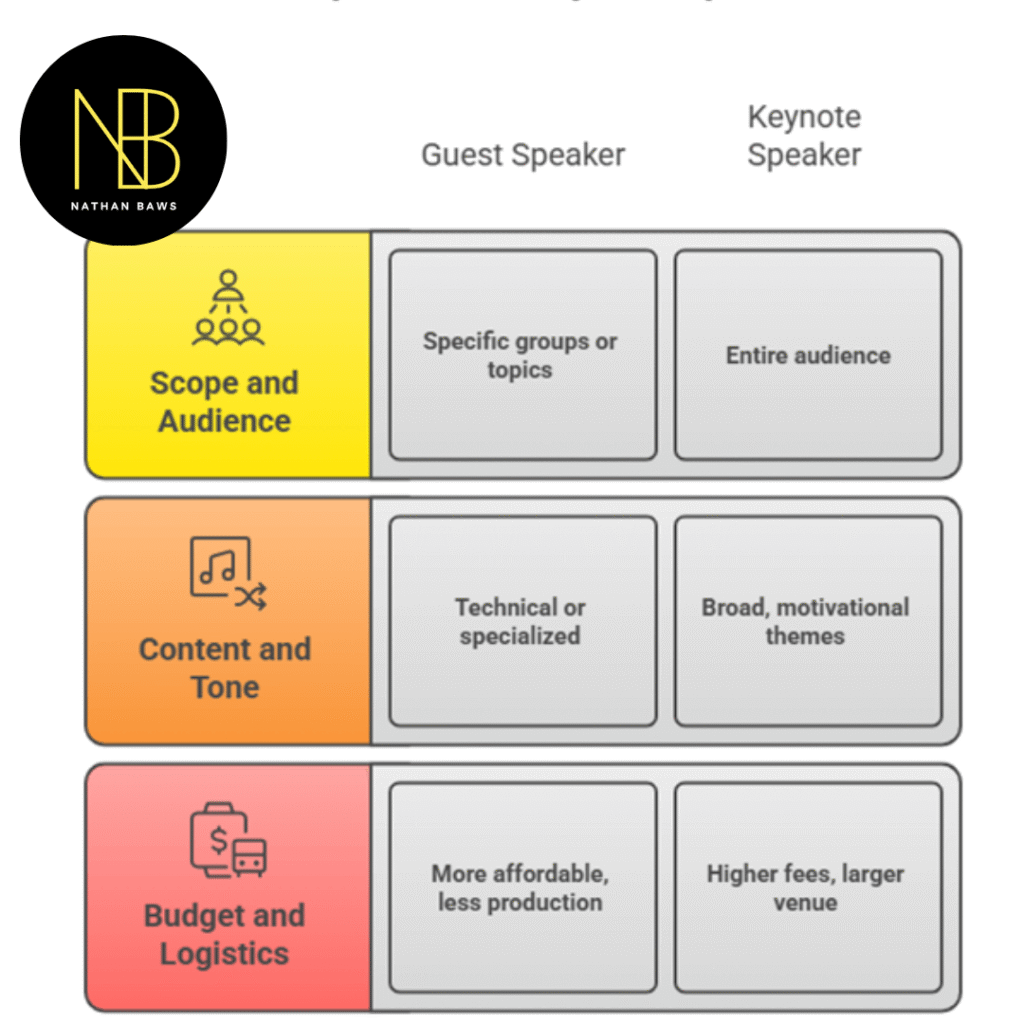
Guest speakers focus on specific groups or topics while keynote speakers address the entire audience. Scope defines content depth versus breadth and determines logistics like room size and AV needs. Knowing the audience size helps you pick the right speaker type.
Content and tone
Guest speakers deliver technical or specialised content; keynote speakers deliver broad, motivational themes. Tone for a guest speaker is usually instructional and practical, while a keynote tone is strategic and inspirational. Match tone to your event goals for best results.
Budget and logistics
Keynote speakers usually command higher fees and need larger venue support. Guest speakers are often more affordable and require less production. Budget planning should include travel, AV, speaker preparation time, and promotional costs.
How to Decide Between a Guest Speaker vs Keynote Speaker
Define event goals
Start with clear goals: learning, motivation, networking, brand positioning, or sales. If your main goal is engagement and hands-on learning, a guest speaker may be better. If you need a memorable message and high impact, choose a keynote speaker.
Consider audience size and profile
Smaller, specialised audiences benefit from guest speakers who can dive deep. Larger and mixed audiences benefit from a keynote that connects themes and provides shared takeaways. Match speaker type to audience expectations to improve satisfaction.
Evaluate budget and timeline
Work out realistic spend and schedule for sourcing, briefing, and marketing your speaker. Keynote speakers require more lead time for travel and production. Guest speakers are often easier to secure at short notice and lower cost.
Practical Steps to choose Guest speaker vs Keynote speaker
Create a clear brief
Write a concise brief that outlines goals, audience, outcomes, and logistics. Include details like event date, location in Perth, expected audience size, and AV capabilities. A clear brief helps you and the speaker align expectations early.
Assess speaker fit and experience
Review past presentations, audience feedback, and recorded talks to assess fit. Look for experience with Australian audiences and local relevance to Perth where possible. Consider a trial webinar or pre-event call to vet delivery style and tone.
Negotiate terms and rehearsal
Agree on fee, travel, rehearsal time, and intellectual property for recordings. Include time for a run-through so the speaker can tailor content to your audience. Clear contracts reduce last-minute issues and ensure a smooth event.
How to Work With a Speaker for Best Results
Provide audience insights
Share demographic details, industry trends, and attendee expectations with the speaker. This helps them tailor content to the Perth audience and deliver practical relevance. The more specific the insight, the more tailored the session will be.
Coordinate with AV and venue
Ensure AV checks and stage layout meet speaker requirements well before the event. Test microphones, screens, and recording equipment to avoid technical issues. For keynote presentations, lighting and stage design can amplify impact.
Plan audience engagement
Decide on Q&A, polls, or breakout discussions to increase interaction. Guest speakers often benefit from small-group formats; keynote sessions need structured engagement for large audiences. Use technology like live polling to gather feedback and keep energy high.
Measuring Success: Metrics for Guest Speaker vs Keynote Speakers
Engagement metrics
Track session attendance, participation in Q&A, and poll responses to measure engagement. Compare engagement between guest speaker sessions and keynote slots to evaluate impact. Use post-event surveys to gather qualitative feedback.
Learning and outcome metrics
For guest speakers, measure knowledge gain via tests, assessments, or practical tasks. For keynotes, measure inspiration and intent to act through feedback and follow-up actions. Use attendance retention rates to see who stayed for full sessions.
Commercial impact
Track leads, partnerships, and sales that stem from the event to evaluate commercial return. Keynote speakers often influence brand perception, while guest speakers can generate specific business opportunities. Use CRM data to tie event activity back to outcomes.
Local Considerations for Perth and Australian Events
Audience expectations in Australia
Australian audiences value practical takeaways and clear examples they can apply locally. Perth audiences prefer direct, action-focused talks with local relevance. Ensure the speaker understands Australian business culture and market nuances.
Travel and timing
Perth is distant from other Australian capitals, so plan travel and rehearsal time carefully. Allow extra time for flights, equipment shipping, and local setup. Consider virtual or hybrid options when schedules are tight or budgets limited.
Working with local suppliers
Use local AV and event teams who know Perth venues and logistics. Local suppliers can help reduce costs and avoid customs or shipping delays. Coordinate early to lock in preferred dates and services.
Case Studies: Successful Use of Guest speaker vs Keynote Speaker
Professional conference in Perth
A Perth industry conference used a keynote to set the theme and guest speakers for deep dives. The keynote created cohesion while guest sessions delivered actionable skills. Post-event feedback showed high satisfaction with both formats.
Corporate retreat
A corporate retreat combined a motivational keynote with specialist guest workshops. The keynote united teams while workshops delivered practical skills and planning. The result was improved team alignment and measurable performance improvements.
Training and development day
For training days, guest speakers provided practical instruction while a keynote opened the event with strategic context. This mix helped participants see the big picture and apply new skills immediately. Follow-up coaching increased long-term impact.
How Nathan Baws Can Help
Expertise and experience
Nathan Baws delivers practical, high-impact presentations for Australian audiences, with experience across corporate and educational events. He knows how to tailor content for Perth and regional audiences to ensure local relevance. His approach blends strategy, practical steps, and clear calls to action.
Customised content
Nathan works with organisers to craft messages that fit event goals and audience needs. He can deliver keynote sessions that inspire broad audiences and guest sessions that teach specific skills. He offers rehearsal and content adjustments to match your exact brief.
Easy booking and reliable delivery
Contact Nathan Baws to discuss availability, fees, and how he can support your event in Perth or across Australia. He provides clear contracts, logistical support, and pre-event collaboration to ensure success. Booking early secures dates and allows time for tailored content development.
Budget Guide and Negotiation Tips
Estimating costs
Keynote fees often include travel, prep time, and production costs and command higher rates than guest speakers. Guest speakers typically cost less but may still require travel and materials. Build a realistic budget that covers speaker fees, AV, and promotion.
Negotiation tips
Be clear about the value you offer in return, such as exposure, recordings, or follow-up opportunities. Offer options like virtual appearances or shorter slots to fit smaller budgets. Agree on deliverables and cancellation terms in writing to avoid surprises.
Value beyond the fee
Consider the long-term value a keynote can bring through brand awareness and media coverage. Guest speakers can provide immediate skill transfer and stronger ROI for targeted outcomes. Balance short-term cost constraints with long-term benefits when choosing speaker type.
Preparation Checklist for Organisers
Logistics and venue
Confirm venue layout, AV needs, seating, and accessibility in advance. Share floor plans, tech specs, and contact details for venue staff with the speaker. Schedule a technical rehearsal to prevent last-minute issues.
Content and branding
Provide branding guidelines, event theme, and key messages the speaker should align with. Agree on slide templates, logo use, and social media mentions ahead of time. Make sure any recordings comply with your rights and privacy policies.
Promotion and follow-up
Promote the speaker early with clear messaging about the session benefits to attendees. Use email, social, and local media to boost attendance and engagement. Plan follow-up content, recordings, and surveys to continue the conversation after the event.
Conclusion
Understanding guest speaker vs keynote speaker helps you pick the right format for your Perth or Australian event. Use guest speakers for deep, practical learning and keynote speakers for broad, memorable impact. For tailored advice, bookings, and professional delivery, contact Nathan Baws to discuss how he can help you achieve your event goals.
Visit nathanbaws.com to enquire about availability, fees, and customised sessions for Perth and across Australia.
FAQs
1. What is the main difference between a keynote and a guest speaker?
Keynote speakers address the full audience with a central theme while guest speakers focus on specific topics or groups. Keynotes set the tone for the whole event and aim to inspire. Guest speakers provide detailed, practical knowledge to smaller segments.
2. How do I pick between a guest speaker vs keynote speaker for a conference?
Decide based on your event goals, audience size, and budget. Choose a keynote for broad impact and a guest speaker for depth and training. Match the speaker’s style to attendee expectations.
3. Are keynote speakers more expensive than guest speakers?
Yes, keynote speakers usually command higher fees due to preparation, production, and audience reach. Guest speakers are typically more affordable and require less production. Budget for travel and AV in both cases.
4. Can a speaker do both keynote and guest sessions at the same event?
Yes, many speakers can deliver a keynote and run a workshop or breakout session. This provides both broad inspiration and practical skills to attendees. Ensure timing and fees are agreed in advance.
5. How far in advance should I book a keynote speaker in Perth?
Book a keynote several months in advance to secure dates and allow for prep and travel. Popular speakers may need even longer lead times. Early booking also helps with marketing and logistics.
6. What should be in a speaker brief?
Include event objectives, audience details, logistics, and technical specifications in the brief. Add branding guidelines and any specific messages you want covered. A clear brief helps the speaker tailor their session effectively.
7. How can I measure the impact of a keynote or guest speaker?
Use engagement metrics, surveys, and follow-up results to measure impact. Track attendance, poll responses, and post-event actions for concrete data. Tie outcomes to business metrics where possible for a clear ROI view.
8. Is it better to hire a local Perth speaker?
Hiring a local Perth speaker can reduce travel costs and increase local relevance. Local speakers often understand the market and audience expectations better. However, choose based on fit and experience rather than location alone.
9. Can virtual speakers replace live guest or keynote speakers?
Virtual speakers can be a good alternative, especially for budget or travel constraints. They may lack some live presence but can still deliver strong content and engagement. Use high-quality production and interactivity to boost virtual impact
10. How do I contact Nathan Baws for speaking enquiries?
Visit nathanbaws.com to find contact details and submit an enquiry form. Provide your event brief, dates, and audience details for a quick response. Nathan will discuss availability and how he can tailor a session to your needs.
Also Read: 10 Unconventional Business Mentoring Programs: Nathan Baws’ Approach to Explosive Growth