Introduction
The corporate events landscape across major Australian hubs like Sydney, Melbourne, Brisbane, and Perth has expanded rapidly over recent years. Companies are increasingly investing in massive annual conferences, industry-wide trade forums, and targeted executive retreats to align teams and share critical industry trends.
When you sit down with your corporate planning committee to build out an event roadmap, one of the most critical decisions you will face centres on how you structure your presentation lineup. Specifically, you must understand the subtle yet profound operational differences between a keynote speaker and a guest speaker.
Many event coordinators treat these two professional designations as interchangeable. This is a significant operational oversight that can result in mismatched audience expectations and a poor return on your talent acquisition budget.
Every single professional who steps onto a stage serves a distinct, specialised purpose within your broader conference schedule. To build a flawless event flow, you must understand exactly how a keynote speaker vs guest speaker impacts your timeline, shapes your audience’s mindset, and delivers practical commercial value.
The Core Definitions: Keynote Speaker vs Guest Speaker
To optimise your presentation line-up, you must first establish the exact functional definitions of these two-stage roles. Each role demands a completely unique set of professional skills, requires varying levels of background customisation, and carries different responsibilities regarding audience engagement.
The Strategic Blueprint of a Keynote Speaker
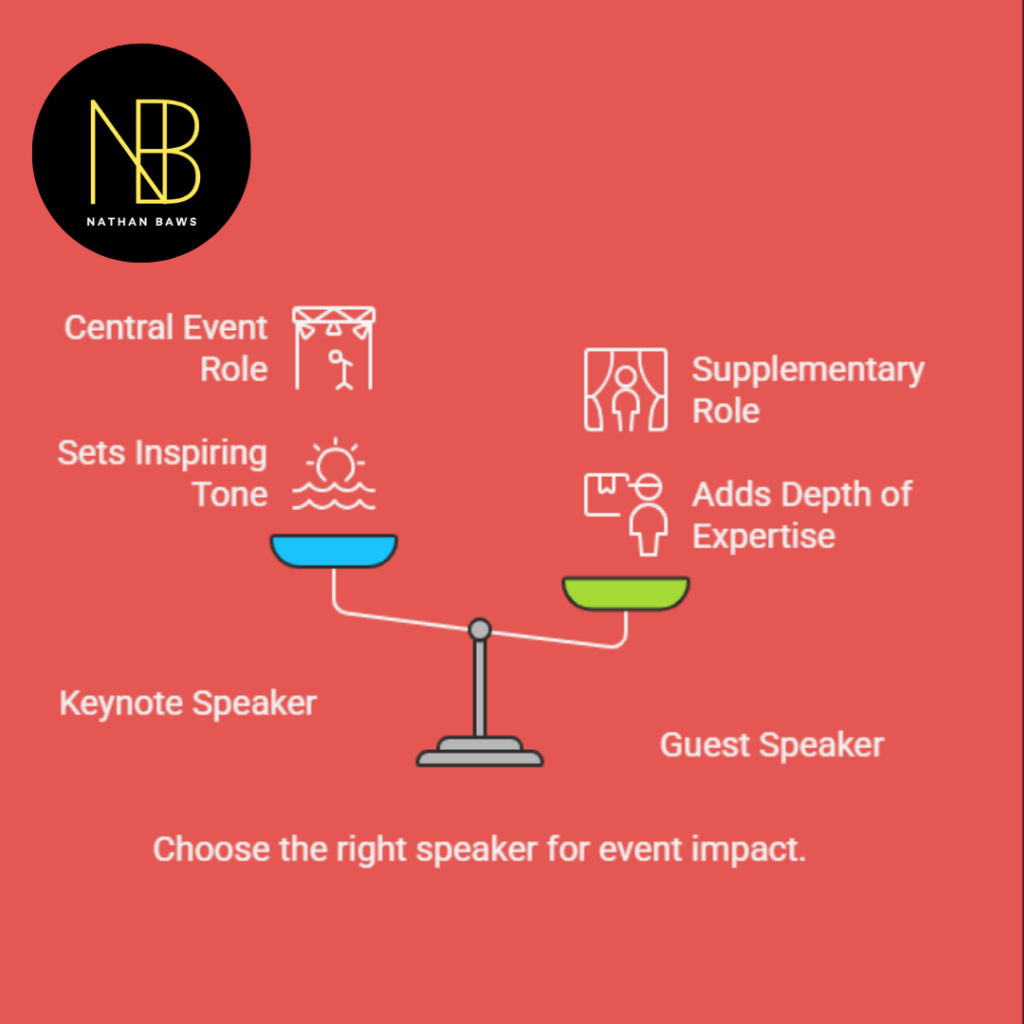
A keynote presentation acts as the structural anchor for your entire conference. The professional selected for this high-visibility slot is tasked with setting the exact emotional tone, establishing the overarching commercial theme, and capturing the room’s undivided attention from the moment the event begins.
When comparing a keynote speaker vs guest speaker, the keynoter focuses primarily on the big picture, breaking down macroeconomic patterns, shifting industry frameworks, and major cultural transformations. They weave personal, high-stakes storytelling with universal business lessons to inspire the workforce and prepare them for the more detailed breakout sessions that follow later in the day.
The Tactical Focus of a Guest Speaker
A guest presenter operates on a completely different operational wavelength. Instead of addressing the entire conference with broad, sweeping themes, these professionals are brought in to deliver deep, targeted expertise on a highly specific industry topic.
In the structural equation of a keynote speaker vs guest speaker, the guest presenter handles the specialised details. They might lead a breakout workshop focused strictly on optimising front-line B2B sales conversions, integrating advanced AI automation tools into existing marketing systems, or breaking down and changing tax regulations within the local financial sector. Their value is found in their direct, hands-on industry specialisation.
Structural Alignment: Where to Position Each Role on Your Agenda
The overall flow of a corporate event is a major factor in how well your audience absorbs information. Throwing random professionals onto a stage without a clear understanding of the balance between a keynote speaker vs guest speaker can create intense cognitive fatigue for your attendees.
Opening and Closing the Day with a Keynote
Because keynoters specialise in high-energy delivery and broad strategic frameworks, they should always be positioned at the absolute start or the very conclusion of your event schedule.
An opening keynote builds immediate momentum, wakes up the room, and gives attendees a shared vocabulary for the rest of the conference. Conversely, a closing keynote brings together the scattered insights of the day, leaving your team with a clear, inspiring call to action as they prepare to head back to their respective workplaces.
Filling the Mid-Day Sessions with Guest Presenters
Once your keynoter successfully establishes the overarching theme, your audience is primed to dive into tactical learning. This mid-day slot is precisely where your guest presenters deliver the highest value.
Placing highly technical guest sessions in the middle of the day allows attendees to split up into smaller, focused groups based on their specific corporate roles. Your sales team can attend a guest session on closing strategies, while your operations team learns about supply chain efficiency from an entirely separate industry specialist.
Budgetary Considerations: Allocating Value and Fees
Understanding the financial differences between a keynote speaker vs guest speaker is vital for protecting your company’s entertainment and training budgets. Because the preparation time and overall stage responsibilities differ wildly between the two roles, their commercial rates reflect these distinct profiles.
The Premium Investment of a Keynote Authority
Securing a top-tier keynoter requires a notable financial commitment. These professionals spend dozens of hours researching your enterprise, interviewing your executive stakeholders, and customising their frameworks to align perfectly with your organisational goals.
When evaluating the cost of a keynote speaker vs guest speaker, keep in mind that a keynoter’s fee covers their national reputation, their ability to draw ticket sales, and their unique skill in commanding an audience of thousands simultaneously.
The Cost-Effective Efficiency of Guest Specialists
Guest presenters are typically more budget-friendly because they are delivering an established, highly specialised presentation from their existing area of expertise.
They generally do not need to rewrite their core material to fit your specific company culture; they are simply arriving to share their deep, objective knowledge on a clear operational topic. This makes booking multiple guest presenters a fantastic, highly cost-effective strategy to bring immense technical value to your workforce without breaking your bank.
Common Mistakes to Avoid in Selection and Booking
The path to building a world-class conference lineup is filled with subtle pitfalls that can quickly disrupt your event’s flow. Recognising these common selection mistakes early keeps your planning committee entirely on track.
Forcing a Guest Specialist into a Broad Keynote Slot
It is easy to fall into the trap of booking a highly respected industry accountant or software developer to open your annual convention simply because they are a brilliant mind. This is a common booking mistake.
In the context of a keynote speaker vs guest speaker, a brilliant tactical specialist may completely lack the high-energy storytelling skills needed to hold a large room’s attention for an hour. Forcing a technical specialist into a keynote role can lead to a dry, low-energy presentation that sets a sluggish tone for the entire day.
Neglecting the Pre-Event Briefing Alignment
Every presenter you book must understand exactly where they sit on your conference agenda. If a guest presenter does not realise a keynoter has already spent an hour covering the broad future of AI, they may inadvertently spend their first twenty minutes repeating those exact same concepts.
Ensure you host comprehensive briefing sessions that clarify the boundaries between your chosen keynote speaker vs guest speaker. This clear communication ensures your presenters don’t cross over into each other’s topics, keeping your entire event highly engaging, varied, and professional.
Key Trends Shaping Modern Corporate Lineups in Australia
The expectations of corporate workforces across Australia are changing rapidly. Audiences no longer tolerate long, boring slide decks or generic corporate jargon, forcing event planners to adapt their talent sourcing strategies.
The Rise of Integrated Panel Discussions
Rather than keeping a strict, rigid wall between a keynote speaker vs guest speaker, progressive event planners are finding unique ways to blend these talents.
A popular modern trend involves having your high-profile keynoter deliver an opening presentation and then transition into hosting a live panel discussion featuring your technical guest specialists. This approach bridges the gap between big-picture strategy and daily operational tactics, giving your team a highly interactive, well-rounded learning experience.
The Demand for Seamless Virtual Collaboration
With remote and hybrid work models now standard across major enterprises, modern presenters must be incredibly proficient across digital platforms.
Whether you are booking a keynote speaker vs guest speaker, your chosen talent must know how to project immense energy through a camera lens, effortlessly manage digital Q&A tools, and ensure that remote online viewers feel just as included and inspired as the professionals sitting in the physical venue.
Frequently Asked Questions (FAQs)
What is the fundamental difference between a keynote speaker vs guest speaker?
A keynoter sets the core theme, emotional energy, and strategic tone for an entire event, focusing heavily on big-picture concepts. A guest presenter focuses strictly on a highly specific operational niche, providing deep technical value and actionable tactics within a smaller, targeted breakout session or workshop.
Can the same professional act as both a keynote speaker vs guest speaker at one event?
Yes, it is common for a premium professional to deliver a high-energy opening keynote address to the entire convention, and then lead a highly specific, tactical breakout session later in the afternoon as a guest specialist.
How do the preparation requirements differ between a keynote speaker vs guest speaker?
Keynoters require extensive pre-event briefings to understand your company culture, business goals, and current organisational friction points, so they can tailor their message accordingly. Guest presenters generally deliver pre-built, highly technical talks centred on their clear field of expertise, requiring less customisation.
Which role typically commands a higher performance fee?
Keynoters command significantly higher financial fees because they bear the structural responsibility of anchoring the event, drive higher ticket sales, and invest massive amounts of time in creating a highly customised, transformational experience for the audience.
How long does a standard presentation last for a keynote speaker vs guest speaker?
A standard keynote presentation generally runs for 45 to 60 minutes, focusing heavily on storytelling and primary frameworks. A guest presenter’s session can vary wildly, ranging from a quick 30-minute technical update to a highly interactive 90-minute or half-day hands-on workshop.
Should a keynote speaker or a guest speaker handle the audience Q&A session?
Both roles utilise Q&A sessions, but they handle them differently. A guest presenter routinely dedicates a large portion of their time to technical Q&A to solve specific audience challenges. Keynoters often skip live Q&A entirely to preserve the high-energy, emotional impact of their closing statements, or they keep it highly structured.
How many keynoters should we book for a standard single-day corporate conference?
For a standard one-day conference, it is best practice to book a maximum of one or two keynoters – typically one to open the morning session and one to close out the afternoon. Filling the remaining time slots with targeted guest specialists keeps your timeline moving smoothly without causing audience fatigue.
Do guest presenters require the same level of stage technology as keynoters?
Keynoters often require advanced staging setups, wireless microphones, specific lighting cues, and large projection screens to deliver high-impact visual stories. Guest presenters generally rely on standard technical support, such as a podium microphone, a reliable laptop connection for slides, and a simple whiteboard for interactive brainstorming.
How do we choose between a keynote speaker vs guest speaker for our next meeting?
Look directly at the primary goal of your corporate meeting. If your objective is to inspire your workforce, realign departments after a major restructure, or launch a fresh brand vision, choose a keynoter. If your goal is to train your staff on a specific software tool or update them on compliance rules, hire a guest specialist.
Is copyright and recording permission the same for a keynote speaker vs guest speaker?
Recording rights are highly protected by intellectual property laws for both roles, but keynoters enforce these rules much more strictly because their custom frameworks represent their core commercial product. You must explicitly negotiate recording rights in the contract for both types of presenters before the event begins.