Introduction
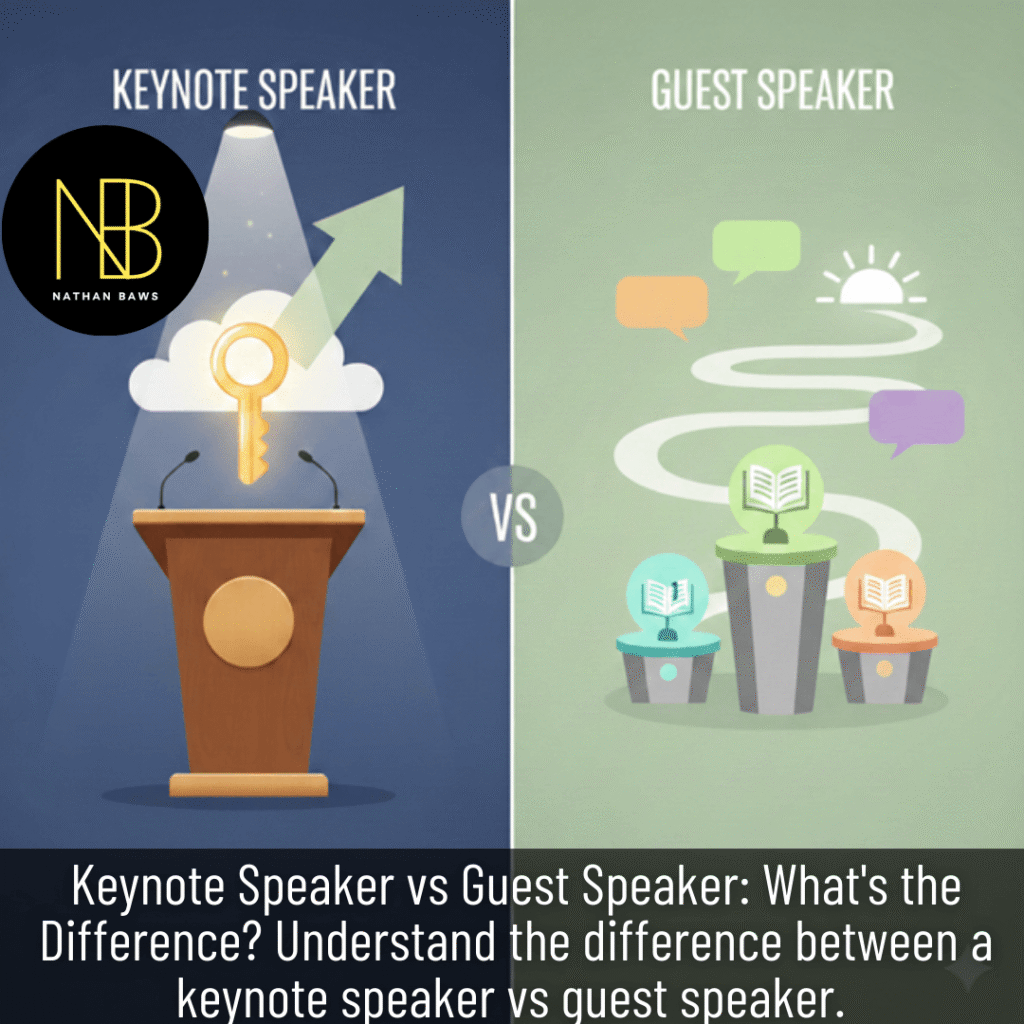
Choosing the right presenter for your corporate function, educational seminar, or large-scale industry conference can be the defining factor between an unforgettable event and a forgettable failure. The strategic distinction between a Guest Speaker vs Keynote Speaker shapes your entire event blueprint, impacts the ultimate audience experience, and dictates your final return on investment.
If you are currently organising professional events in Perth or anywhere else across Australia, understanding the nuances of a Guest Speaker vs Keynote Speaker helps you choose the perfect talent for your commercial objectives. Far too often, event organisers treat these terms as interchangeable, leading to mismatched expectations, misallocated budgets, and disjointed agendas.
This comprehensive guide breaks down the operational differences, practical talent-selection steps, and how to work with a seasoned expert like Nathan Baws to achieve the best results for your upcoming gathering. By analysing the dynamic of a Guest Speaker vs Keynote Speaker, you can design an agenda that flows perfectly.
Key Takeaways
- Clear definitions, hidden operational differences, and unique value propositions of each role.
- Strategic mapping frameworks to perfectly match speaker types to your ultimate event goals.
- Deep analysis of a Guest Speaker vs Keynote Speaker regarding budget planning, remote logistics, and hyper-targeted promotional tips.
- Essential evaluation questions to ask before finalising any talent contracts.
What Is a Guest Speaker?
Role and purpose
A guest speaker is traditionally brought in to deliver a highly specific topic to a smaller, targeted, or focused part of an overall event program. When evaluating a Guest Speaker vs. a Keynote Speaker, remember that the guest speaker does not bear the thematic weight of the entire conference on their shoulders.
Instead, they provide deep subject matter expertise, practical case studies, or specialised technical training tailored to a dedicated breakout session. They add instant technical credibility and real-world depth to the program without needing to be the central, headline figure for the whole event.
Typical session formats
Guest speaker sessions are naturally designed to foster interactive, highly focused learning environments. They usually manifest as hands-on technical workshops, panel discussions, interactive seminars, or deep-dive breakout talks running parallel to other events.
These agile formats allow for close-quarters interaction, direct question-and-answer segments, and a detailed exploration of a niche topic relevant to a specific subset of attendees. When comparing a Guest Speaker vs Keynote Speaker, the guest format is heavily optimised for targeted training, collaborative masterclasses, and hands-on skill-building modules.
When to choose a guest speaker
You should actively choose a guest speaker when your event agenda calls for deep subject-matter expertise or a highly specific, tactical skill set. They are perfect when your main goal is to support an overarching program with specialised content, data-heavy research, or collaborative, interactive experiences.
For targeted educational conferences, department-specific training days, and professional development seminars, understanding the distinction between a Guest Speaker and a Keynote Speaker helps you choose a tactical specialist who delivers the absolute highest immediate value to your attendees.
What Is a Keynote Speaker?
Role and purpose
A keynote speaker serves a completely different, highly strategic purpose within an event infrastructure. Their fundamental role is to set the overarching tone for the entire event and address the complete audience with a unified, central message.
The keynote address is specifically engineered to inspire, emotionally unify, break down mental barriers, and provide a memorable, cohesive theme for the day. Analysing a Guest Speaker vs. a Keynote Speaker reveals that the keynote speaker serves as the strategic anchor of the entire convention.
Typical session formats
Keynote sessions are inherently larger, longer, more theatrical, and considerably more formal than standard guest segments. They are traditionally placed at the absolute opening of an event to build immediate energy, or at the closing slot to solidify takeaways and leave a lasting impression.
Because they address the entire registration base at once, audience size, main-stage venue scale, audio-visual production, and dramatic delivery style matter immensely for true keynote delivery. This spatial dynamic is a major differentiator when evaluating a Guest Speaker vs Keynote Speaker.
When to choose a keynote speaker
You should select a keynote speaker when your event demands a powerful central message, high-impact audience transformation, or significant media and industry attention.
They are the ideal choice for flagship annual conferences, high-stakes corporate alignment meetings, and massive industry association gatherings where experiential cohesion and long-term inspiration are paramount. In the debate of Guest Speaker vs Keynote Speaker, the keynote presentation often becomes the single memorable highlight referenced months after the curtains close.
Key Differences Between Guest Speaker vs Keynote Speaker
Scope and audience
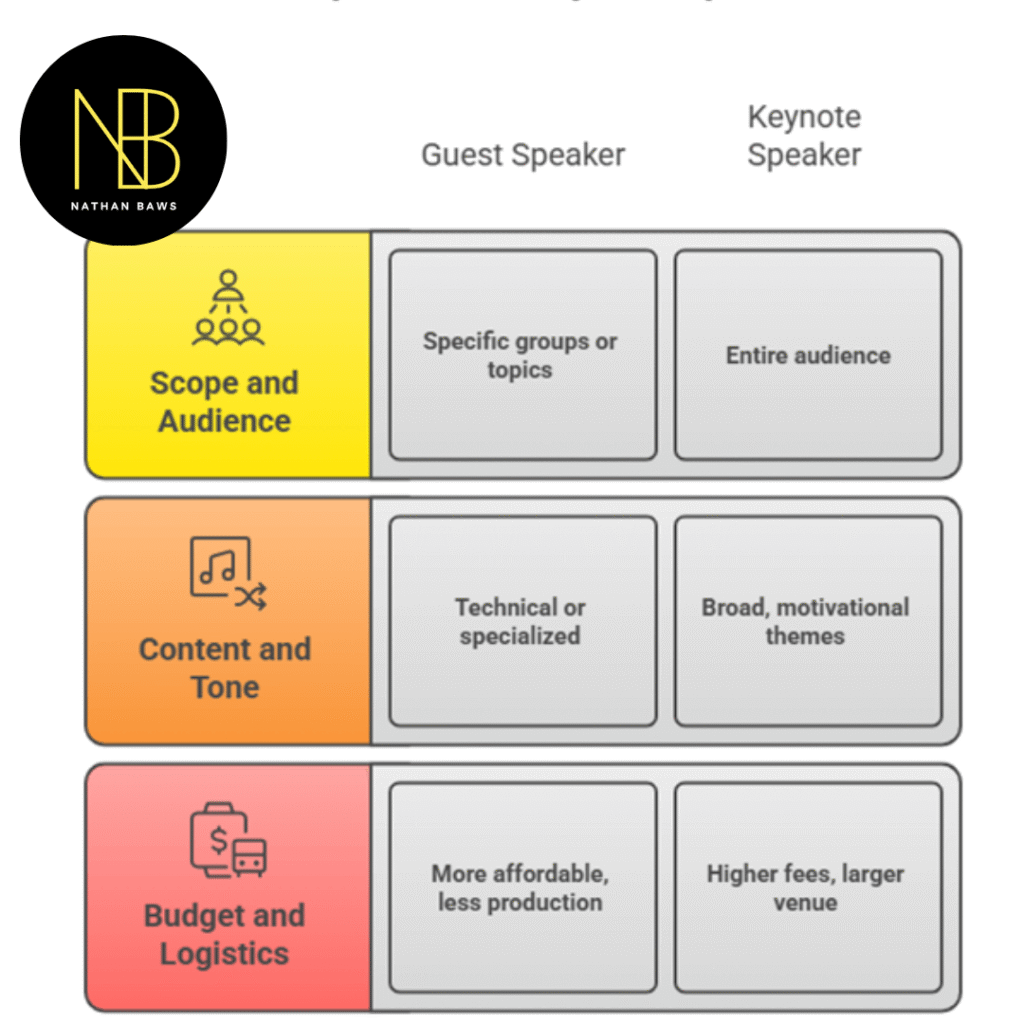
The operational scope of these two roles dictates how your venue is arranged and how your timeline is managed. Guest speakers focus on specific niche groups or isolated technical topics, while keynote speakers address the entire audience simultaneously.
Scope directly defines the depth of content versus the breadth of themes. This variance determines major logistical requirements such as room size assignments, specific AV needs, and seating layouts. Evaluating a Guest Speaker vs Keynote Speaker through the lens of audience scope helps you pick the right speaker type for each slot.
Content and tone
The fundamental nature of the material delivered varies widely between a Guest Speaker and a Keynote Speaker. Guest speakers deliver technical, highly specialised, and instructionally heavy content meant for immediate implementation.
Conversely, keynote speakers deliver broad, motivational, and strategically visionary themes. The tone for a guest speaker is typically instructional, academic, and highly practical. Meanwhile, a keynote tone is strategic, emotional, storytelling-driven, and fundamentally inspirational. Matching this tone to your primary event goals is vital for maximising attendee satisfaction.
Budget and logistics
From a financial and operational standpoint, the investment required for a Guest Speaker vs. a Keynote Speaker is vastly different. Keynote speakers are premium headliners who command significantly higher performance fees and require extensive main-stage venue support, advanced lighting, and immaculate sound design.
Guest speakers are usually more affordable, offer flexible booking terms, and require far less technical production. Comprehensive budget planning must account for these differences by factoring in travel overhead, specialised AV riders, speaker preparation timelines, and targeted promotional campaigns.
How to Decide Between a Guest Speaker vs Keynote Speaker
Define event goals
Your selection matrix must always start with crystalline event goals: are you prioritising technical learning, emotional motivation, corporate networking, brand repositioning, or direct sales pipeline velocity?
If your primary objective is tactical engagement and hands-on, practical learning, choosing a Guest Speaker vs. a Keynote Speaker will point you directly toward the guest speaker. If your event requires a singular, memorable message, corporate alignment, and high emotional impact, you must prioritise a keynote speaker.
Consider audience size and profile
The demographic makeup and sheer volume of your attendees will dictate which presentation style resonates most effectively. Smaller, highly specialised audiences composed of technical experts benefit immensely from guest speakers who can dive deep into industry complexities without losing the room.
Conversely, massive, mixed-demographic audiences require a keynote presentation that seamlessly connects diverse themes and provides broad, universally shared takeaways. Always balance the use of a Guest Speaker vs Keynote Speaker based on audience expectations to optimise overall event survey satisfaction scores.
Evaluate budget and timeline
Before signing any speaker management agreements, map out a realistic financial spend and an operational timeline for sourcing, briefing, and marketing your chosen talent. When reviewing a Guest Speaker vs Keynote Speaker, keep in mind that keynote speakers require substantial lead times – often six to twelve months – to accommodate complex travel, custom content creation, and extensive multi-channel promotional campaigns.
Guest speakers, by contrast, are typically much easier to secure at shorter notice, present lower financial risk, and require far simpler onboarding processes.
Practical Steps to Choose Guest Speaker vs Keynote Speaker
Create a clear brief
The foundation of a successful engagement lies in your initial documentation. Write a highly concise, comprehensive speaker brief that clearly outlines your organisational goals, audience personas, desired behavioral outcomes, and logistical frameworks.
Whether you are seeking a Guest Speaker vs Keynote Speaker, be sure to include hyper-specific details such as exact event dates, venue locations in Perth, expected registration counts, and specific AV capabilities. A crystal-clear brief ensures that both you and the incoming speaker align all performance expectations early in the planning lifecycle.
Assess speaker fit and experience
Do not rely solely on slick marketing showreels; proactively audit past full-length presentations, unedited audience feedback, and authentic recorded live talks to assess true fit. Look specifically for documented experience engaging Australian audiences and establishing localised relevance to the unique Perth corporate ecosystem.
When assessing a Guest Speaker vs Keynote Speaker, consider arranging a brief trial webinar, a preliminary video interview, or an intensive pre-event discovery call to thoroughly vet their delivery style, vocabulary, and energetic tone before issuing a formal contract offer.
Negotiate terms and rehearsal
A professional relationship requires an equitable, highly detailed contract. When hiring either a Guest Speaker or a Keynote Speaker, explicitly agree on the base speaker fee, localised travel allowances, dedicated rehearsal slots, and comprehensive intellectual property parameters for event video recordings.
Always mandate a formal tech run-through within the contract terms so the speaker can seamlessly calibrate their digital assets to your specific venue. Clear, transparent contracts drastically reduce last-minute operational friction and ensure a flawless, stress-free execution on event day.
How to Work With a Speaker for Best Results
Provide audience insights
To maximise the impact of your investment, actively share deep demographic data, pressing industry economic trends, and real attendee expectations with your selected presenter. This foundational data allows them to tailor their vocabulary and examples directly to the Perth market, driving deep practical relevance.
The core mechanics of a Guest Speaker vs Keynote Speaker both rely on this data. The more hyper-specific and honest your internal audience insights are, the more personalised, impactful, and memorable the resulting presentation will naturally be for the attendees.
Coordinate with AV and venue
Never leave technical execution to chance on the morning of the event. Ensure that comprehensive AV diagnostics and physical stage layouts completely satisfy your speaker’s technical rider well in advance of doors opening.
Rigorously test wireless microphones, high-definition display screens, and digital recording feeds to completely eliminate technical disruptions. For high-stakes keynote presentations, precise theatrical lighting, clear sightlines, and smart stage design can massively amplify the speaker’s emotional impact, which is a major point of divergence in the Guest Speaker vs Keynote Speaker logistics framework.
Plan audience engagement
Work collaboratively with your speaker to map out structured audience engagement strategies, such as live digital Q&A feeds, instantaneous mobile polling, or quick breakout discussions. Guest speakers thrive within highly interactive, small-group formats that allow for direct conversation.
Keynote sessions, because of their grand scale, require highly structured, beautifully timed engagement mechanisms designed for large rooms. Utilising modern event technology keeps audience energy focused and provides valuable real-time feedback data across both halves of the Guest Speaker vs Keynote Speaker spectrum.
Measuring Success: Metrics for Guest Speaker vs Keynote Speakers
Engagement metrics
To accurately evaluate performance, track granular session attendance numbers, voluntary participation rates in Q&A segments, and real-time mobile poll response volumes.
Carefully compare these engagement markers between your technical guest speaker breakout tracks and your main-stage keynote slots to evaluate relative audience impact. When contrasting a Guest Speaker vs Keynote Speaker, always deploy immediate, post-event digital surveys to capture qualitative attendee feedback while the experience is fresh in their minds.
Learning and outcome metrics
For specialised guest speakers, success is measured through tangible knowledge acquisition. Evaluate this via post-session assessments, workshop project completions, or practical workspace tasks executed by attendees.
For main-stage keynotes, success must be measured through qualitative inspiration, institutional cultural alignment, and a long-term intent to act. Tracking long-term attendance retention rates across multi-day events will clearly reveal how the balance of a Guest Speaker vs Keynote Speaker successfully maintained audience energy over time.
Commercial impact
For corporate organisers, success must eventually translate to the bottom line. Track qualified inbound leads, strategic corporate partnerships, and direct sales pipelines that stem from the event to evaluate true commercial return on investment.
When tracking a Guest Speaker vs Keynote Speaker, keynote speakers excel at shifting overarching brand perception and elevating market authority, while technical guest speakers excel at driving specific, immediate business development opportunities. Utilise your CRM tracking parameters to directly link post-event customer activity back to specific speaker sessions.
Local Considerations for Perth and Australian Events
Audience expectations in Australia
Australian corporate and institutional audiences possess a unique cultural filter; they deeply value authentic, no-nonsense delivery, highly practical takeaways, and real-world examples they can immediately apply within their local operations.
Perth audiences, in particular, lean strongly toward direct, action-focused, and highly transparent presentations that feature distinct local relevance. Whether you hire a Guest Speaker vs Keynote Speaker, it is absolutely crucial to ensure that your selected speaker thoroughly understands the nuances of the Australian business landscape and regional market trends.
Travel and timing
Perth’s geographic isolation from eastern Australian capitals introduces distinct logistical variables that demand meticulous scheduling. When coordinating a Guest Speaker vs Keynote Speaker, always build substantial buffers into travel schedules to account for cross-country flight delays, time-zone adjustments, and physical equipment transit.
Allow plenty of extra time for localised tech setups and on-stage rehearsals. When dealing with tight corporate windows or restrictive budgets, always evaluate premium hybrid or fully virtual presentation options to bridge geographic gaps.
Working with local suppliers
Whenever possible, partner with established, local Perth AV production firms and venue coordinators who possess deep familiarity with regional event spaces. Local event suppliers provide invaluable on-the-ground intelligence, dramatically reduce equipment shipping overhead, and eliminate unexpected logistical delays.
Whether your event relies heavily on a Guest Speaker vs Keynote Speaker, initiate communications with local suppliers early in your planning timeline to lock in preferred seasonal dates, premium equipment packages, and top-tier technical talent.
Case Studies: Successful Use of Guest Speaker vs Keynote Speaker
Professional conference in Perth
A prominent Western Australian resources and tech association hosted a multi-day conference utilising a distinct combination of both roles. In their pre-event planning, they mapped out the ideal deployment of a Guest Speaker vs Keynote Speaker. They secured a visionary keynote speaker to open the event, unifying a diverse crowd around the future of automation.
Following the keynote, they deployed highly technical guest speakers within localised breakout rooms to lead intensive masterclasses on software integration. Post-event analytical surveys showed unparalleled satisfaction scores, with attendees praising both the big-picture inspiration and the immediate tactical takeaways.
Corporate retreat
An expanding Australian financial services firm organised an intensive executive retreat designed to address shifting market conditions. When balancing the structure of a Guest Speaker vs Keynote Speaker, they opened the retreat with an emotional, storytelling-driven keynote speaker who successfully broke down internal departmental silos and realigned team culture.
Over the remaining days, specialised guest speakers were brought into private boardroom environments to facilitate direct tactical execution workshops. This strategic pairing resulted in a completely realigned management tier and measurable efficiency gains across the corporate structure.
Training and development day
A large public sector organisation designed a mandatory workforce training day by masterfully balancing presentation styles. They balanced the framework of a Guest Speaker vs Keynote Speaker by utilising an authoritative keynote speaker to open the morning, contextualising upcoming regulatory shifts and driving institutional buy-in.
The remainder of the day was led by expert guest speakers who delivered practical compliance instruction within interactive training labs. This approach ensured that all participants understood the broad strategic necessity while safely mastering the specific day-to-day regulatory procedures.
How Nathan Baws Can Help
Expertise and experience
Nathan Baws delivers highly practical, incredibly dynamic, and high-impact presentations tailored perfectly for modern Australian audiences. With a deep, proven background spanning intense corporate environments, entrepreneurial ventures, and specialised educational initiatives, Nathan understands how to hold a room.
When you are caught between hiring a Guest Speaker vs Keynote Speaker, Nathan’s versatile background allows him to serve both needs effectively. He possesses firsthand knowledge of what makes Perth and regional Australian audiences tick, ensuring every presentation lands with absolute authenticity. His unique delivery style seamlessly blends overarching organisational strategy with raw, real-world execution steps.
Customised content
Nathan rejects generic, cookie-cutter presentations. He collaborates with event organisers well ahead of time to craft a hyper-customised message that reflects your exact event goals and attendee profiles.
If your organisation is stuck deciding on a Guest Speaker vs Keynote Speaker, Nathan can help you structure the perfect mix. Whether you require a commanding, main-stage keynote address designed to inspire a crowded auditorium or an intensive guest speaker breakout session aimed at teaching specific growth strategies, Nathan recalibrates his content to suit. He participates in rigorous pre-event briefings to ensure his presentation matches your exact brief.
Easy booking and reliable delivery
Securing premium talent for your event shouldn’t be a logistical nightmare. Working with Nathan Baws means experiencing a seamless, highly professional onboarding process from initial inquiry to final applause.
Organisers receive transparent, comprehensive contract structures, organised logistical support materials, and enthusiastic pre-event collaboration. Whether you book Nathan as a Guest Speaker vs Keynote Speaker, reaching out early allows him the necessary time to dive deep into your organisation’s goals, creating a truly bespoke presentation that guarantees event success.
Budget Guide and Negotiation Tips
Estimating costs
When structuring your event’s financial blueprint, remember that the decision between a Guest Speaker vs Keynote Speaker represents a major financial pivot point. Keynote speakers represent a premium headline investment. Their professional fees reflect extensive customised preparation, massive audience reach, and the significant market draw they bring to your marketing materials.
Guest speakers generally represent a more accessible financial tier, allowing you to book multiple specialists across various breakout tracks. Always construct a comprehensive budget sheet that clearly separates baseline performance fees from secondary expenses like flights, accommodation, specialised AV requirements, and marketing assets.
Negotiation tips
If you are working with tight financial constraints, look for creative ways to offer mutual value to your prospective speaker beyond the monetary fee. Consider offering high-quality, multi-camera video recordings of their session, guaranteed introductions to executive-tier clients, or long-term multi-event contracts.
Additionally, you can negotiate alternative delivery formats when considering a Guest Speaker vs Keynote Speaker, such as a localised virtual appearance or a slightly condensed presentation slot, to seamlessly align their premium talent with your available budget.
Value beyond the fee
Always look at speaker acquisition through the lens of long-term asset generation rather than an immediate operational expense. A world-class keynote speaker can single-handedly drive early registration velocity, attract lucrative corporate sponsorships, and elevate your brand’s media coverage.
Simultaneously, tactical guest speakers provide immediate, measurable skill transfers that boost employee productivity or client retention. Balance your short-term cash flow realities against the long-term institutional value generated by high-caliber presenters when looking at the costs of a Guest Speaker vs Keynote Speaker.
Preparation Checklist for Organisers
Logistics and venue
- Finalise the physical venue layout, main-stage sightlines, and room seating configurations well in advance.
- Distribute complete venue technical specifications and emergency on-site contacts directly to the speaker’s team.
- Schedule a dedicated, uninterrupted technical rehearsal block for audio, video, and lighting adjustments.
- Confirm localised ground transportation, hotel accommodations, and dietary requirements for out-of-town talent, factoring in the different setup times for a Guest Speaker vs Keynote Speaker.
Content and branding
- Provide the speaker with comprehensive corporate branding guidelines, official event themes, and restricted vocabulary lists.
- Mutually agree upon presentation slide formats, aspect ratios, corporate logo usage, and co-branded social assets.
- Secure written, legally compliant intellectual property and media recording releases before production begins.
- Share a detailed event timeline illustrating exactly who introduces the speaker and who manages the transition off-stage, keeping the dynamic of a Guest Speaker vs Keynote Speaker clear for the MC.
Promotion and follow-up
- Launch targeted marketing campaigns early, highlighting the speaker’s unique insights to accelerate registration.
- Distribute engaging promotional media assets across email lists, corporate social channels, and localised press networks.
- Design structured post-event follow-up workflows, such as key takeaway summaries, session video links, and feedback surveys.
- Plan an internal debriefing session to evaluate performance data against your initial event benchmarks and ROI goals, noting how the Guest Speaker vs Keynote Speaker split impacted attendee reviews.
Conclusion
Mastering the operational differences between a Guest Speaker vs Keynote Speaker is a critical step in designing an impactful, highly professional event. By intentionally deploying guest speakers for granular, tactical masterclasses and booking keynote speakers for overarching theme-setting and emotional unity, you maximise your audience’s time and attention.
Whether you are coordinating an intimate corporate gathering in Fremantle or a massive national industry convention in the heart of the Perth CBD, matching your speaker selection to your strategic goals ensures lasting success. Balancing the unique benefits of a Guest Speaker vs Keynote Speaker guarantees a dynamic, world-class experience.
For tailored strategic advice, premium event booking, and a dynamic presentation that your attendees will reference for years to come, get in touch with Nathan Baws today.
Visit nathanbaws.com right now to check corporate calendar availability, request fee structures, and begin designing a customised session for your next major event in Perth or across wider Australia.
FAQs
What is the main difference between a keynote and a guest speaker?
Keynote speakers are contracted to address the entire event congregation simultaneously from the main stage, delivering a broad, visionary, and highly inspirational message that unifies the event’s theme.
Guest speakers are subject-matter specialists brought in to address specific, targeted sub-groups within smaller breakout rooms or workshops, focusing purely on tactical, deep-dive technical education. Understanding this core difference highlights why the choice of a Guest Speaker vs Keynote Speaker matters so much to organisers.
How do I pick between a guest speaker vs keynote speaker for a conference?
Your decision should be dictated by your primary event goals, overall audience scope, and available financial resources. Select a premium keynote speaker if your goal is to inspire a massive, diverse audience, establish brand authority, and set an overarching emotional tone.
Choose a guest speaker if you need to provide niche training, specialised technical case studies, and hands-on workshops to focused professional groups. Balancing a Guest Speaker vs Keynote Speaker layout ensures all bases are covered.
Are keynote speakers more expensive than guest speakers?
Yes, keynote speakers command significantly higher performance fees because they carry the marketing weight of the event, require custom presentation development, and possess a major industry draw.
Guest speakers are generally much more budget-friendly, making them highly efficient choices for multi-session breakout tracks. When budgeting for a Guest Speaker vs Keynote Speaker, keep in mind that travel, accommodation, and AV riders apply to both roles.
Can a speaker do both keynote and guest sessions at the same event?
Absolutely. It is common practice to retain a versatile speaker to deliver the opening morning keynote address to the entire crowd, and then lead a highly interactive, technical workshop session for a smaller group later in the afternoon.
This approach provides excellent value when looking at a Guest Speaker vs Keynote Speaker arrangement, but you must ensure that both distinct delivery styles and additional compensation are explicitly mapped out in the contract.
How far in advance should I book a keynote speaker in Perth?
It is highly recommended to secure your keynote speaker at least six to twelve months before your scheduled event date. High-calibre speakers manage complex international schedules, and booking early guarantees availability.
Furthermore, locking in your headliner early gives your marketing team a powerful asset to drive early-bird registration sales and secure corporate event sponsorships, which is a key advantage when locking down a Guest Speaker vs Keynote Speaker.
What should be in a speaker brief?
A comprehensive speaker brief must include detailed event objectives, deep audience demographic profiles, explicit behavioural goals, and precise logistical timelines.
Additionally, it should outline exact venue specifications, required audio-visual capabilities, corporate branding guidelines, and the key thematic messages your organisation needs emphasised. A thorough brief enables the presenter to understand their role as a Guest Speaker vs Keynote Speaker and customise their content flawlessly.
How can I measure the impact of a keynote or guest speaker?
Impact can be tracked by gathering quantitative engagement metrics, such as session check-in volumes, live digital polling response rates, and Q&A participation levels.
Additionally, you should distribute immediate post-event surveys to collect qualitative data regarding attendee satisfaction, knowledge acquisition, and long-term intent to act. For corporate teams assessing a Guest Speaker vs Keynote Speaker, tracking post-event sales pipeline velocity reveals true commercial ROI.
Is it better to hire a local Perth speaker?
Hiring a talented local Perth speaker offers great benefits, such as completely eliminating interstate travel costs, simplifying short-notice logistics, and providing a deep local market context that resonates naturally with Western Australian attendees.
However, when organising a Guest Speaker vs Keynote Speaker strategy, you should always prioritise a speaker’s specific topic expertise, proven presentation track record, and cultural fit over their geographic location alone.
Can virtual speakers replace live guests or keynote speakers?
Virtual speakers serve as an excellent, budget-conscious alternative when dealing with restrictive financial boundaries or sudden travel disruptions.
While a virtual presentation may lack some of the visceral, high-energy presence of a live speaker on stage, you can still achieve massive audience impact across a Guest Speaker vs Keynote Speaker model by employing professional multi-camera broadcasting layouts, premium audio equipment, and interactive digital engagement tools.
How do I contact Nathan Baws for speaking enquiries?
You can easily initiate a booking discussion by visiting the official website at nathanbaws.com, where you can access direct contact channels and submit a comprehensive event inquiry form.
Be sure to provide your planned event dates, venue location, estimated audience size, and primary organisational goals. Nathan’s team will promptly review your submission to discuss calendar availability, fee structures, and custom content design across the Guest Speaker vs Keynote Speaker spectrum.