Introduction
The digital landscape shifts at a dizzying pace. Technologies that were considered cutting-edge last year are now foundational, and tactics that once yielded high conversion rates are falling flat. For businesses aiming to stay ahead of the curve, listening to a seasoned professional is often the catalyst for real operational change.
When searching for a qualified speaker, organisations look for more than just theoretical knowledge. They seek actionable insights, real-world case studies, and a clear roadmap to navigate the modern internet economy.
Nathan Baws has established a reputation for delivering exactly that. By breaking down complex algorithmic shifts into practical business moves, audiences leave his sessions equipped to optimise their marketing funnels immediately. Let’s dive deep into the core frameworks and lessons that define high-impact digital growth today.
The Evolving Role of a Keynote Speaker in Digital Marketing
A truly impactful presentation goes beyond just defining what SEO or PPC means. Today, a digital marketing specialist must act as a bridge between high-level corporate vision and down-to-earth execution.
Why Static Marketing Strategies Fail
Many organisations find themselves trapped in a cycle of outdated methodologies. They rely on strategies that worked five years ago, wondering why their customer acquisition costs are skyrocketing.
The digital space demands continuous agility. A keynote address serves as a wake-up call, shaking up comfortable but stagnant internal paradigms and introducing modern alternatives that maximise return on investment (ROI).
Bridging the Gap Between Tech and Executive Vision
One of the primary challenges in modern enterprise environments is communication. The technical teams understand data analytics and code, while the executive suite focuses on profitability and market share.
An experienced industry presenter speaks both languages. By translating complex data frameworks into clear financial outcomes, they help unify teams around a single, cohesive growth trajectory.
Core Frameworks for Modern Business Growth
To move the needle, businesses must move away from vanity metrics. Likes, shares, and superficial impressions do not pay the bills. True digital mastery focuses on revenue-generating actions.
1. Data-Driven Customer Journey Mapping
Every customer leaves a digital footprint. Understanding this trail is the first step toward building an automated, high-conversion pipeline.
Understanding Intention-Based Search
Audiences do not stumble upon products. They are searching for answers to specific, underlying problems.
By analysing search intent, businesses can tailor their content to meet users exactly where they are in their decision-making process, shifting from aggressive pitching to providing organic assistance.
Eliminating Friction Points in the Funnel
A friction point is anything that slows down or prevents a customer from completing a purchase. This could be a slow-loading website page, an overly complicated checkout form, or confusing messaging.
During live workshops, mapping these barriers allows teams to visually identify revenue leaks and quickly patch them.
2. Omnichannel Strategy vs. Multichannel Chaos
There is a massive difference between having an active presence across multiple channels and running a unified omnichannel ecosystem.
Defining True Channel Integration
Multichannel marketing simply means you are posting content on Facebook, LinkedIn, Google, and email separately.
Omnichannel marketing means these channels communicate with one another. If a customer views a product via an email blast, your social media ads change to reflect that exact product, creating a fluid, unified user experience.
Creating a Consistent Brand Narrative
Consistency builds trust. If your brand voice feels professional on LinkedIn but completely chaotic on TikTok, your target demographic will feel disconnected.
A skilled speaker and digital marketing authority will emphasise building a centralised brand manual that governs every piece of public-facing creative execution, regardless of the platform.
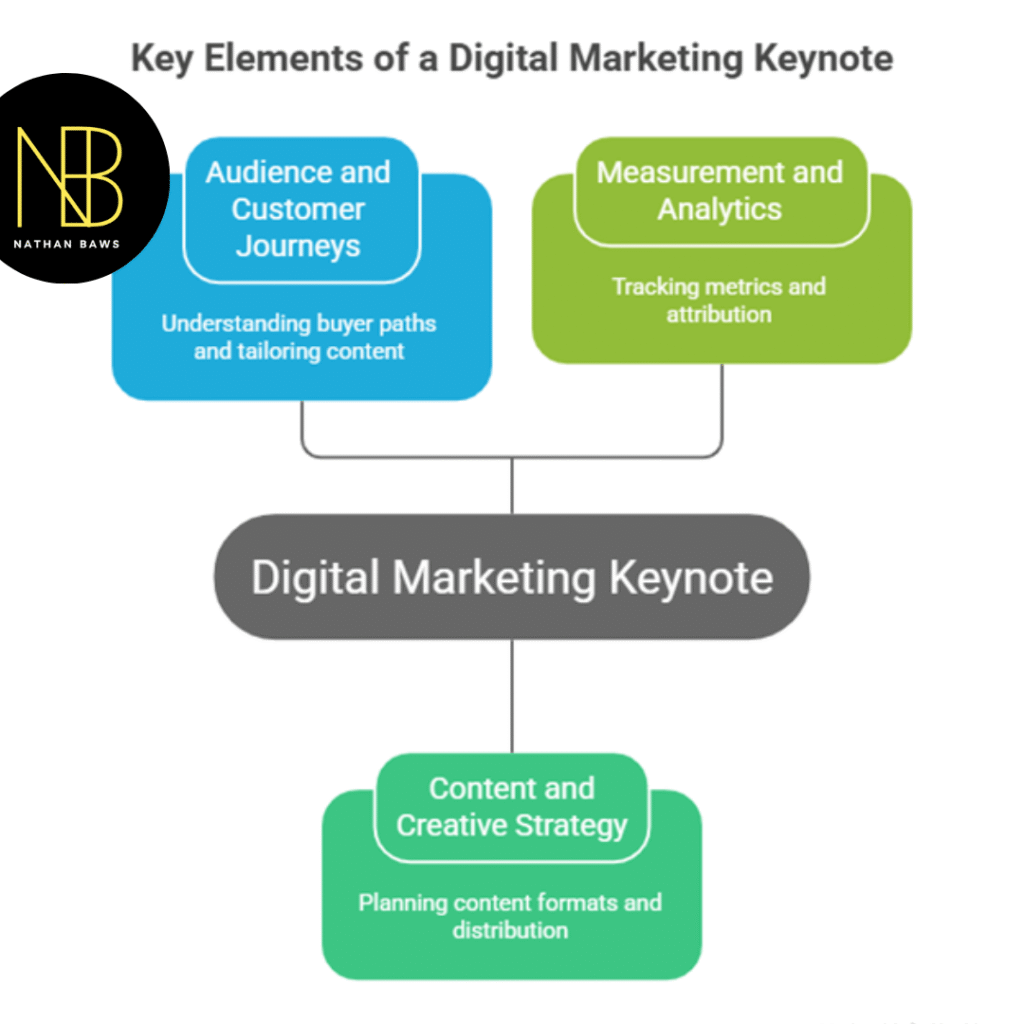
Leveraging Advanced Technologies Without Losing the Human Touch
Artificial Intelligence (AI) and automation are changing the foundation of content creation and customer service. However, relying too heavily on technology can strip your brand of its identity.
HumanisiHumanisingAutomation
AI should be treated as an assistant, not a replacement for human creativity and emotional connection.
Predictive Analytics for Better Resource Allocation
AI excels at sorting through massive datasets to find hidden consumer trends.
By leveraging predictive analytics, brands can forecast seasonal shifts in consumer demand, allowing marketing teams to allocate their ad spend much more efficiently before the competition even notices the trend.
The Risk of Automated Generic Content
The market is currently flooded with generic, AI-generated blog posts and social updates. Consumers have developed a keen sense for this and quickly tune it out.
To stand out, businesses must infuse their content with unique perspectives, proprietary data, and real human stories that software simply cannot replicate.
Maximising Personalisation at Scale
Customers no longer respond well to generic mass emails. They want personalised experiences tailored precisely to their needs.
Dynamic Website Experiences
Imagine a website layout that adapts to the visitor. If a return B2B client lands on your homepage, they should see a customised portal. If a brand-new retail customer arrives, they should be greeted with an introductory educational offer. This level of dynamic personalisation is what separates industry leaders from lagging competitors.
Behaviour-Triggered Email Workflows
Instead of blast-emailing your entire subscriber database every Tuesday, top-performing organisations rely on behavioural triggers.
If a user downloads a specific whitepaper, they automatically enter a targeted email sequence that expands on that exact topic, guiding them down the funnel with relevance.
The Metrics That Actually Matter: Shifting Away from Vanity
It is easy to get caught up in green arrows on an analytics dashboard. But if those numbers do not translate to bank deposits, they are nothing more than noise.
Conversion Rate Optimisation (CRO)
Driving traffic to a web property is only half the battle. The real work begins when you try to convert anonymous visitors into qualified leads.
A/B Testing Frameworks
You should never guess what design or copy works best. A/B testing allows you to pit two distinct versions of a landing page against each other to see which one performs better empirically.
Even a minor 0.5% increase in conversion rates can translate to tens of thousands of dollars in added revenue over a financial quarter.
User Experience (UX) Adjustments
Simple fixes often yield the biggest returns. Moving a call-to-action button above the fold, clean formatting, and simplifying navigation menus can completely revitalise an underperforming web page.
Insights from a speaker, a digital marketing professional, often emphasise looking at your website through the eyes of a frustrated, busy user.
Customer Lifetime Value (LTV) vs. Customer Acquisition Cost (CAC)
The health of a modern business relies on the balance between how much it costs to win a customer versus how much profit that customer generates over time.
| Metric | Definition | Ideal Business Goal |
| CAC | Cost to acquire a customer | Keep as low as possible through optimization |
| LTV | Lifetime value of a customer | Maximize via retention and upselling |
| Ratio | LTV to CAC comparison | Aim for a healthy 3:1 ratio or higher |
Lowering Acquisition Costs Through Organic SEO
Paid advertising is an excellent way to get immediate traffic, but the moment you stop paying, the traffic stops.
Investing in high-quality search engine optimisation (SEO) creates a sustainable asset that brings in qualified inbound leads day and night without ongoing ad spend.
Boosting Retention with Exceptional Post-Purchase Content
The sale doesn’t end when the checkout is complete. By keeping your current clients engaged with educational onboarding materials, product updates, and VIP offers, you maximise their lifetime value and transform them into active brand advocates.
Future-Proofing Your Digital Presence
The digital marketing landscape will continue to evolve. To maintain a competitive edge, businesses must look forward and prepare for the next wave of shifts.
Preparing for a Privacy-First Web
With search engines phasing out third-party cookies and global privacy laws tightening, traditional targeting methods are becoming obsolete.
Prioritising Data Collection
Brands must build their own data ecosystems. This means growing your own email newsletters, creating proprietary online communities, and offering genuine value in exchange for user information.
When you own the data, you are no longer at the mercy of sudden platform policy changes.
Building Brand Trust as a Core Asset
In an era of deep fakes and data leaks, transparency is an incredible competitive advantage.
Clearly communicating how you protect user information and staying open about your business practices builds a deep sense of loyalty that competitors cannot easily disrupt.
The Rise of Alternative Search Interfaces
People are no longer just typing queries into a standard search box. The way we look for information is changing rapidly.
Optimising and Conversational AI
With smart speakers and conversational AI assistants handling more daily queries, search optimisation is shifting toward long-tail, natural phrases.
Content needs to be formatted to directly answer conversational questions clearly, concisely, and with authority.
Visual and Social Search Adoption
Younger generations are increasingly using platforms like Instagram and TikTok as search engines to find restaurants, products, and lifestyle advice.
Brands must adapt their content strategy to include highly engaging, searchable video elements to ensure they remain discoverable across these evolving channels.
Implementing the Lessons: From Audience Member to Market Leader
Attending a presentation or reading an educational guide is step one. The real magic happens during execution. Nathan Baws frequently stresses that information without execution is entirely useless.
Starting Small with Micro-Campaigns
Do not try to overhaul your entire corporate enterprise marketing setup overnight. Start by launching small, isolated test campaigns to practice new strategies without putting major budgets at risk.
Analyse performance data, refine your approach, and scale up once you have proof of concept.
Building a Culture of Internal Agility
Encourage your marketing teams to experiment and view missed marks as valuable learning data.
The companies that dominate the digital marketplace are not those that never make mistakes; they are the ones that learn, pivot, and iterate faster than anyone else in their niche.
Summary of Key Frameworks
To recap, building an unstoppable digital presence requires mastering a few core pillars:
- Intention-Based Mapping: Aligning your content directly with user search intent.
- True Omnichannel Integration: Unifying your channels for a seamless customer experience.
- Balanced Automation: Using AI to scale efficiency while maintaining a human brand touch.
- Focus on Core Metrics: Prioritising conversion rates and LTV/CAC ratios over vanity metrics.
- Future-Proofing: Preparing for privacy-first web regulations and alternative search interfaces.
Frequently Asked Questions
What does a speaker, digital marketing expert,t actually do?
A digital marketing professional delivers educational presentations, keynotes, and hands-on workshops designed to help companies understand modern online growth strategies. They break down complex topics like SEO, AI automation, conversion rate optimisation, and data privacy into clear, actionable steps that teams can implement immediately to drive ROI.
How do I know if our company needs a digital marketing keynote speaker?
If your marketing results have plateaued, your customer acquisition costs are rising, or your internal teams are struggling to keep pace with algorithmic changes, an outside perspective is highly valuable. A keynote session helps align your staff, breaks down corporate silos, and introduces fresh frameworks to revitalise your overall growth strategy.
What is the difference between vanity metrics and actionable metrics?
Vanity metrics include likes, page impressions, and follower counts on social media. While they look great on paper, they do not directly measure business revenue. Actionable metrics focus on actual performance, such as conversion rates, customer acquisition costs (CAC), lifetime value (LTV), and overall email click-through rates.
How can businesses prepare for a cookie-less future?
To prepare for a privacy-first web, businesses must prioritise gathering first-party data. This involves building out your own email lists, creating engaging loyalty programs, and offering premium downloadable assets. Relying on your own data ecosystem ensures you stay independent of changing third-party platform algorithms.
How can small businesses implement these strategies on a tight budget?
You do not need an enterprise-level budget to achieve incredible digital marketing results. Focus heavily on organic search engine optimisation (SEO) by producing outstanding, high-intent content that solves user problems. Additionally, use free or low-cost automation tools to handle basic customer workflows, and run highly targeted, low-budget social ad sets to test your offers before scaling.
What makes Nathan Baws different from other marketing speakers?
Nathan Baws brings a balance of high-level strategic vision and actual, practical execution to the stage. Instead of focusing entirely on high-level theory, his presentations feature real-world case studies, clear data frameworks, and immediate, actionable steps designed for teams to execute the moment the conference wraps up.
How often should a company audit its digital marketing funnel?
Ideally, a comprehensive audit should be conducted biannually or at the start of every major fiscal year. However, core performance metrics such as traffic bounce rates and conversion rates should be monitored weekly to catch minor system friction points before they turn into costly pipeline errors.
What role does storytelling play in high-performance digital marketing?
Storytelling is the bridge that turns a generic transaction into brand loyalty. While algorithms control visibility, human emotion drives conversions. A key piece of advice often shared by industry veterans is to focus content strategies on user-centric stories that highlight client transformations rather than just listing corporate product features.
Why is conversion rate optimisation (CRO) considered more valuable than driving new traffic?
Driving traffic can become incredibly expensive, especially as digital ad spaces become highly competitive. CRO focuses on maximising the value of the traffic you already have. Doubling your conversion rate yields the same revenue increase as doubling your traffic, but it usually costs a fraction of the budget.
Can corporate keynotes be customised for specific industry niches?
Yes, professional presentations are highly tailored. Whether your business operates in B2B enterprise SaaS, consumer retail, or specialised healthcare, a seasoned digital communicator adjusts the case studies, frameworks, and technological insights to align precisely with your market’s regulatory environment and buyer behaviour.
Also Read: 10 Entrepreneurial Growth Strategies You Haven’t Tried Yet-Nathan Baws’ Approach