Introduction
The global corporate events landscape is experiencing a massive shift. The era of generic, slide-heavy futurism is officially over. Today, enterprise boards, conference organisers, and booking managers are demanding something far more substantial: actionable, evidence-based insights that bridge the gap between cutting-edge technology and human capability.
At the absolute epicentre of this transformation is the booming AI keynote market.
As organisations rush to integrate generative artificial intelligence, machine learning, and automated governance systems into their day-to-day operations, the demand for world-class keynote speakers who can credibly unpack these topics has skyrocketed. But the market has matured rapidly. Audiences no longer want to see a live demo of a text-to-image generator; they want to know how artificial intelligence will reshape their business models, their workforce structures, and their industry regulations over the next decade.
For platforms like Nathan Baws– focused on high-impact professional development, leadership training, and future-ready business strategies- understanding the current dynamics of the speaking industry is essential.
Let’s dive deep into the forces driving the AI speaking circuit, explore the exact selection criteria leading enterprise planners use, and map out the specialty lanes defining the market.
The Evolution of the AI Keynote Market: Moving Past the Hype
The corporate speaking industry has always been a reliable barometer for executive anxiety and corporate investment. When a major technological shift occurs, it hits the conference stage first. However, the trajectory of artificial intelligence on the global stage has outpaced almost every other tech trend in recent history.
To truly understand where the market sits today, we have to look at how the conversation has evolved over the past few years.
From “What is AI?” to “How Do We Scale Safely?”
In the initial wave of the generative AI boom, events were flooded with introductory sessions. Audiences wanted basic literacy. Presentations were dominated by awe-inspiring statistics about data processing, live demonstrations of prompt engineering, and broad, sweeping predictions about the future of automation.
Today, the market has reached a critical stage of maturity. The novelty has worn off, and enterprise buyers are facing real-world operational challenges. Corporate audiences are asking much tougher questions:
- How do we bridge the human capability gap during an AI-led transformation?
- What are the legal, ethical, and compliance frameworks required to protect our proprietary data?
- How does a traditional business model pivot to become AI-native without destroying its core culture?
This shift has fundamentally changed what makes a successful presentation. The speakers commands the highest fees and the most prestigious stages are no longer just commentators; they are practitioners, researchers, and operators who have actively built, regulated, or managed these technologies in high-stakes environments.
The Rise of the Specialist Lane
Because artificial intelligence touches every single facet of modern business, the concept of a general “tech speaker” is fast becoming obsolete. The market has splintered into highly distinct, specialised lanes.
A medical summit addressing automated diagnostic tools requires a completely different voice than a retail leadership retreat exploring algorithmic supply chains or a banking board analysing predictive risk models. Event planners now curate their lineups with surgical precision, matching specific organisational pain points to speakers who possess deep, unassailable domain expertise.
What Event Planners Look for When Booking Top Keynote Speakers
With thousands of presenters updating their bios to include “AI Expert,” corporate booking managers and event organisers have had to develop incredibly rigorous filtering mechanisms. The financial and reputational stakes of a high-profile corporate event are simply too high to risk on a speaker whose knowledge is only skin-deep.
Drawing insights from industry benchmarks- including the comprehensive criteria outlined in The Event Planner’s Guide to Australia’s Best AI Keynote Speakers (2026) compiled by futurist Anders Sörman-Nilsson- we can isolate the seven non-negotiable standards that define premier talent in the current market.
1. Verifiable, Core Expertise
True market leaders don’t just include a slide about artificial intelligence at the end of a general business presentation; it is the absolute anchor of their current practice. Planners look for a demonstrable track record of active research, software development, corporate governance, or direct industry deployment. The speaker’s frameworks must be built on first-hand experience rather than repackaged industry consensus or curated news headlines.
2. Tier-1 Enterprise Engagement
A speaker’s client roster is one of the most reliable indicators of their market authority. Premier talent boasts documented engagement with Fortune 500 companies, ASX 200 enterprises, major government departments, and peak global industry associations. If a speaker is trusted to brief a multinational banking board or open a global tech summit, it proves their messaging can withstand intense professional scrutiny.
3. Published Long-Form Thought Leadership
In a fast-moving market, short-form social media commentary and basic blog posts are no longer enough to establish true authority. High-calibre keynote speakers are almost always backed by substantial, published bodies of work. This includes peer-reviewed academic papers, comprehensive industry white papers, or bestselling books published by reputable global houses. These texts serve as the intellectual foundation for their on-stage presentations.
4. Independent Third-Party Recognition
Credibility on the stage is directly linked to status off the stage. Top-tier presenters hold verified external validations, such as academic appointments at leading universities, prestigious industry awards, positions on government advisory boards, or regular features as subject-matter experts in elite media outlets like the Australian Financial Review, The Wall Street Journal, the BBC, or Forbes.
5. Original Intellectual Property (IP)
The speaking market rewards original perspectives. Planners actively filter out presenters who merely repeat widely available statistics or summarise public reports. Instead, they seek out individuals who have developed proprietary models, unique diagnostic frameworks, or distinct methodologies that give audiences a completely new way to conceptualise and solve their technological challenges.
6. Active, High-Frequency Stage Practice
The dynamics of live storytelling are vastly different from written analysis. A brilliant researcher or a successful founder isn’t automatically a compelling presenter. Planners look for individuals who are actively keynoting, with a proven track record of delivering highly rated presentations within the last twelve months. This ensures their stagecraft is sharp, their timing is precise, and their content is fully optimised for live audience engagement.
7. Geographic and Cultural Relevance
While top-tier talent frequently presents on global stages, event organisers place immense value on localised relevance. For an event held in the Asia-Pacific region, for example, a speaker must understand the specific regulatory frameworks, economic conditions, workforce dynamics, and cultural nuances of that market. They must be able to translate global technological shifts into immediate, practical realities for the local professionals sitting in the room.
Mapping the Market: The Top Specialty Lanes and Voices Shaping 2026
To understand how professional stages are being structured, it is helpful to look at the specific categories of expertise that corporate buyers are investing in. The modern AI speaking ecosystem can be broken down into several primary lanes, each serving a distinct event purpose.
Academic, Research, and Deep Tech Authority
This lane is reserved for the pure scientists, computer engineers, and institutional researchers who are actively inventing the future. These presentations are highly authoritative, deeply factual, and focused on the foundational realities of computer science.
A prime example of this level of authority is Scientia Professor Toby Walsh from UNSW Sydney. As the Chief Scientist at the UNSW AI Institute and a globally cited academic voice, Professor Walsh brings an unassailable level of scientific credibility to the stage. His presentations- drawn from his extensive books like Machines Behaving Badly and The Shortest History of AI– bypass corporate buzzwords to deliver profound insights into the structural, mathematical, and ethical realities of the technology. These voices are ideal for policy forums, academic summits, and deep-tech governance briefs.
AI and the Future of Work
How does a workforce adapt when their core tools change overnight? This lane focuses heavily on organisational culture, leadership, agility, and the human elements of corporate transformation. It addresses the practical realities of managing hybrid teams, reskilling workers, and overcoming organisational inertia.In this space, figures like Dom Price (Partner at Be Luminous and former long-serving Work Futurist at Atlassian) are highly sought after. Price’s work zeroes in on the human capability gap, exploring exactly why most corporate technological transformations stall. Rather than focusing purely on the software, these presentations look at the team dynamics, psychological safety, and cultural conditions required to make technological integration a commercial success.
Business Transformation and Strategic Leadership
This category is built for C-suite executives, directors, and corporate strategists who need to understand how to leverage artificial intelligence to drive revenue, optimise operations, and outmanoeuvre competitors. It is highly commercial, practical, and focused on execution.
This lane features heavy-hitting corporate operators like:
- Mike Walsh: A global futurist who spends his life tracking emerging business models across the globe, helping companies design data-driven, algorithmic corporate structures.
- Stephen Scheeler: The former CEO of Facebook Australia and New Zealand, who brings unparalleled executive experience in scaling massive digital ecosystems and leading through disruptive change.
- Andy Lark: A globally recognised CMO and enterprise leader who helps brands navigate the intersection of technological transformation and customer experience.
Ethics, Governance, and Responsible Deployment
As regulatory bodies worldwide introduce strict guidelines around automated data usage, algorithmic bias, and digital privacy, corporate compliance has become a massive boardroom priority. This lane addresses the vital frameworks required to scale technology safely, ethically, and legally.
Leaders in this sector include Dr Catriona Wallace, an acclaimed AI entrepreneur and founder of the Responsible Technology Institute, and Professor Nicholas Davis. Their presentations provide boards and executive teams with clear, actionable frameworks to navigate the complex moral and regulatory landscapes of the digital age, ensuring that commercial innovation does not come at the expense of ethical integrity or corporate legal compliance.
Humanist AI and Digital Strategy
Technology never exists in a vacuum; it is ultimately used by people to serve people. This lane blends deep strategic foresight with a profoundly humanistic perspective, exploring how businesses can use advanced tools to deepen customer relationships, elevate human creativity, and design sustainable futures.
Maximising the Impact of a Keynote: The Event Planner’s Checklist
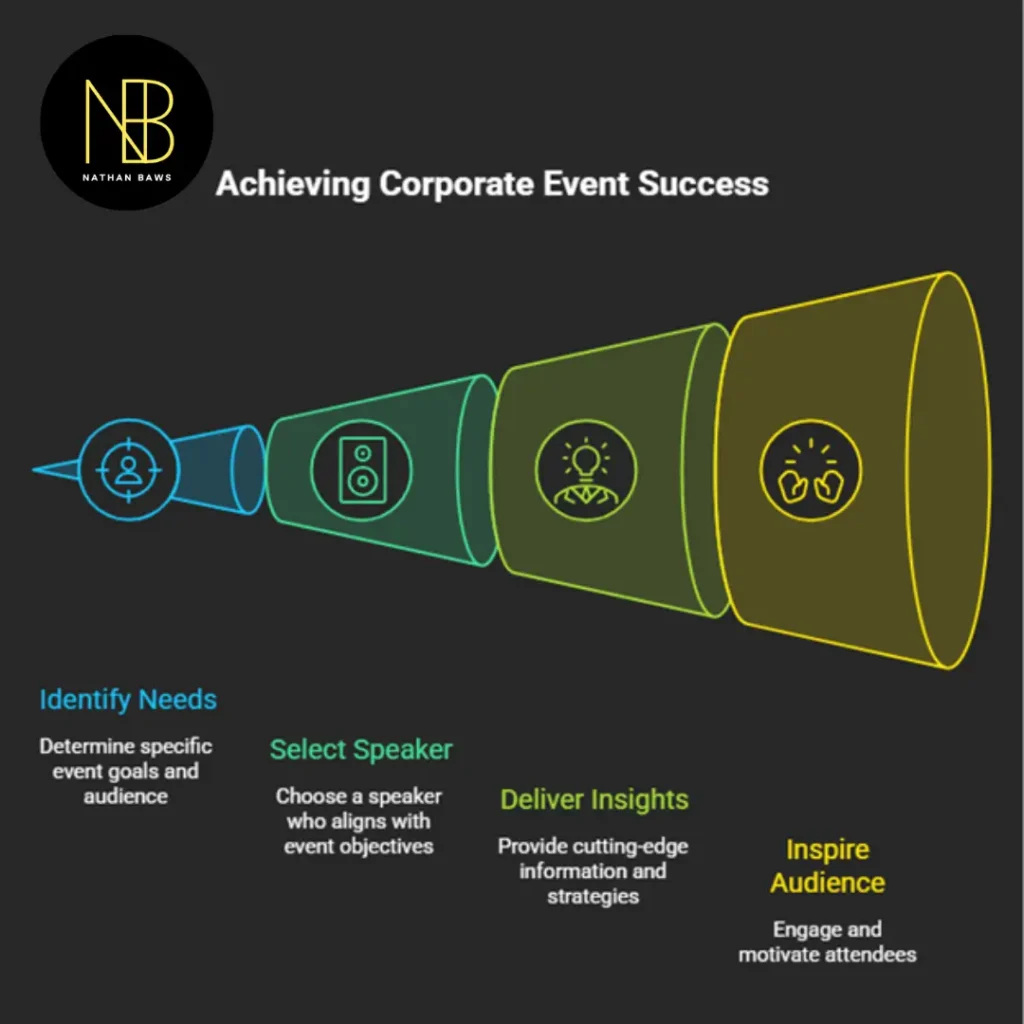
Booking the right talent is only half the battle. To ensure a corporate presentation truly resonates and delivers a return on investment, event organisers must carefully design the surrounding experience.
If you are planning an upcoming corporate conference, leadership summit, or professional development event, use this strategic checklist to maximise the value of your keynote session:
- Align the Lens to the Audience: Ensure the speaker’s specialty lane directly matches the primary pain point of your attendees. Do they need deep scientific reassurance (Academic), operational execution strategies (Business Transformation), or a clear look at workforce cultural impacts (Future of Work)?
- Facilitate Deep Customisation: Provide the speaker with a detailed pre-event briefing. Share your organisation’s specific strategic goals, current technological hurdles, and internal terminology so they can tailor their examples and frameworks directly to your company’s reality.
- Design for Interactive Q&A: Allocate dedicated time for audience interaction. A truly brilliant speaker shines during unscripted Q&A sessions, where they can give direct, real-time advice on the specific challenges raised by your leadership team or delegates.
- Anchor with Original IP: Choose speakers who can provide a concrete model or framework that attendees can physically write down and take back to their desks. This ensures the impact of the presentation extends far beyond the final round of applause.
Elevate Your Next Corporate Stage
The rapidly growing AI keynote market underscores a fundamental truth about modern business: keeping pace with technological change requires continuous, high-level professional learning. Whether you are a corporate executive looking to reshape your business strategy or an event planner tasked with inspiring an international audience, the voice you put on your stage matters.
At Nathan Baws, we specialise in delivering the cutting-edge insights, high-impact leadership strategies, and professional development resources required to thrive in a rapidly changing business environment. Let’s work together to make your next corporate event an unforgettable success.
Also Read: How to Choose and Work with Key Speakers in Perth
Frequently Asked Questions (FAQs)
What exactly is the AI keynote market?
The AI keynote market refers to the highly specialised segment of the professional corporate speaking industry focused on artificial intelligence, machine learning, and automation. It comprises researchers, tech founders, futurists, and corporate operators who are hired by enterprises, bureaus, and event planners to deliver high-impact presentations on how advanced digital tools are altering business, society, and industry regulations.
Why is the demand for specialised tech presenters growing so rapidly?
As artificial intelligence transitions from a speculative future concept into an immediate operational necessity, companies are facing intense pressure to adapt. Generalist speakers can no longer address the highly complex technical, ethical, and organisational questions that boards and executives have. Specialised presenters provide the actionable frameworks and deep industry domain expertise required to guide real-world corporate execution.
How do premier corporate event planners verify the credibility of a speaker?
Planners use a rigorous multi-point verification process. They look for genuine, first-hand professional or academic experience in computer science or corporate transformation, a proven track record of keynoting for top-tier Fortune 500 or ASX 200 companies, a substantial body of published long-form work (such as books or peer-reviewed white papers), and verified independent recognition from elite academic institutions or national media outlets.
What is the difference between an AI futurist and an AI operator on stage?
An AI futurist typically focuses on long-term trends, market foresight, human-machine collaboration, and macro-economic shifts, helping organisations conceptualise where their industry is headed. An AI operator or founder focuses on the immediate, practical realities of building, coding, deploying, and managing technology, offering tactical, hands-on insights derived from running tech companies or engineering platforms.
How much time should be allocated for a professional keynote session?
The industry standard for a premier keynote presentation is typically 45 to 60 minutes. This usually breaks down into 35 to 45 minutes of structured, high-impact storytelling and visual presentation, followed by 15 minutes of interactive, audience-led Q&A. This balance ensures the speaker can deliver a comprehensive narrative while still addressing specific individual audience inquiries.
Why is published thought leadership so important for keynote talent?
Published work- such as books from global publishing houses or peer-reviewed institutional research- serves as proof that a speaker’s ideas have undergone extensive editorial and professional review. It indicates that the presenter has a deeply considered, highly structured body of original intellectual property, rather than just a collection of surface-level observations or internet statistics.
Can a single speaker cover both technical coding and corporate governance?
It is incredibly rare. The market has become highly specialised because the skills required to write advanced algorithmic code are completely distinct from the legal, ethical, and strategic frameworks needed to manage corporate compliance and boardroom risk. Event organisers generally prefer to book specialised talent for each distinct area to ensure maximum depth of insight.
How far in advance should an organisation book a top-tier speaker?
For premier international talent and highly sought-after industry specialists, it is best to secure bookings 6 to 12 months before the event date. Many top-tier presenters travel extensively across global circuits and have highly congested schedules, particularly during peak corporate conference seasons (typically autumn and spring).
What are the most critical ethical concerns addressed in modern AI keynotes?
Presentations focused on ethics and governance primarily address algorithmic bias, data privacy protection, copyright infringement, transparent decision-making models, and the responsible management of workforce displacement. Speakers help organisations establish robust internal compliance frameworks to ensure their technological implementations align with global legal standards and human rights principles.
How does localisation impact the effectiveness of a technological presentation?
Technology operates globally, but business operates locally. A presentation that fails to account for regional compliance laws, local economic data, market-specific workforce cultures, and distinct regional consumer behaviours will feel disconnected from the audience’s daily reality. Top-tier presenters always customise their global insights to align perfectly with the local context of the room.