Introduction
The modern corporate landscape is undergoing a profound transformation. As fast-paced technological advancements, shifting workforce dynamics, and economic pressures converge, corporate environments face unprecedented volatility. Organisations can no longer rely on traditional playbooks to navigate these disruptions. Survival and subsequent success require a fundamental shift in executive strategy.
When businesses look to anchor their teams during times of transition, bringing in an external authority can be the catalyst for real change. Engaging an experienced Leadership Speaker offers more than a simple morale boost; it introduces objective clarity, actionable corporate frameworks, and proven methodologies to help cross-functional teams align behind a unified vision. Drawing upon fresh insights from top event themes and corporate discussions across Australia, this comprehensive guide explores the essential pillars of modern corporate governance and operational resilience.
The Evolving Corporate Ecosystem and the Future of Work
The traditional parameters of the workplace have fundamentally changed. Executive teams are no longer tasked with simply managing local operations; they are responsible for orchestrating highly distributed networks, managing complex digital architectures, and leading multi-generational teams. To remain competitive, modern corporate frameworks must adapt to these shifting structural foundations.
Bridging Generational Shifts and Workplace Expectations
One of the most complex challenges facing executives today is managing a multi-generational workforce. For the first time in modern economic history, corporate spaces see a simultaneous convergence of Baby Boomers, Gen X, Millennials, and Gen Z, with Gen Alpha rapidly approaching the horizon. Each demographic brings distinct communication preferences, contrasting technical literacies, and different professional expectations.
A seasoned Leadership Speaker frequently highlights that modern talent retention hinges on intergenerational fairness and flexible engagement strategies. Rather than forcing diverse teams into a rigid, outdated corporate template, modern frameworks must pivot towards adaptive management. This involves establishing clear professional milestones, developing robust internal mentorship channels, and creating an inclusive corporate environment where every demographic feels valued and aligned with the overarching commercial objectives.
Balancing Hybrid Models with Organisational Cohesion
The debate surrounding hybrid working models has shifted from baseline implementation to long-term operational optimisation. While remote arrangements offer clear flexibility benefits, they can simultaneously erode organic organisational culture, dilute corporate communication, and fragment cross-functional collaboration.
The core challenge for contemporary corporate managers is maintaining operational cohesion across decentralised networks. Resolving this friction requires deliberate, structured communication practices rather than passive observation.
Leaders must leverage integrated project management tools, schedule regular alignment sessions, and focus on output-based performance metrics instead of mere physical presence. By designing structured interactions, companies can ensure that distributed teams remain deeply connected to the core company values and strategic priorities.
Cultivating Operational Resilience and High-Performance Cultures
True operational resilience is not merely the capacity to survive a commercial crisis; it is the deliberate ability to adapt, evolve, and capture market share during periods of market disruption. Building this level of structural agility requires an intentional commitment to psychological safety, clear performance standards, and a shared corporate purpose.
Building Psychological Safety for High-Performing Corporate Teams
Psychological safety serves as the fundamental baseline for all high-performance corporate cultures. When employees operate within an environment dominated by risk aversion or the fear of negative professional repercussions, innovation stalls, critical communication breaks down, and minor operational bottlenecks quickly escalate into systemic business failures.
An expert Leadership Speaker can provide leadership teams with concrete, structural frameworks to actively foster psychological safety within their workflows. This includes establishing regular open-floor feedback loops, practising transparent decision-making, and shifting the collective response to project setbacks from personal fault-finding to objective system analysis.
When corporate teams know that calculated, data-driven risks are supported by management, they are far more likely to propose the innovative solutions required to navigate market volatility.
Implementing Practical Frameworks for Managing Pressure
In high-stakes corporate environments, pressure is an inevitable variable. However, sustained, unmanaged stress inevitably results in widespread professional burnout, declining productivity, and costly executive turnover.
Building long-term operational resilience requires embedding practical, proactive mental fitness habits directly into your operational systems. Executives must move beyond superficial well-being initiatives and instead design sustainable corporate workflows. This includes establishing clear boundaries around after-hours digital communication, incorporating structured recovery intervals into demanding project lifecycles, and training mid-level managers to recognise early indicators of team exhaustion.
By treating energy management as a core operational metric, businesses protect their most valuable asset: their human capital.
Strategic Adaptation: Technology, Purpose, and Inclusivity
Remaining competitive in a changing commercial landscape requires a balanced approach to corporate transformation. Organisations must successfully integrate advanced technology while simultaneously reinforcing their foundational corporate values, commitments to diversity, and ethical governance structures.
Human-Centred Technological Integration and AI Governance
The rapid deployment of generative Artificial Intelligence (AI) and automated workflow systems presents both significant commercial opportunities and complex operational challenges. The primary obstacle to successful digital transformation is rarely the software itself; rather, it is the natural human resistance to change and a general lack of structured corporate governance.
To drive sustainable digital adoption, executive teams must execute a human-centred technology strategy. This means clearly communicating how new tools will augment and elevate human roles rather than simply replace them.
Leadership teams should establish clear governance playbooks detailing acceptable usage parameters, data privacy protocols, and quality assurance workflows. By pairing practical upskilling initiatives with transparent communication, companies can turn technological hesitation into proactive, value-driving adoption.
Embedding Purpose and Structural Inclusion into Governance
Modern consumers, corporate partners, and high-tier job candidates increasingly align themselves with organisations that demonstrate clear ethical alignment, transparent corporate governance, and a genuine commitment to diversity. Superficial public relations statements are no longer sufficient; inclusion and purpose must be embedded directly into corporate systems.
A professional Leadership Speaker brings an invaluable external perspective to this process, guiding executive boards through the complex work of structural alignment. This requires auditing recruitment pipelines to eliminate implicit bias, establishing diverse succession planning frameworks, and linking corporate social responsibility objectives to core executive performance evaluations. When diversity, equity, and inclusion are treated as fundamental drivers of business innovation rather than mere compliance check-boxes, organisations unlock a much broader spectrum of creative problem-solving and market insight.
Conclusion: Charting the Path Forward
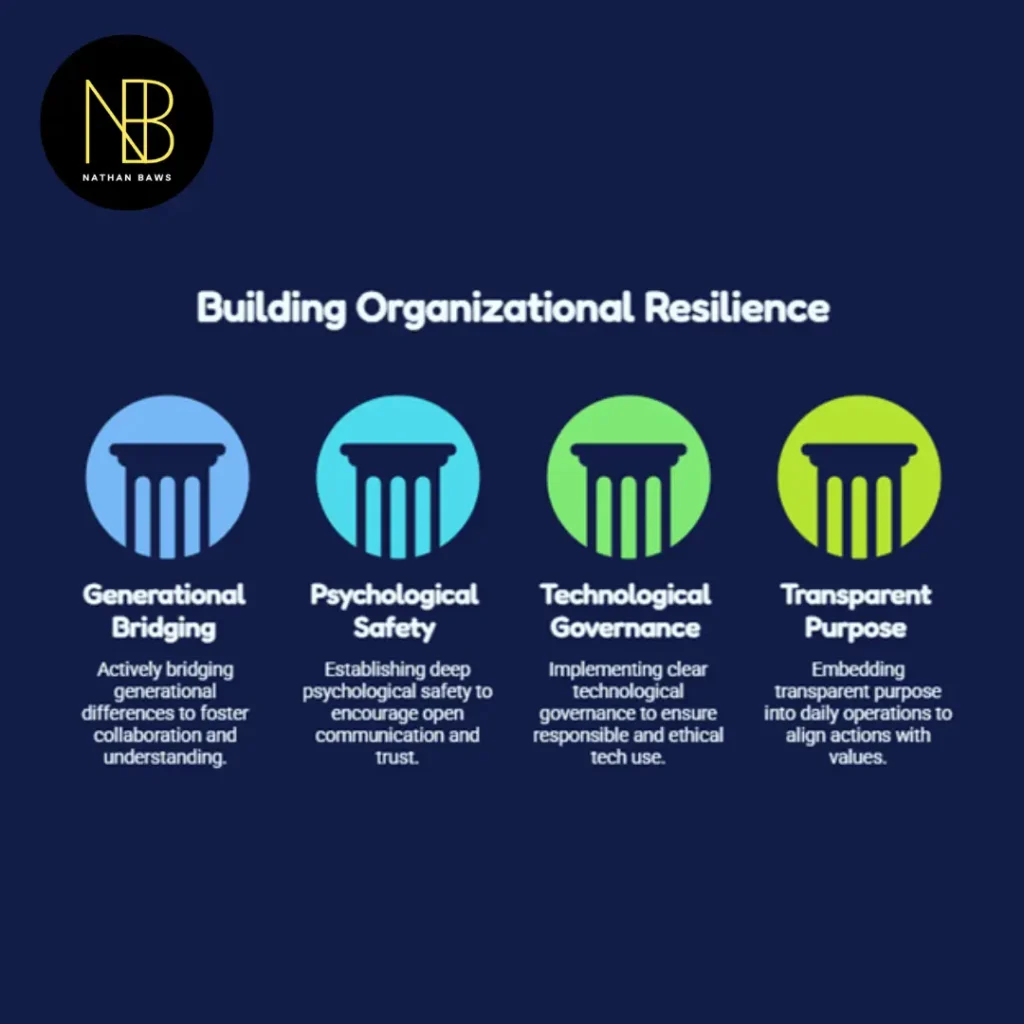
Navigating a changing world demands a complete departure from passive, reactive management. The modern corporate environment rewards organisations that are proactive, structurally agile, and fundamentally human-centred. By actively bridging generational differences, establishing deep psychological safety, implementing clear technological governance, and embedding transparent purpose into daily operations, companies build the resilient foundations necessary to thrive through any market disruption.
As you look to future-proof your organisation and equip your management teams with the strategic tools required for long-term market success, consider the profound impact of expert external guidance. Bringing an experienced Leadership Speaker into your next executive corporate event or annual strategic planning seminar provides your workforce with the clear, actionable insights and external inspiration needed to confidently navigate the future of business.
Book Nathan Baws for Your Next Event
Also Read: Great Keynote Speakers: Bringing Your Australian Event to Life with Nathan Baws
Frequently Asked Questions (FAQs)
What does a professional Leadership Speaker bring to a corporate event?
A professional speaker provides objective industry analysis, proven operational frameworks, and vital external inspiration. They act as a neutral catalyst, helping to break down internal information silos, align disparate teams behind core corporate goals, and introduce fresh strategic perspectives that accelerate organisational change.
How can corporate executives effectively manage multi-generational workforces?
Managing multi-generational teams requires implementing flexible internal communication channels, establishing clear and objective performance metrics, and building structured mentorship programs. Focus on intergenerational fairness and adapt your management approach to suit the unique communication styles and professional expectations of each demographic.
What steps can a company take to build psychological safety within its workflows?
Executives can build psychological safety by establishing regular, transparent feedback loops, actively encouraging calculated, data-driven risk-taking, and shifting the managerial response to project failures from personal blame to objective system analysis. Leaders must model vulnerability and openly accept constructive feedback.
How can businesses introduce Artificial Intelligence without alienating employees?
Successful AI integration requires a highly transparent, human-centred strategy. Executive teams must clearly communicate how automation will augment human capabilities, establish comprehensive governance guidelines, and provide accessible, practical training programs to upskill employees effectively.
Why is structural inclusion considered a driver of commercial innovation?
Diverse teams bring a much broader spectrum of life experiences, cultural insights, and problem-solving approaches to a business. When an organisation embeds genuine inclusion into its governance, it prevents groupthink, optimises product development, and understands complex consumer markets more accurately.
How do you maintain corporate cohesion across highly distributed hybrid teams?
Maintaining cohesion requires replacing informal workplace communication with structured digital interaction. Businesses should implement centralised project management platforms, hold brief, purpose-driven alignment meetings, and focus performance evaluations entirely on clear, objective work outputs.
What is the difference between simple crisis management and true operational resilience?
Crisis management is a short-term, reactive approach focused purely on business survival. True operational resilience is a long-term, proactive strategy that builds systemic agility, psychological safety, and flexible workflows, allowing an organisation to adapt and grow stronger during periods of market disruption.
How can mid-level managers prevent professional burnout within their teams?
Managers can mitigate burnout by setting clear boundaries around after-hours professional communication, monitoring workloads to ensure fair distribution, and normalising the use of planned recovery times during intensive project cycles.
What criteria should an organisation use when selecting an external speaker?
Organisations should select a speaker based on their specific industry experience, their ability to tailor content to the business’s distinct operational challenges, and their capacity to provide practical, actionable frameworks rather than generic motivational platitudes.
1How can corporate purpose be effectively linked to daily business operations?
Purpose is integrated into operations by embedding specific ethical, environmental, or social benchmarks directly into the company’s key performance metrics. This ensures that long-term values are prioritised alongside short-term financial targets during executive decision-making processes.