Introduction
In an era defined by rapid demographic shifts and borderless talent pools, the modern Australian office looks vastly different to how it did even a decade ago. Today’s leaders are no longer managing uniform teams; instead, they are steering organisations shaped by a beautiful, complex blend of multi-generational viewpoints, varied cultural backgrounds, and distinct technological literacies.
According to social researchers at McCrindle, managing a workforce of growing diversity is now one of the top five defining challenges and demands for business leaders and event organisers alike. As we transition away from highly rigid, traditional structures into highly collaborative environments, the tools we use to lead must evolve too.
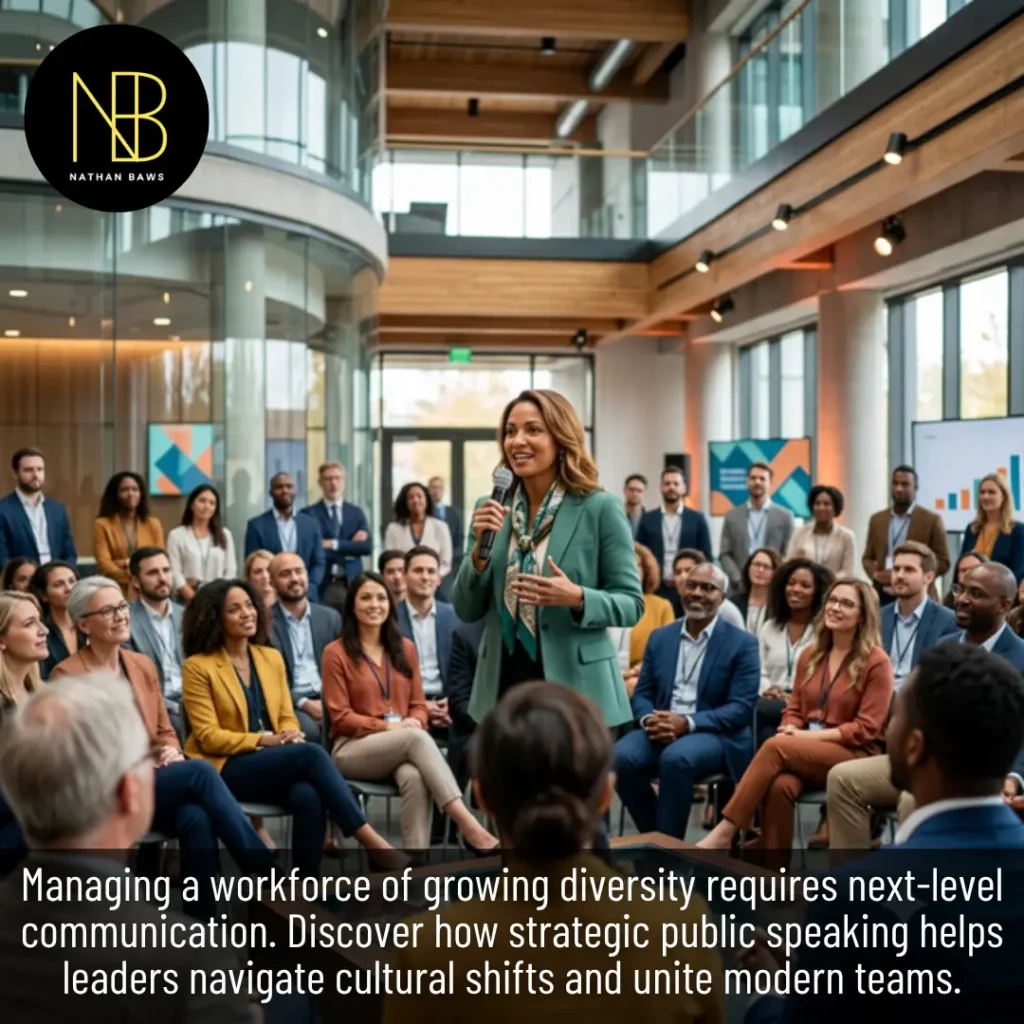
Among these tools, none is more critical yet frequently underutilised than strategic communication. To truly bridge the gaps within a multifaceted team, masters of corporate leadership must lean heavily into the power of public speaking. Far from being just a skill reserved for massive conference stages, the art of presenting to an audience is the ultimate executive lever for driving alignment, building psychological safety, and fostering a deep sense of belonging across every layer of a diverse workforce.
The Intersection of Diversity and Executive Communication
When we think of managing a workforce of growing diversity, we often focus on HR policies, inclusion metrics, and cultural awareness calendars. While these frameworks provide a vital foundation, they are ultimately static. They live in spreadsheets and employee handbooks. To bring inclusive values to life, leaders need a dynamic delivery mechanism- and that is where public speaking comes into play.
Every time a CEO stands up at an all-hands meeting, a department head pitches a new strategy, or a manager leads a professional development workshop, they are engaging in a form of speech-making that dictates the cultural tone of the entire business.
Why Static Messages Fail in Dynamic Environments
Relying solely on emails or text-based Slack channels to communicate complex corporate changes is a recipe for misunderstanding, especially in a diverse team. Written words lack tone, facial expressions, and warmth. For employees who speak English as a second language, or for younger digital-native workers who interpret text communication differently than Baby Boomers, a poorly phrased email can cause unnecessary anxiety or alienation.
In contrast, oral presentations allow a leader to humanise their message. Through vocal variety, intentional pausing, and open body language, a speaker can project empathy and certainty simultaneously. It allows you to address the varied psychological needs of a diverse room in real time, transforming a standard corporate update into a unifying moment.
Moving Beyond Motivation to Actionable Insights
The McCrindle data highlights an important shift in what modern corporate audiences demand from speakers: the market has decisively moved away from purely theoretical or generic motivational talks toward practical, real-world application.
When presenting to a diverse internal team, your audience does not just want to hear that diversity matters; they want to see how it functions practically within the business strategy. Masterful oratory must bridge this gap by translating high-level inclusion values into daily, actionable workflows that make every employee- regardless of their background- feel equipped to succeed.
Essential Speaking Trends for Inclusive Leaders
To successfully command a room filled with varied generational and cultural backgrounds, leaders cannot rely on outdated, text-heavy lecture styles. You have to adapt to the expectations of the modern listener. McCrindle’s analysis of international keynote environments highlights several critical shifts in audience engagement that apply directly to internal corporate communication.
Embracing the ‘Less is More’ Philosophy
Attention spans are shorter than ever, driven by busy working schedules and a constant barrage of digital distractions. The traditional one-hour standard presentation has rapidly given way to snappier 45-minute or even 30-minute keynote sessions.
When communicating with a diverse workforce, brevity is your greatest asset. Long, winding speeches run the risk of losing team members who may face language barriers or those from younger generations who crave fast, high-impact summaries. By narrowing your focus to one or two core messages per presentation, you increase the retention rate across your entire audience.
Making Data and Strategy Intensely Visual
It is called a presentation for a reason- what your team sees should powerfully reinforce what they hear. Complex numbers, strategic pillars, and demographic data can easily overwhelm listeners when delivered as a wall of text on a slide.
Great communicators use easily consumed visual cues to cross cultural and generational lines. A well-designed infographic, a powerful photograph, or an intuitive diagram communicates meaning instantly, bypassing cognitive fatigue and language friction. If you want your strategy to stick with a diverse workforce, show it; do not just say it.
Reinforcing the Narrative with Post-Event Materials
True communication does not end when you step away from the lectern or close the Zoom window. To ensure your message resonates with everyone in a varied workforce- including reflective learners who prefer to process information slowly, or team members who need to review technical terms- you must support your presentation with tangible follow-up materials.
Providing visual summaries, professional infographic cards, or electronic copies of your presentation slides allows your team to digest the core insights at their own pace. This multi-channel approach guarantees that no one is left behind simply because they process verbal information differently than their peers.
Crafting Presentations that Resonate Across Generations
A major component of managing a workforce of growing diversity is balancing the distinct communication preferences of up to four different generations coexisting in the same workspace: Baby Boomers, Generation X, Millennials (Gen Y), and Generation Z.
Structuring a presentation that satisfies the expectations of a Boomer executive while simultaneously captivating a Gen Z graduate is a true test of leadership. It requires a balanced framework that blends data-driven authority with authentic, collaborative storytelling.
Balancing Data with Human Centred Storytelling
To appeal to the analytical mindset often found in seasoned professionals, your speech must be anchored in solid research, market trends, and clear business outcomes. However, to engage younger generations who highly value transparency and social purpose, that data must be wrapped in a human narrative.
Instead of simply presenting profit margins or productivity metrics, tell the story of the people behind those numbers. Highlight the collaborative efforts of a cross-functional team, acknowledge individual cultural contributions, and explicitly show how your business goals align with a broader societal impact.
Cultivating an Environment of Active Collaboration
The McCrindle research underscores that today’s leaders must guide their teams away from highly structured, top-down environments and towards deeply collaborative spaces. Your presentation style should mirror this shift.
Instead of a pure “sit and listen” approach, build interactive loops into your business presentations. This could include:
- Using real-time digital polling to gather immediate, anonymous feedback from the room.
- Opening up the floor for structured Q&A panels that feature diverse voices from within the company.
- Running pre-presentation surveys to capture an accurate snapshot of your team’s current sentiment, and then addressing those specific insights directly during your talk.
By treating your presentation as a two-way conversation rather than a rigid lecture, you break down hierarchical barriers and make a diverse workforce feel genuinely seen, heard, and valued.
Conclusion: Elevating Your Leadership Voice
Managing a workforce of growing diversity is an extraordinary opportunity to unlock innovation, creativity, and resilience within your business. However, these benefits can only be realised if your team is aligned, connected, and moving in the same direction.
As a leader, your voice is the ultimate tool for creating that alignment. By mastering the art of public speaking and tailoring your delivery to meet the visual, concise, and collaborative demands of a modern audience, you can bridge any cultural or generational divide.
Are you ready to transform the way you communicate with your team, command corporate stages, and lead your diverse workforce with absolute certainty?
Book a Speaking Consultation with Nathan Baws
Also Read: 7 Essential Tips to Book a Keynote Speaker and Make Your Perth Event a Ripper
Frequently Asked Questions
What are the main challenges when managing a workforce of growing diversity?
The primary challenges include overcoming communication barriers across different languages and cultural backgrounds, balancing the conflicting workplace expectations of multiple generations, and shifting corporate structures away from rigid hierarchies towards inclusive, collaborative environments.
How does public speaking assist in managing diverse corporate teams?
It allows leaders to humanise their message, using tone, empathy, and visual aids to ensure that strategic updates are accessible to everyone. It moves communication beyond cold, easily misunderstood emails into an aligned, shared experience.
Why is a visual approach so important in modern business presentations?
Visual cues like infographics, icons, and diagrams transcend language barriers and generational preferences. They help audiences process complex data quickly, reducing cognitive overload and improving message retention across a varied group.
How are attention spans changing the structure of corporate keynotes?
Audiences now favour shorter, high-impact presentations over long lectures. The traditional one-hour presentation has largely been replaced by 30 to 45-minute sessions that deliver actionable insights efficiently without unnecessary fluff.
What is the best way to engage younger generations like Gen Z during a presentation?
Generation Z responds best to authentic, transparent, and collaborative communication. They prefer shorter sessions, highly visual data, a focus on social impact, and opportunities to interact via digital tools or collaborative discussions rather than just listening passively.
How can leaders ensure their messages are retained by all team members?
By using a multi-channel approach. Leaders should reinforce their spoken presentations with visual summaries, electronic slide decks, or printed infographic cards, allowing individuals to review the material at their own pace.
What does it mean to move from motivational to practical speaking?
Modern corporate audiences value actionable insights over vague inspiration. Rather than just sharing generic ideas or anecdotes, speakers must present solid data, research, and real-world strategies that listeners can apply immediately to their daily workflows.
How can I include a diverse workforce in the presentation process itself?
You can distribute anonymous surveys before the event to capture a true snapshot of team sentiment, and then share those results during your talk. You can also integrate live polling and invite a diverse mix of staff members onto Q&A panels.
Why do text-only communications often fail in diverse environments?
Text lacks critical human context, such as tone of voice, warmth, and body language. This can lead to misinterpretation, increased anxiety, or a feeling of exclusion, particularly for team members from different cultural or linguistic backgrounds.
How can I improve my public speaking skills to better lead my business?
Focus on refining your message clarity, embracing visual storytelling, and shortening your delivery times. Working with an experienced executive presentation coach can help you tailor your specific style to connect authentically with modern, multifaceted audiences.