Introduction
Finding the right Business Partner can significantly transform a small operation into a scalable and resilient enterprise, particularly in a competitive market like Perth, where strategic alignment and execution matter. This guide from Nathan Baws is designed to help you identify, evaluate, and onboard a Partner with clarity and confidence, while ensuring strong legal protections, aligned goals, and cultural compatibility. A well-matched Business Partner can bring complementary skills, shared responsibility, and improved decision-making, but only when the partnership is built on structure, transparency, and long-term vision.
Quick Takeaways
- Choose a Business Partner who complements your skills and shares your values.
- Document roles, equity and exit terms before operations begin.
- Use local Perth advisors for legal, tax and financial structuring.
- Maintain regular governance and measurable KPIs with your Partner.
- Plan for disputes and exits with clear contractual terms to protect continuity.
Why a Business Partner Matters for Your Perth Business
Strategic advantages
A Partner brings complementary skills, capital and networks that accelerate execution. In Perth’s competitive markets, a partner can unlock contracts, introduce specialised expertise and improve credibility with suppliers and customers.
Operational benefits
Sharing operational load with a Business Partner can enhance capacity and resilience. Practical benefits include shared administrative duties, improved cash flow management and distributed decision-making that helps businesses scale.
Local market relevance
Perth businesses benefit from local knowledge. A Partner who understands Western Australian regulations, procurement cycles and sector-specific networks reduces time-to-market and increases the chance of winning local contracts.
Defining Roles and Expectations with Your Business Partner
Clarify responsibilities
Outline clear, written responsibilities for each partner. Whether your Partner focuses on sales, operations or finance, written role definitions prevent overlap and misunderstandings.
Decision-making protocols
Agree on how major and minor decisions will be made. Specify voting rights, reserve matters and escalation pathways so a dispute doesn’t stall operations.
Performance metrics
Set measurable KPIs tied to revenue, client acquisition and operational targets. When a Partner understands metrics, accountability improves, and performance can be reviewed objectively.
Selecting the Right Business Partner in Perth: A Practical Process
Step 1: Define strategic needs
Start with a gap analysis of skills, capital and networks. Identify precisely what you need from a Partner to meet your 12–36 month goals.
Step 2: Source and vet candidates
Use industry associations, referrals and Perth business networks to source candidates. Vet backgrounds, check references and validate past outcomes to ensure a reputable Partner.
Step 3: Cultural fit and values
Assess cultural alignment through structured interviews and trial projects. A Partner with aligned values will reduce friction and foster long-term collaboration.
Legal Structures and Agreements for a Business Partner
Choosing the right entity
Decide whether to operate as a partnership, joint venture, company or trust. Each structure has tax, liability and governance implications for you and your Business Partner.
Drafting a partner’s agreement
A comprehensive agreement should cover capital contributions, equity splits, vesting, exit pathways and dispute resolution. Insist on clear buy-sell clauses when engaging any Partner.
Intellectual property and confidentiality
Protect IP and confidential information in writing. Specify ownership, licensing terms and post-exit obligations so the relationship with your Business Partner preserves core assets.
Onboarding and Governance with a New Business Partner
Structured onboarding programme
Introduce operational systems, client relationships and reporting frameworks through a formal onboarding plan. A Partner who understands internal processes will integrate faster.
Governance and board reporting
Set up regular governance meetings and reporting cadences. Whether informal fortnightly reviews or formal monthly board meetings, consistent oversight reduces drift between partners.
Training and development
Invest in training to align your Partner on systems, industry compliance and customer service standards. Continuous development benefits both parties and enhances performance.
Managing Conflict and Risk with a Business Partner
Preventive measures
Use clear contracts, insurance and role clarity to prevent disputes. Regular reviews with your Partner also surface issues before they escalate.
Dispute resolution
Include mediation and arbitration clauses in agreements. Knowing how a dispute with your Partner will be handled reduces uncertainty and legal costs.
Exit planning
Agree in advance on fair exit valuation methods and trigger events. A well-drafted exit clause protects both you and your Partner in changing circumstances.
Financial Considerations When Bringing on a Business Partner
Capital contributions and equity splits
Decide on upfront contributions and equity allocation with transparency. A Partner’s financial input should reflect risk and expected value delivered.
Profit allocation and remuneration
Define profit-sharing, dividends and salaries. Distinguish between remuneration for operational roles and returns on investment provided by your Business Partner.
Tax and compliance
Work with Perth-based accountants to structure tax-efficient arrangements. Consider GST, payroll tax and superannuation obligations when onboarding a Partner.
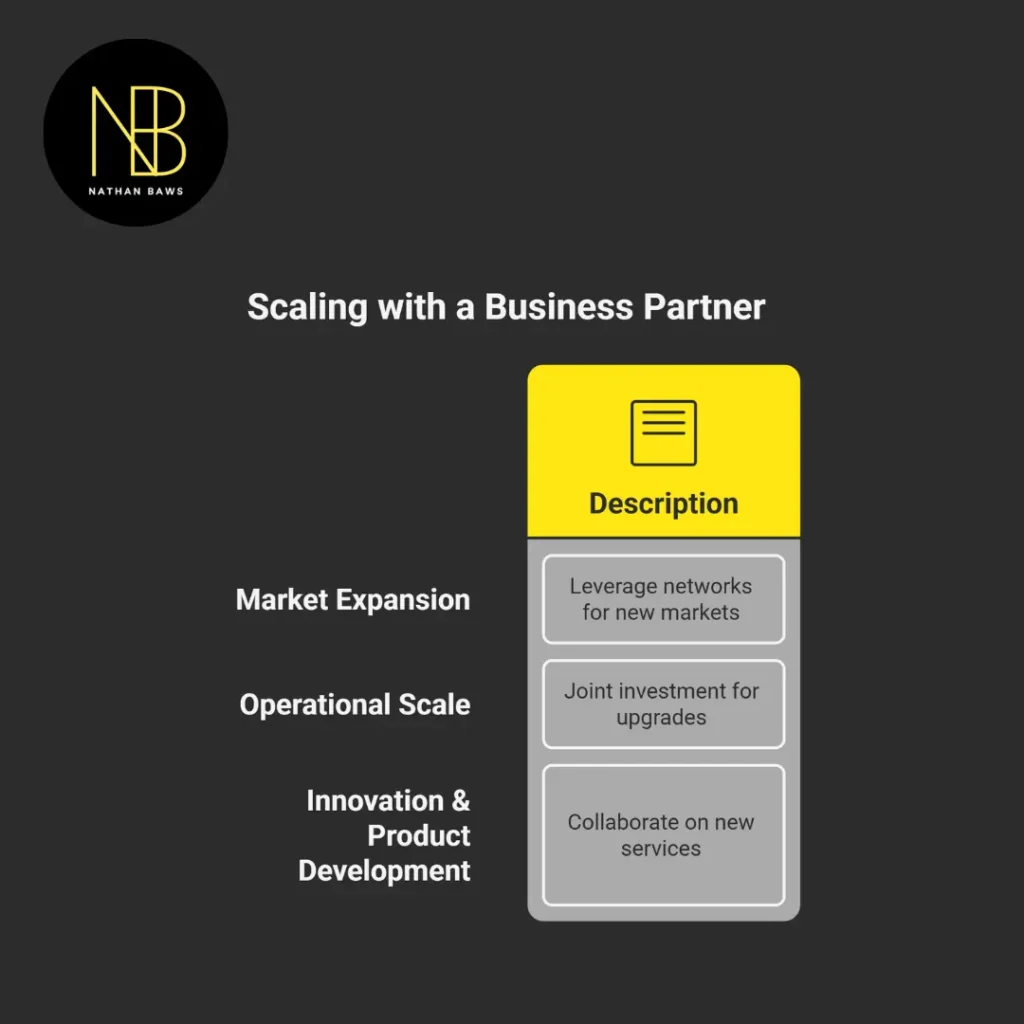
Scaling with a Business Partner: Strategies for Perth SMEs
Market expansion
Leverage your Partner’s networks to enter new Perth suburbs, regional WA or national channels. Collaborative sales strategies can accelerate market reach.
Operational scale
Use joint investment to upgrade systems, hire staff or invest in logistics. A Partner can share the capital burden that often limits single-owner growth.
Innovation and product development
Collaborate on new services or product lines. A Partner with complementary skills can speed development and reduce time-to-market in Perth’s evolving economy.
Case Studies and Local Examples of Successful Partner Relationships
Small services firm partnership
A Perth consultancy paired a technical director with a sales-focused Partner to triple revenue in two years. Clear role definitions and KPI alignment made the arrangement effective.
Retail joint venture
Two Perth retailers formed a partnership to co-invest in a shared warehouse, lowering costs and increasing inventory turnover. Regular governance kept operations aligned between the Partner teams.
Export collaboration
A mining-services SME partnered with an international logistics Partner to access new export channels. The partnership included a phased exit clause protecting local owners while enabling growth.
Implementation Checklist: Onboarding Your Business Partner in Perth
Due diligence tasks
- Verify the identity and business history of the prospective Partner.
- Check references and previous partner feedback.
- Obtain financial statements and credit checks.
Agreement elements to include
- Equity split, capital obligations and vesting schedule.
- Roles, KPIs and decision-making framework with your Partner.
- Exit clauses, valuation method and dispute resolution.
Operational integration
- Implement shared systems and reporting cadences for the Partner.
- Schedule training and client introductions.
- Set up insurance, payroll and legal compliance checks in WA.
Why Contact Nathan Baws About Your Partner Plans
Local expertise
Nathan Baws provides Perth-focused advice on structuring partnerships, drafting agreements and navigating WA regulatory requirements when selecting a Business Partner.
Practical guidance
Get actionable checklists, contract templates and negotiation support that reflect business realities and protect founders and their Partner relationships.
Next steps
Contact Nathan Baws to discuss your partnership objectives, review draft agreements or plan an onboarding roadmap for a new Partner in Perth. Reach out to Nathan Baws for a consultation to explore how a Partner can accelerate your growth.
Conclusion
A successful Business Partner relationship in Perth blends strategic fit, clear legal frameworks and practical governance. By defining roles, protecting assets and aligning incentives, you and your Partner can unlock growth while managing risk. For personalised advice on structuring or onboarding a Business Partner, contact Nathan Baws to discuss next steps and receive Perth-relevant guidance.
Frequently Asked Questions
What is a Business Partner?
A Business Partner is an individual or organisation that collaborates to share risks, skills and rewards in a business venture. They can provide capital, expertise or market access and should be aligned on goals and values.
How do I find a trustworthy Business Partner in Perth?
Start with referrals from industry associations, professional networks and local advisors. Vet candidates carefully through references, financial checks and short trial collaborations before formalising a Business Partner relationship.
What legal agreements are essential with a Business Partner?
Key documents include a partner’s agreement or shareholders’ pact, IP and confidentiality agreements, and buy-sell clauses. These protect both parties and clarify a Business Partner’s obligations.
How should equity be split with a new Business Partner?
Equity splits should reflect capital contribution, sweat equity and strategic value. Use vesting schedules and performance-based milestones to align a Business Partner with long-term goals.
How do I handle disputes with a Business Partner?
Include mediation and arbitration processes in your agreement. Regular governance meetings and objective KPIs reduce the likelihood that disputes with a Business Partner will escalate.
Can a Business Partner be an investor only?
Yes. A Business Partner can be a passive investor providing capital without operational involvement, though agreements should still address voting rights, information access and exit terms.
What taxes apply when partnering in WA?
Tax considerations include company tax, GST, superannuation and payroll tax where applicable. Consult a Perth accountant to ensure the Business Partner arrangement is tax-efficient and compliant.
How do I protect IP when working with a Business Partner?
Clearly assign ownership or licence terms in writing, include confidentiality clauses and restrict post-exit competition. This prevents a Business Partner from misusing proprietary assets.
When should I consider ending a Business Partner relationship?
Consider exit if a Business Partner consistently misses KPIs, breaches agreements, or if strategic goals diverge. Pre-agreed exit mechanisms reduce disruption when parting ways.
What are the first steps after choosing a Business Partner?
Run a structured onboarding, finalise legal agreements, align financial arrangements and set KPIs. An early focus on governance helps integrate a Business Partner effectively.