Too many Perth businesses cycle through strategy sessions and workshops that promise change but deliver little measurable improvement. At some point, planning alone is not enough; you need a business consultant who can diagnose underlying issues, implement solutions and measure impact. We explain how to recognise when a consultant is the right investment and what practical steps to follow.
- Immediate indicators that a consultant is needed
- How a consultant differs from a strategy session
- Actionable steps to engage and work with a consultant
Why a Business Consultant Delivers More Than Another Strategy Session
Clear definition of roles
When you hire a business consultant, the expectation is delivery of outcomes, not just ideas. A consultant is accountable for planning, execution and evaluation across agreed metrics.
Experienced execution
A business consultant brings industry-tested practices that reduce time to value. Rather than theoretical models discussed in a session, consultants apply repeatable techniques tailored to your business.
Resource augmentation
Engaging a consultant supplements internal capacity. Consultants often embed temporarily to upskill teams, implement new processes and then hand over a sustainable model.
Common Signs Your Business Needs a Consultant
Stalled growth despite strategic plans
If your revenue trajectory is flat after multiple plans, it is a signal that execution gaps exist. A business consultant diagnoses blockers and creates an actionable roadmap.
Repeated operational failures
Recurring process breakdowns, missed deadlines, and quality lapses indicate systemic issues. A consultant applies process improvement methods to stabilise operations.
Leadership capacity stretched thin
When leaders are consumed by day-to-day problems and cannot focus on strategy, a business consultant provides temporary leadership capacity and coaching to restore balance.
How to Assess Your Need for a Business Consultant
Conduct an impact audit
Review key performance indicators over the past 12 months. A business consultant can assist in an objective impact audit to identify priority areas for intervention.
Map skills and capacity gaps
Create a skills inventory for critical roles. A consultant helps map where temporary external expertise will accelerate progress and where internal training is sufficient.
Evaluate change readiness
Change initiatives fail when an organisation lacks readiness. A business consultant assesses culture, governance and resource readiness before recommending interventions.
Engaging a Consultant: Practical Steps for Perth Businesses
Define desired outcomes clearly
Before contact, define the outcomes you require. A business consultant will ask for measurable targets, revenue uplift, cost reduction, and cycle time improvement, so be specific.
Select the right consultant profile
Look for consultants with sector experience relevant to your business. For Perth readers, local market knowledge, supplier networks and compliance understanding can be decisive.
Set time-bound milestones
Structure the engagement with short-term milestones and deliverables. A business consultant should demonstrate progress regularly against agreed checkpoints.
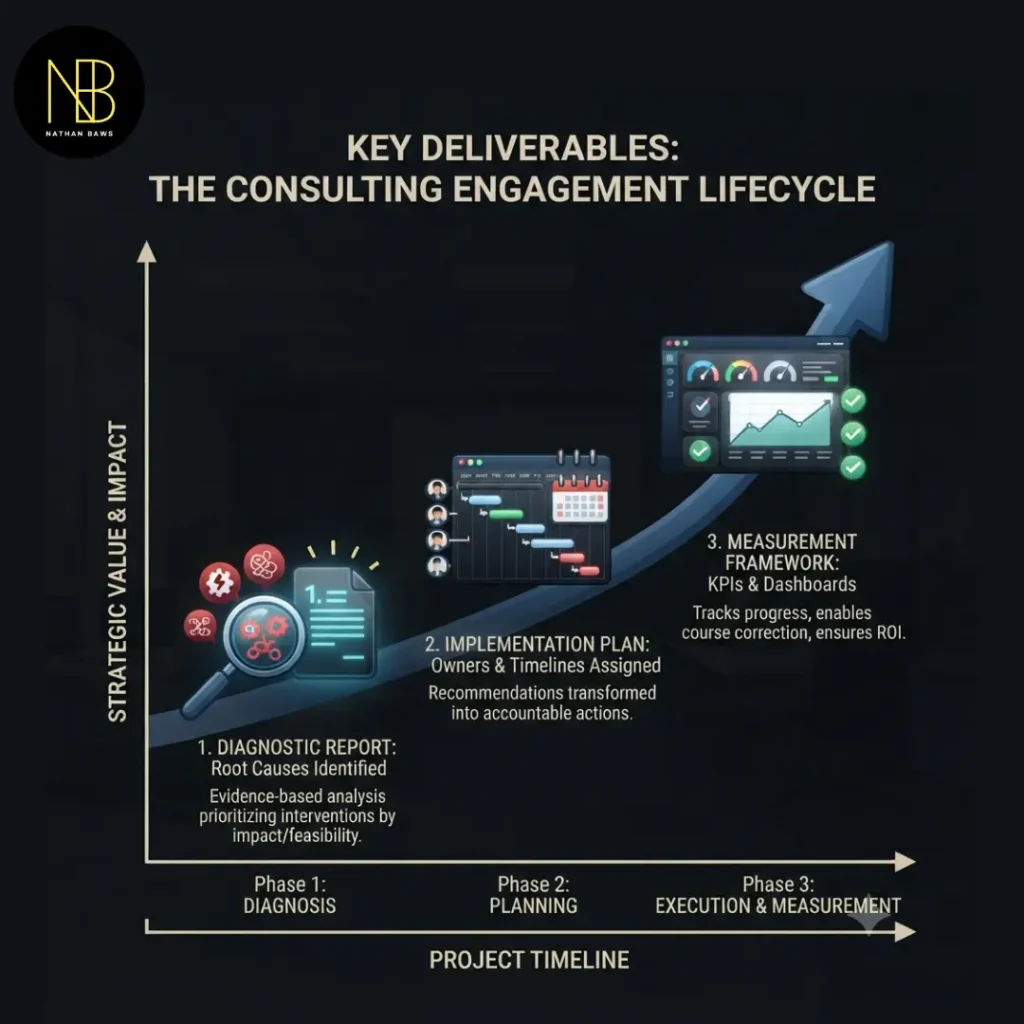
Key Deliverables a Business Consultant Should Provide
Diagnostic report with root causes
Initial diagnostics should identify root causes rather than symptoms. A business consultant provides an evidence-based report that prioritises interventions by impact and feasibility.
Implementation plan with owners
A useful consultant delivers an implementation plan assigning owners, timelines and resources. This transforms recommendations into accountable actions.
Measurement framework
Outcomes must be measured. A consultant sets up a measurement framework and data dashboards that track progress and enable course correction.
Processes a Consultant Uses to Create Rapid Change
Lean process improvement
Consultants often apply lean techniques to eliminate waste and speed delivery. Practical tools include value stream mapping and quick Kaizen events.
Agile implementation sprints
Breaking work into sprints allows rapid learning and incremental value delivery. A business consultant can lead sprints that deliver tangible improvements in weeks, not months.
Stakeholder engagement and change management
Successful change requires stakeholder alignment. A consultant designs communication plans, training and governance to embed new practices sustainably.
Financial Considerations and ROI Expectations
Cost versus capacity
Hiring a consultant is an investment in specialised capacity. Compare fees to the cost of delayed projects, lost revenue or continued inefficiency to make the case.
Setting measurable ROI targets
Define ROI in clear terms: percentage sales growth, cost savings, margin improvement or time-to-market reduction. A consultant should agree and report on these metrics.
Phasing engagements to spread the cost
Divide large projects into phases. A consultant can deliver early wins in initial phases that fund subsequent work and reduce financial risk.
Choosing Between a Specialist Consultant and a Generalist
When to choose a specialist
Choose a specialist consultant when technical depth is required, for example, supply chain optimisation, digital marketing performance or regulatory compliance.
When a generalist adds value
A generalist business consultant is valuable when the challenge spans multiple functions and requires cross-functional coordination and pragmatic problem-solving.
Hybrid approach
Often, the optimal model combines a generalist lead with specialist advisors. This gives coherence and technical depth while retaining practical project management.
Integrating a Consultant Into Your Team
Define collaboration protocols
Set clear working protocols: meeting cadence, decision rights and reporting lines. A business consultant should fit into existing governance while adding clarity.
Embed to transfer capability
Encourage consultants to work alongside staff so skills and methods transfer. This ensures benefits remain after the engagement ends.
Maintain transparent communication
Open communication prevents surprises and builds trust. Regular updates, shared dashboards, and joint steering committees keep everyone aligned.
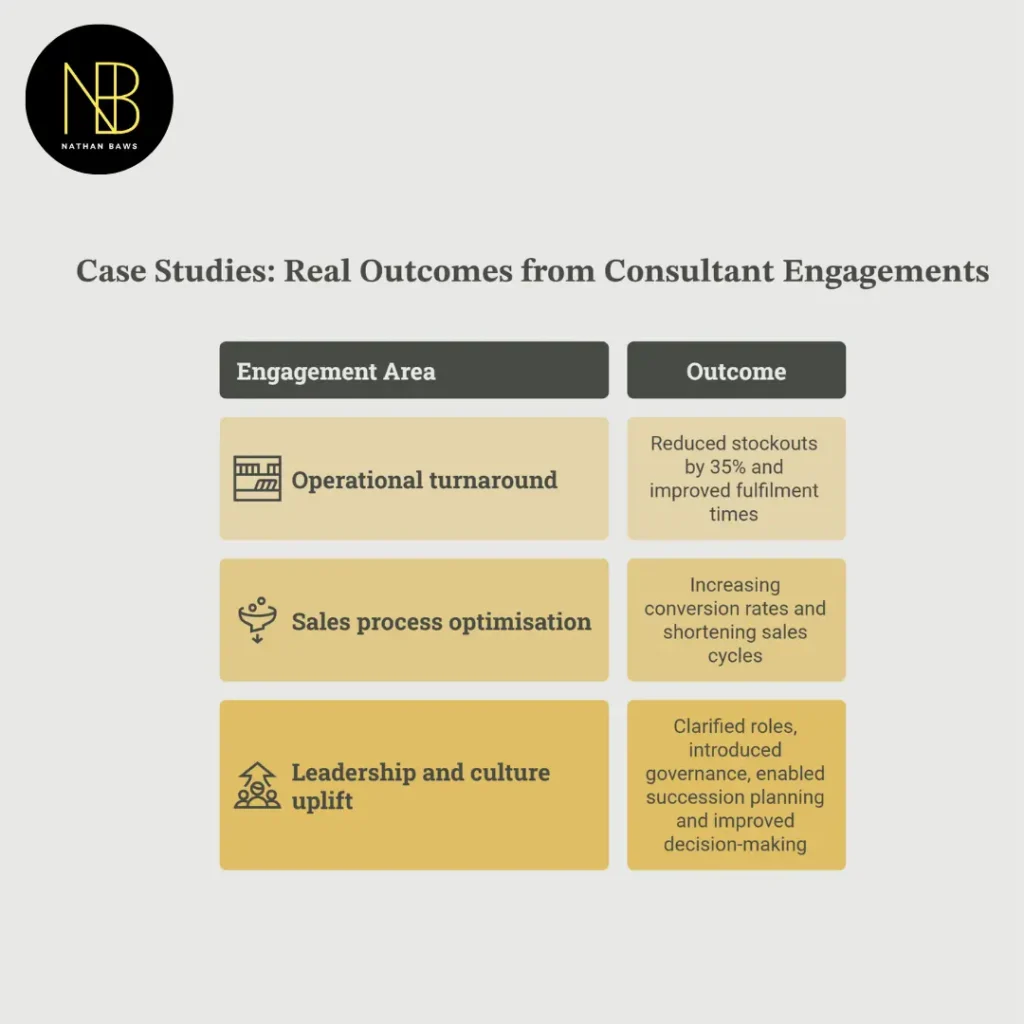
Case Studies: Real Outcomes from Consultant Engagements
Operational turnaround
A retail business in Perth engaged a business consultant to address inventory shrinkage and delivery delays. Within three months, a process redesign reduced stockouts by 35% and improved fulfilment times.
Sales process optimisation
An industrial services firm streamlined its sales pipeline with consultant-led CRM redesign and qualification criteria, increasing conversion rates and shortening sales cycles.
Leadership and culture uplift
A family-owned business benefited from a consultant-led leadership program that clarified roles and introduced governance, enabling succession planning and improved decision-making.
Common Pitfalls When Working with Consultants and How to Avoid Them
Vague briefs
Problem: Unclear objectives lead to ambiguous outcomes. Solution: Produce a concise statement of work with measurable KPIs before engagement.
Failure to commit internal resources
Problem: Internal teams are not available to support implementation. Solution: Assign internal owners and protect their time for the project.
Overreliance on recommendations
Problem: Recommendations sit unused. Solution: Require the consultant to include an implementation and sustainment plan with ownership transfer steps.
Actionable Checklist: Preparing to Engage a Business Consultant
Step 1: Clarify outcomes
List three measurable outcomes you want the consultant to deliver.
Step 2: Gather data
Compile financials, process maps and KPIs for the consultant to review before starting.
Step 3: Identify stakeholders
Nominate a project sponsor and core team members who will be accessible throughout the engagement.
How Nathan Baws Approaches Consulting for Perth Businesses
Local market insight
We combine local Perth market knowledge with national best practice to deliver solutions that respect regional realities and growth opportunities.
Practical, measurable plans
Our engagements prioritise measurable outcomes and rapid implementation so clients see tangible benefits early in the relationship.
Collaborative delivery
We work with your leadership and teams to embed capability, ensuring improvements continue after the engagement ends.
Conclusion
Recognising when your organisation requires a business consultant rather than another strategy session is a critical step for sustainable growth. When growth stalls, processes fail repeatedly, or leadership lacks capacity, an experienced business consultant can diagnose root causes, implement change and measure outcomes. For Perth businesses seeking a practical partner, we invite you to contact Nathan Baws to discuss how a business consultant can deliver results for your organisation.
Contact Nathan Baws to arrange an initial consultation and start turning plans into measurable outcomes.
Frequently Asked Questions
What exactly does a business consultant do?
A business consultant diagnoses problems, recommends solutions and often supports implementation. We focus on measurable outcomes, process improvement and capability transfer to ensure lasting benefit.
How much does hiring a business consultant cost in Perth?
Fees vary by scope, expertise and duration. Many consultants offer phased engagement models to spread cost and deliver early value; request a scope-based quote to compare options.
How long does a typical consulting engagement last?
Engagements range from short diagnostics of a few weeks to multi-phase projects over several months. We recommend setting near-term milestones to review progress regularly.
Can a consultant help with digital transformation?
Yes. A business consultant can define digital strategy, prioritise initiatives, select vendors and lead implementation while ensuring business alignment and ROI.
Will a consultant replace internal staff?
No. Consultants augment capacity and transfer skills. The goal is to leave the organisation stronger, not to create dependency on external advisors.
What should be included in a statement of work?
Include scope, objectives, deliverables, timelines, roles, KPIs and payment terms. Clear SOWs reduce risk and increase the likelihood of successful outcomes.
How do we measure consultant success?
Set specific KPIs such as revenue growth, cost savings, cycle time reduction or customer satisfaction improvements. Regular reporting against these metrics demonstrates progress.
Are there risks to hiring a consultant?
Risks include poor fit, unclear briefs and lack of internal commitment. Mitigate these by vetting experience, defining outcomes and securing internal resources for implementation.
How do we choose between a local Perth consultant and a national firm?
Local consultants bring regional market knowledge and networks; national firms may offer scale and specialist services. Choose based on the complexity of the issue and the importance of local insight.
What are the quick wins a consultant can deliver?
Quick wins include process standardisation, sales pipeline hygiene, cost baseline reviews and clarity on priority initiatives. These deliver immediate value and build momentum for larger changes.