Introduction
Witnessing an elite corporate presenter or a seasoned business speaker step onto the main stage and completely command the room is a masterclass in professional communication. The entire audience hangs on every word, responds precisely to key moments, nods in collective agreement, and takes extensive notes. Achieving this level of engagement is the ultimate objective for anyone stepping behind a microphone in a professional capacity.
Developing into an influential business speaker does not occur by chance. It demands a sophisticated understanding of human psychology, an authentic professional presence, and an intentional strategy designed to command authority the moment you step out from the wings.
Whether public speaking currently induces performance anxiety or you are an experienced professional seeking to refine your executive presence, implementing deliberate communication techniques will fundamentally transform your results.
This guide examines the psychological mechanisms of impactful presentations, focusing on structural execution, vocal dynamics, physical presence, and the subtle art of maintaining audience engagement.
By analysing these core methodologies, professionals can successfully address diverse corporate crowds with absolute confidence. Embracing these advanced strategies will ensure your insights resonate with attendees long after the conclusion of the event.
Key Objectives
- Learn to immediately capture the attention of a distracted audience upon taking the stage.
- Understand why carefully structured narratives are essential for ensuring corporate messages remain memorable.
- Master actionable physical and psychological techniques to convert pre-presentation anxiety into focused performance energy.
- Discover proven methodologies for delivering practical, high-value advice that executives can implement immediately.
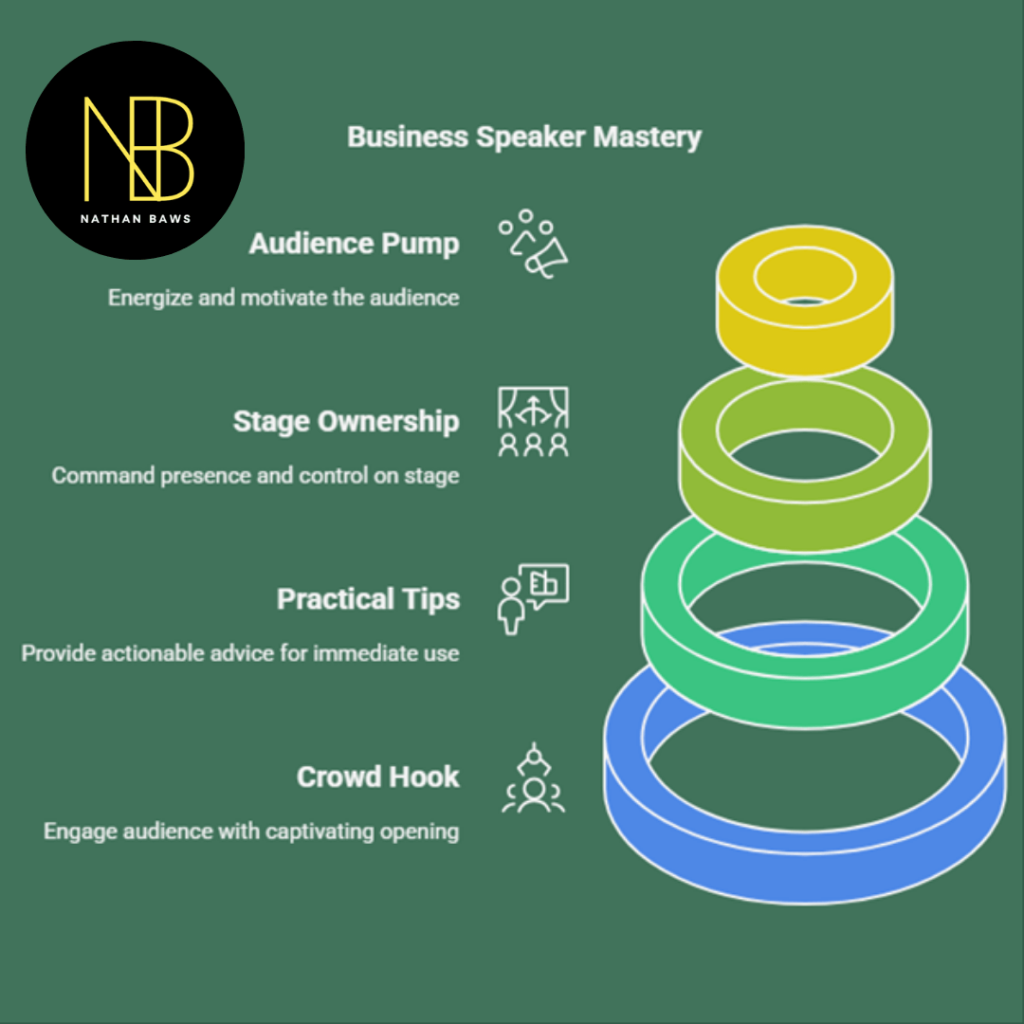
Establish an Immediate, High-Impact Opening
When presenting to a corporate audience, the window of opportunity to establish authority is brief. A speaker has mere moments to earn the respect, trust, and focused attention of the room.
A compelling opening is not merely a stylistic addition to a presentation layout; it is a critical tool for a professional business speaker. Failing to capture the narrative momentum within these initial moments requires a presenter to spend the remainder of the session fighting an uphill battle for audience engagement.
The Critical Importance of the Opening Moments
Commencing a keynote presentation with generic remarks regarding the local weather or standard corporate pleasantries often results in immediate audience disengagement. Such predictable introductions fail to signal value and encourage attendees to divert their attention to their mobile devices.
A calculated opening serves as a vital opportunity to communicate immediate value. It serves as a clear signal to every attendee that the session merits their full attention.
Instead of relying on clichéd introductory remarks, an authoritative business speaker utilises an immediate psychological pattern interrupt. This can be achieved by launching directly into a highly relevant, thought-provoking question or by deploying a startling, verified industry statistic.
This initial statement serves as a definitive professional handshake with the collective audience, ensuring the presentation is established as firm, memorable, and highly impactful.
Executing the Perfect Hook
A presentation should mirror the narrative structure of a compelling film, dropping the audience directly into a high-stakes scenario rather than delaying the core message with unnecessary background information.
For example, opening a corporate seminar by directing the audience to consider a common operational failure immediately establishes common ground. The hook must remain concise, focus explicitly on the specific pain points of the attendees, and clearly preview the overarching value of the presentation. This strategic approach allows a business speaker to establish an optimal professional tone for the entire event.
Pitfalls to Avoid
Amateur presenters frequently make the mistake of dedicating the opening minutes of a speech to an exhaustive personal biography or corporate resume. Audiences prioritise the value they will receive over a lengthy introduction of the speaker’s background.
Furthermore, speakers should avoid mumbling through standard, uninspired filler text. Forced corporate icebreakers should also be omitted, as professional attendees rarely appreciate contrived interaction. Presenters must deliver high-value content rapidly to maintain control of the room.
Incorporate Purposeful Professional Narratives
Human cognition is inherently wired for narrative structures. Long before the advent of data spreadsheets, slide decks, and corporate briefs, information was preserved and shared through storytelling. In public speaking, structured narratives serve as the primary vehicle for conveying complex messages into long-term memory.
The Value of Narrative Frameworks
Presentations that rely exclusively on analytical data, financial statistics, and market trends frequently suffer from declining audience engagement. While data is crucial, it lacks the human element required to inspire action.
Conversely, introducing a raw, authentic case study regarding an operational turnaround immediately alters the dynamics of the room.
Attendees naturally focus on the resolution of a conflict. Stories engage the emotional intellect, complementing logical data. For a dedicated business speaker, well-constructed narratives serve as a vital shortcut to establishing deep professional alignment with an audience.
Methodologies for Effective Storytelling
Utilising Authenticity
To maximise impact, a business speaker should share unfiltered, real-world accounts from the corporate environment. These should not resemble polished public relations press releases.
Instead, they should focus on critical lessons learned through operational challenges or strategic missteps. Sharing the vulnerability of managing a critical technical failure during an executive pitch, for example, humanises the presenter and builds profound credibility.
The selected narrative must remain concise, connect directly to the primary thesis, and move efficiently toward a clear conclusion to prevent the audience from losing focus.
Maintaining Structural Simplicity
Presenters do not need to deliver grand, theatrical performances to share impactful narratives, nor must they project an aura of absolute infallibility. An authentic business speaker who shares grounded, practical accounts connects far more effectively than an individual reading from a rigid script.
The narrative can centre on simple, relatable dynamics – such as guiding an introverted team member to contribute to a critical strategy session. Because corporate audiences recognise these scenarios, they listen intently to the insights derived from them.
Optimise Non-Verbal Communication
Spoken words represent only a single component of total stage communication; non-verbal cues carry immense weight. Posture, shoulder alignment, and deliberate movement across the platform directly influence how an audience receives a message. For an authoritative business speaker, the strategic management of body language significantly enhances perceived competence and command.
Cultivating Deliberate Physical Stillness
Inexperienced presenters often move aimlessly across the platform, pacing in a manner that betrays nervousness and dilutes the impact of their words.
In contrast, an expert presenter utilises deliberate stillness when delivering core strategic concepts. Standing firmly with weight evenly distributed and shoulders relaxed conveys complete readiness and authority.
Practising this grounded posture allows a business speaker to ensure the audience remains focused entirely on the delivery and depth of the spoken message.
Utilising Purposeful Gestures
Hand movements must never appear frantic or uncoordinated. Instead, they should be used intentionally to reinforce key phrases and concepts.
For instance, gesturing downward can emphasise a non-negotiable strategic priority, while extending open palms signals transparency and collaboration.
Elite presenters ensure their physical gestures function as a natural, fluid extension of their vocal delivery rather than a source of visual distraction for the audience.
Establishing Strategic Eye Contact
Authentic eye contact remains an exceptionally powerful psychological tool on stage. Presenters who scan the room rapidly or fixate on the back wall create an emotional disconnect.
The correct approach requires a business speaker to select specific individuals across different sections of the venue, maintaining eye contact for the duration of a complete thought.
This targeted approach fosters a sense of personal connection and trust throughout the room, whereas constantly looking down at notes undermines a speaker’s authority.
Convert Performance Anxiety into Focused Energy
Experiencing an elevated heart rate or heightened adrenaline prior to taking the stage is a natural physiological response. Even veteran presenters experience these sensations before major keynote addresses. The objective is not to eliminate these feelings entirely, but rather to channel them into a dynamic, focused performance.
Reframing Pre-Presentation Stress
An experienced business speaker recognises that adrenaline is not an indicator of weakness, but a sign of professional commitment.
This biochemical response sharpens cognitive focus, improves reflexes, and heightens awareness, acting as a natural stimulant. The key to professional mastery lies in preventing these physical symptoms from overwhelming mental clarity.
Techniques for Maintaining Calm
Deliberate, controlled respiration is a highly effective strategy for managing stress backstage. Implementing a standard box-breathing technique – inhaling, holding, exhaling, and pausing for equal four-second intervals – effectively regulates the autonomic nervous system.
Additionally, mastering the opening minutes of a presentation ensures a smooth introduction.
Should a minor error occur on stage, acknowledging it with poise maintains rapport. A business speaker who handles unexpected disruptions with grace invariably strengthens audience trust.
Utilising Mental Visualisation
Prior to walking onto the platform, presenters should take a moment to mentally visualise a successful outcome. Picturing an engaged, responsive audience reinforcing key concepts helps condition the mind for success.
This cognitive visualisation technique is widely utilised by elite corporate leaders and athletes alike to optimise execution under high-stakes conditions. Presenting yourself internally as an articulate business speaker ensures your physical execution aligns with that vision.
Deliver Practical, Actionable Blueprints
Audiences derive little value from presentations saturated with abstract theories, vague corporate buzzwords, and empty jargon. Modern executives require concrete tools that offer immediate utility. A premier business speaker does not merely entertain; they provide clear, operational frameworks that attendees can implement immediately within their organisations.
The Priority of Actionable Content
Theoretical discussions regarding organisational leadership often leave audiences unsure of how to apply the concepts.
Instead of advising managers to vaguely “inspire their teams,” an effective presenter provides a specific tactical tool, such as establishing a strict ten-minute standing morning meeting to align daily operational priorities.
Providing clear, high-yield strategies ensures the audience receives measurable value from their time investment.
Simplifying Complex Frameworks
When presenting advanced concepts, a business speaker should design clear, memorable frameworks. Grouping ideas into concise, structured models simplifies retention for busy executives.
Present strategic advice sequentially – detailing implementation, measurement, and optimisation phases.
A presenter who translates complex operational data into clear, accessible action items performs an invaluable service for their audience.
Validating Concepts with Real-World Outcomes
To establish the efficacy of your strategies, always connect them to documented professional results. Citing a case study where a specific customer engagement technique produced a verified fifteen per cent increase in monthly revenue provides undeniable proof of concept.
Demonstrating that your methodologies have been tested and proven in competitive markets confirms your status as a credible authority, ensuring the audience trusts the insights delivered.
Foster Active Audience Engagement
The traditional model of passive, one-way lecturing is ineffective in modern corporate environments. A business speaker who stands rigidly behind a lectern reading text will quickly lose the attention of the room. To optimise information retention, a presenter must transform a monologue into a structured dialogue, actively involving attendees in the learning experience.
Utilising Relatable, Direct Questions
The most efficient method for stimulating audience engagement is posing targeted, professional questions directly to the room.
Inquire about shared industry challenges, such as managing difficult client relationships or navigating supply disruptions.
This technique immediately draws attendees into the narrative, making them active participants. Professionals appreciate having their daily operational realities acknowledged and validated during a presentation.
Integrating Sophisticated Humour
Deploying carefully timed, professional humour is an excellent mechanism for reducing audience defences.
Sharing a brief, self-deprecating anecdote regarding a past graphic design error or an early career misstep builds immediate rapport.
Humour must always remain refined, appropriate, and relevant to the subject matter. A business speaker who can elicit a genuine smile from executives fosters an environment of mutual trust and open communication.
Introducing Facilitated Interaction
Physical and cognitive shifts help reset an audience’s collective attention span. If energy levels diminish, introducing a brief interactive exercise can restore focus.
For instance, requesting that attendees spend thirty seconds discussing a specific operational bottleneck with their colleague instantly re-energises the room.
This structured interaction transforms a standard speech into a collaborative, memorable professional development experience.
Refine Vocal Dynamics and Execution
Possessing groundbreaking business insights is of little consequence if the vocal delivery is flat, uninspired, or monotonous. Masterful stage execution requires treating the voice as a precise instrument. An expert business speaker intentionally varies their vocal delivery to emphasise critical concepts and maintain audience focus.
Varying Vocal Inflection and Tempo
A continuous monotone delivery quickly induces cognitive fatigue among corporate listeners. To keep an audience engaged, a presenter must introduce deliberate variation in cadence and volume.
Slowing the tempo significantly emphasises a profound strategic conclusion, allowing the thought to resonate.
Conversely, accelerating the pace slightly can effectively communicate momentum and enthusiasm during a success story. Intentionally emphasising impactful verbs ensures the delivery remains dynamic and engaging.
The Power of Strategic Silence
Inexperienced presenters often fear silence, rapidly filling natural pauses with vocal disfluencies such as “um” or “ah.”
However, a deliberate pause is a powerful rhetorical tool for a business speaker. Following the introduction of a major concept or a critical data point, a brief pause gives the audience the necessary time to process and integrate the information.
Providing this cognitive breathing space ensures key arguments carry maximum weight.
Committing to Rigorous Preparation
Achieving natural spontaneity on stage requires extensive preparation behind the scenes. Presenters should practice key segments aloud and record video rehearsals to identify any unconscious physical habits or repetitive vocal fillers.
Reviewing these recordings is essential for professional development.
The more thoroughly a business speaker prepares their structural outline in private, the greater their capacity to adapt fluidly to the room on the day of the event without ever appearing rehearsed or robotic.
Conclusion
Mastering these core presentation techniques allows professionals to significantly enhance their stage presence and excel as influential business speakers. From capturing audience attention within the opening moments to providing practical, data-driven strategies for immediate implementation, these methods ensure your message resonates clearly with corporate audiences.
Developing an authentic professional voice is essential for inspiring corporate teams and driving strategic growth. For those seeking to advance their public speaking capabilities, secure an engaging keynote presenter for an upcoming corporate event, or elevate the performance of their leadership team, exploring advanced communication frameworks will ensure your organisational objectives are fully realised.
FAQs
What makes a good business speaker?
An exceptional business speaker focuses on establishing a genuine intellectual connection rather than delivering a rigid script. They prioritise sharing authentic corporate experiences alongside practical frameworks that attendees can immediately apply. True professional authority requires a presenter to abandon artificial personas and speak with transparent credibility.
How do I feel less nervous before I speak?
Experiencing performance anxiety prior to public speaking is a standard physiological response. Presenters should reframe an elevated pulse as focused energy rather than fear. Utilising structured box-breathing techniques, mastering the opening minutes of the presentation, and mentally visualising a successful delivery will build strong professional confidence.
Why do stories help make a talk better?
The human brain processes statistics logically but retains narrative structures through emotional resonance. A prominent business speaker integrates authentic case studies to illustrate complex theories. Sharing real-world challenges and operational lessons creates deeper professional alignment with an audience than listing flawless corporate successes.
What’s the best way to kick off a speech?
Omit standard corporate pleasantries and clichés from your presentation layout. Begin immediately with a deliberate psychological pattern interrupt, such as a challenging question or a compelling industry metric. A high-impact opening immediately demonstrates that you are a professional business speaker who intends to deliver maximum value.
How do I make my talk useful?
Avoid delivering vague, high-level advice regarding corporate culture or communication. Instead, provide clear operational recipes, such as establishing a strict ten-minute standing morning meeting. A business speaker who translates complex management theories into structured, step-by-step blueprints provides superior utility to their audience.
Is body language a big deal?
Non-verbal cues communicate professionalism and confidence before a speaker completes an initial sentence. Presenters must avoid aimless pacing or defensive postures. Standing firmly, utilising controlled gestures to anchor key points, and maintaining deliberate eye contact with individual audience members establishes necessary authority as a competent business speaker.
How do I keep the crowd awake?
Transition the presentation from a monologue into an active dialogue by engaging the audience directly. Pose relevant questions regarding industry bottlenecks or direct attendees to brief peer discussions. Incorporating sophisticated, self-deprecating humour maintains a collaborative environment and keeps executives fully engaged throughout the session.
How much should I practice?
Presenters should practice a speech approximately five to ten times to ensure fluid delivery without appearing mechanical. Reviewing video recordings helps eliminate unconscious vocal fillers and distracting habits. A thoroughly prepared business speaker maintains absolute command of their content, allowing for natural, authoritative adaptation on stage.
Does a bit of humour help?
Integrating relevant, sophisticated humour effectively lowers audience defences and breaks the ice. Sharing a brief, self-deprecating anecdote regarding a past operational challenge makes you an approachable business speaker rather than a distant corporate figure. Ensure all humour remains strictly professional, constructive, and aligned with your subject matter.
How do I know if my talk landed?
Successful delivery is indicated by sustained audience focus, active note-taking, and immediate post-presentation engagement from attendees. Long-term corporate retention and positive evaluations offer clear validation. A premier business speaker leaves an audience thoroughly motivated and equipped with practical strategies they are eager to execute.