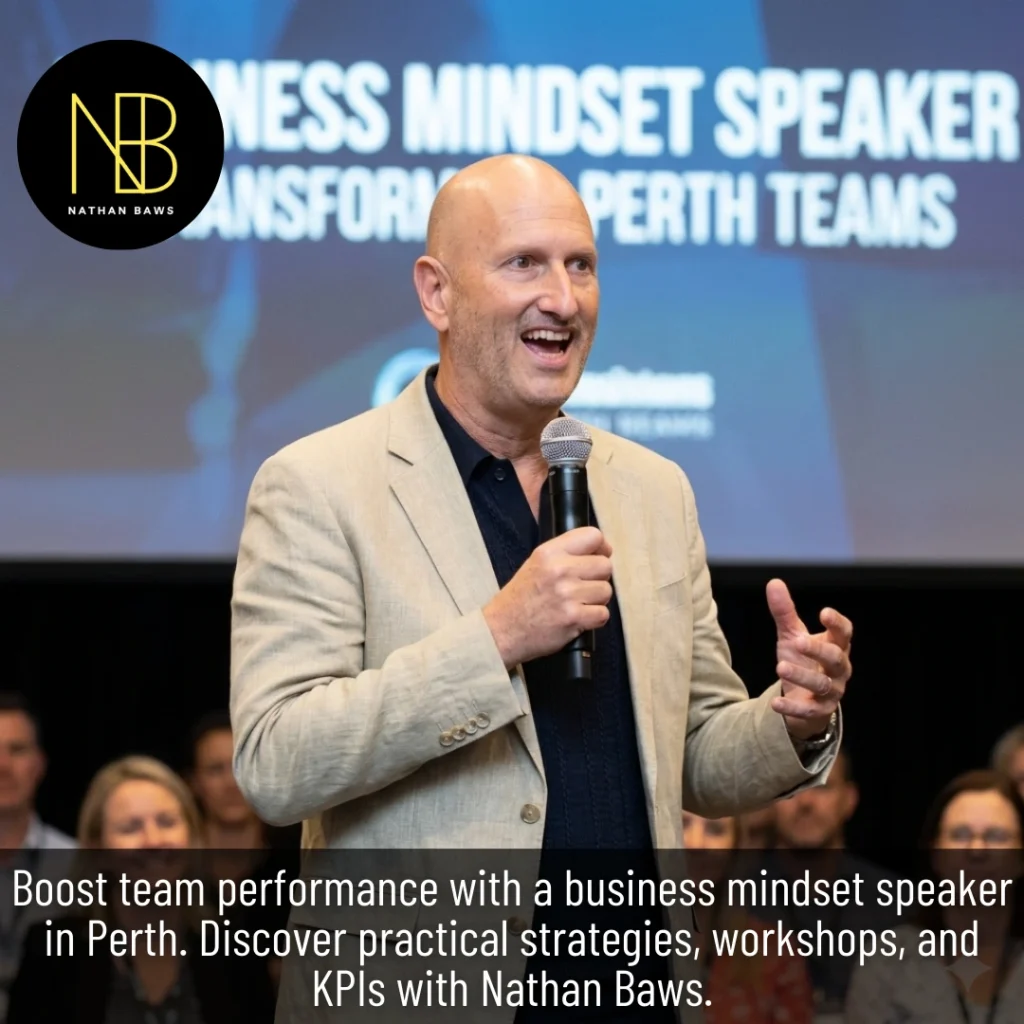
Professional Keynote Speaker Nathan Baws: Inspiring Perth Audiences with Practical Impact
Introduction If you’re searching for a professional keynote speaker who can truly connect with your Perth audience while delivering more than just inspiration, Nathan Baws offers a powerful blend of engaging storytelling, practical strategies and measurable business outcomes. We understand that organisations today need more than motivation alone; they need clear direction, actionable tools and lasting impact. Nathan works closely with event organisers and leadership teams to tailor each keynote to specific goals, whether that’s strengthening leadership capability, navigating change, improving team wellbeing or driving performance. His approach ensures that every session resonates with senior leaders and frontline teams alike, translating ideas into immediate actions that can be applied in the workplace from day one. Key Takeaways Why choose a professional keynote speaker for your Perth event? Addressing local and organisational needs When you hire a professional keynote speaker, you gain more than a presenter; you get a strategic partner who understands organisational dynamics in Perth and Australia. We tailor content to local context, regulatory environments and cultural expectations so messages land and stick. Creating measurable outcomes A professional keynote speaker should deliver clear metrics: engagement scores, takeaway actions and follow-up frameworks. We design talks with measurable outcomes to demonstrate ROI for event stakeholders and sponsors. Boosting morale and performance Engagement from a keynote speaker can immediately lift team morale and focus attention on priority behaviours. We use practical tools to shift mindset and accelerate performance, not just entertain. What to expect from Nathan Baws as a professional keynote speaker Tailored content development Nathan works closely with event teams so that every talk aligns with objectives. A professional keynote speaker offers needs analysis, pre-event interviews and customised slides that reflect your branding and messages. Engagement formats Whether you want a 20-minute opener, a 45-minute keynote, or a panel-led workshop, a professional keynote speaker adapts the format and pacing to the audience’s size and energy. Nathan offers interactive elements and Q&A to increase retention. Follow-up and resources Post-event resources are critical. A professional keynote speaker provides worksheets, follow-up emails, and implementation checklists so participants convert insights into action. How Nathan crafts messages that resonate Research-driven storytelling Nathan combines research, case studies and front-line stories to make every message credible. A professional keynote speaker uses evidence to support claims and practical examples to illustrate change in the Perth context. Practical frameworks We prioritise frameworks that teams can use immediately. A professional keynote speaker equips leaders with simple models they can teach, assess and embed in meetings and performance conversations. Interactive learning techniques Engagement is active, not passive. A professional keynote speaker will involve the audience through polls, short exercises, and reflection prompts that turn insights into behaviour. Top themes Nathan covers as a professional keynote speaker Leadership in times of change Change fatigue is real. Nathan presents a professional keynote speaker perspective on leading through uncertainty with clarity, compassion and decisive action to maintain trust and momentum. Wellbeing and sustainable performance Performance without well-being is short-lived. A professional keynote speaker helps organisations balance drive with care, so teams sustain results over the long term. Culture and behavioural design Culture shapes outcomes. A professional keynote speaker explains how to design rituals, recognition, and decision-making patterns that visibly shift norms and deliver better results. Designing an effective brief for your professional keynote speaker Define event goals and success metrics Start by telling the speaker what success looks like. A professional keynote speaker needs clear goals, engagement scores, the number of actions generated, and behavioural shifts to design relevant content. Clarify your audience profile Share attendee roles, seniority, industry mix and pain points. A professional keynote speaker uses this to calibrate language, examples, and the depth of the practical tools provided. Logistics and technology Confirm AV, stage layout and session length. A professional keynote speaker will adapt slides and interactive elements to the technical setup and ensure smooth delivery. Practical tips for maximising keynote impact Pre-event priming Share pre-reading or short videos to prime participants. A keynote speaker often recommends a primer email to build curiosity and readiness to apply ideas on the day. Integrate the keynote into the event flow Position the keynote to reinforce workshops, panels and breakout sessions. A keynote speaker delivers best when the message is echoed before and after the session. Follow-through activities Plan post-event workshops and check-ins. A professional keynote speaker can provide toolkits that leaders use to embed learning and track progress. Pricing, packages and booking logistics for a keynote speaker Transparent fee structures Fees vary by duration, preparation time and travel. A professional keynote speaker provides a clear proposal that outlines inclusions, travel and additional coaching or workshop rates. Package options Choose from keynote-only, keynote-plus-workshop or a multi-day leadership intensive. A professional keynote speaker will recommend the right package for your impact goals and budget. Local bookings in Perth We have experience delivering across venues in Perth. A keynote speaker can recommend local suppliers, timing strategies and session sequencing to maximise attendance and energy. Actionable exercises Nathan uses during talks The 10-minute reflection loop Participants complete a quick reflection on current priorities, barriers and one immediate action. A keynote speaker uses this to convert insights into commitments during the session. One-page action plan We ask leaders to write a one-page plan outlining steps, stakeholders and measures. A keynote speaker emphasises accountability through simple documentation. Micro-experiments Teams run 7-day experiments to test new behaviours. A keynote speaker guides the design of micro-experiments to reduce risk and increase learning speed. Evidence and testimonials: proof that a speaker drives change Case studies from Australian organisations Nathan has worked with corporate and public sector teams in Australia, resulting in measurable increases in engagement and leadership confidence. A professional keynote speaker provides case studies to demonstrate outcomes and transferability. Participant feedback and NPS High Net Promoter Scores reflect relevance and delivery. A professional keynote speaker continually tracks feedback to refine content and enhance impact. Long-term partnerships Organisations rebook when they see sustainable change. A professional keynote speaker seeks ongoing relationships to