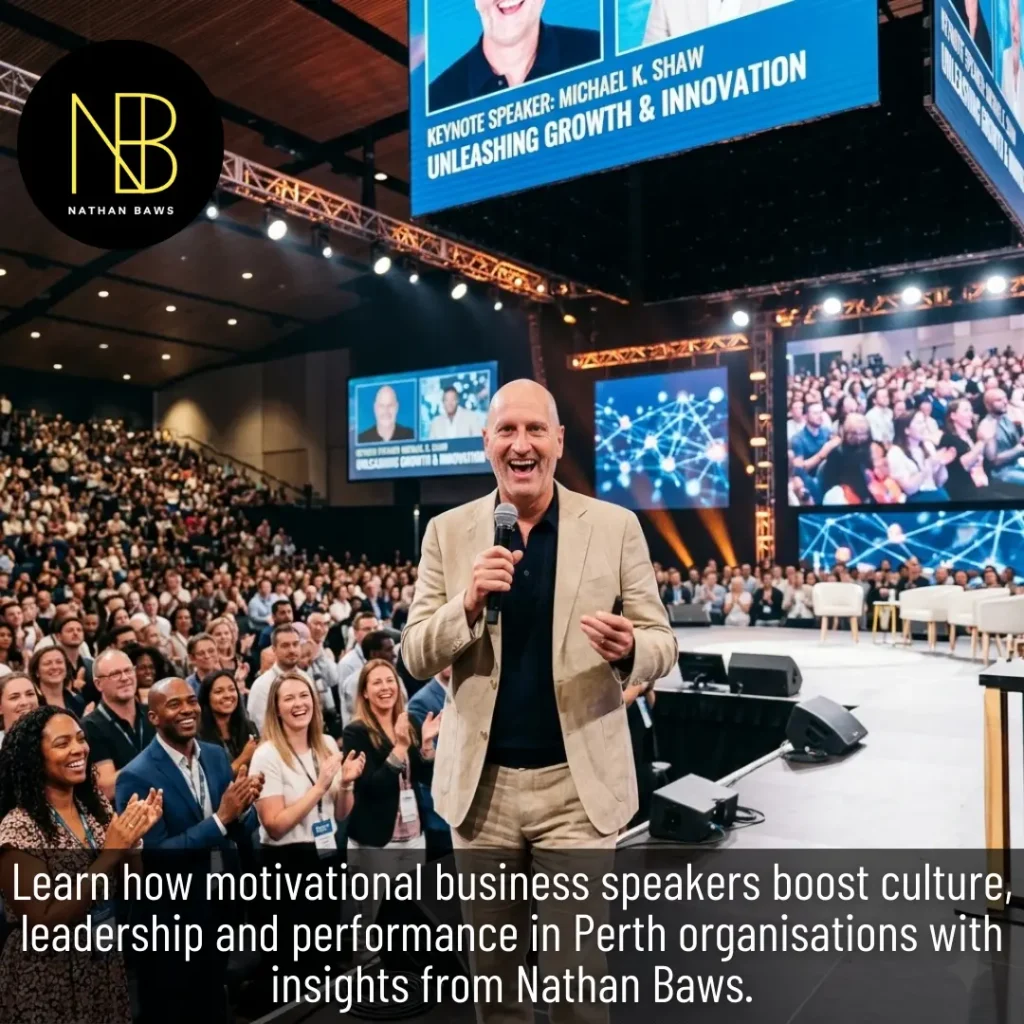
Author name: Nathan Baws

Speaker

How to hire a guest speaker: Practical Guide for Perth Events

Introduction If you want to hire a guest speaker for your next event in Perth, this guide shows clear steps to plan, recruit, and manage speakers so your event succeeds. Whether you need inspiration, training or keynote presence, knowing how to hire a guest speaker saves time, reduces risk, and improves outcomes. Key Takeaways: Understand why you should hire a guest speaker Clarify audience needs When you hire a speaker, start with the audience. Identify their knowledge level, interests, and expectations so the content will be relevant and engaging. Match event goals to speaker outcomes Decide whether you hire a guest speaker for motivation, education, or entertainment. Clear goals make speaker selection and briefing precise. Measure impact Plan how you will measure success when you hire a guest speaker. Use surveys, attendance metrics, and post-event engagement to assess value. Estimate speaker fees Know typical rates before you hire a guest speaker. Fees vary by experience, travel and preparation time; include GST and possible agency fees. Venue and AV costs When you hire a guest speaker, account for venue hire, audio-visual equipment, and support staff to ensure a smooth presentation. Travel and accommodation If you hire a speaker from outside Perth, budget for flights, transfers and accommodation. Clear terms upfront avoid surprises. Find and shortlist speakers Use local networks Tap Perth business groups, universities and industry associations when you hire a speaker. Local contacts often recommend reliable options. Search online and review reels Watch videos and read reviews before you hire a guest speaker. Previous presentations show style, pacing, and audience connection. Create a shortlist and compare Compare shortlisted candidates by topic fit, availability and cost when you hire a speaker. A comparison table helps final decisions. Create a clear speaker brief Define objectives and outcomes Your brief should state why you hire a guest speaker, audience profile, and desired takeaways. Clear objectives help the speaker prepare focused material. Provide logistics and schedule Include event date, venue details, session length and AV setup when you hire a speaker. The more specific you are, the better the delivery. Set branding and content boundaries Clarify any sensitive topics, sponsorship rules, and branding expectations before you hire a guest speaker. This avoids conflicts on the day. Negotiate contracts and terms Fee structure and inclusions Negotiate clear terms for fees, travel costs and any additional sessions when you hire a speaker. Specify payment milestones and invoicing details. Cancellation and contingency plans Agree cancellation terms and backup arrangements in case the speaker cannot attend. When you hire a guest speaker, plan a contingency to protect your event. Intellectual property and recordings Define ownership of presentation materials and permissions for recordings when you hire a speaker. Get written consent for reuse or marketing. Prepare the speaker and the team Run a pre-event briefing Hold a briefing call or meeting a few weeks before the event. Share the audience brief and presentation expectations when you hire a guest speaker. Technical rehearsal Arrange a rehearsal to test sound, slides and lighting. A tech check reduces risks when you hire a speaker and helps timing. Speaker support on the day Assign a staff member as the speaker liaison. They handle arrival, introductions and any last-minute needs when you hire a guest speaker. Create engaging content and formats Tailor presentations to local context Encourage the speaker to include Perth or Australian examples. Relevance improves audience connection when you hire a speaker. Offer interactive formats Consider panels, Q&A or workshops. Interactivity increases retention when you hire a guest speaker. Use follow-up resources Provide handouts, links, or recordings after the event. This extends impact and value when you hire a speaker. Promote the event effectively Create targeted marketing Use email, social media and local listings to reach Perth audiences when you hire a speaker. Tailor messaging to specific sectors like education, business or community groups. Leverage speaker networks Ask the speaker to promote the event to their audience. Collaboration increases reach when you hire a guest speaker. Offer early-bird incentives Use discounts or group rates to boost registrations. Clear benefits encourage commitment when you hire a guest speaker. Manage the session delivery Start on time and set expectations Open with a concise introduction and housekeeping. Setting the tone helps the session flow when you hire a guest speaker. Monitor audience engagement Use live polling or moderated questions to keep the audience involved when you hire a guest speaker. Handle feedback professionally Collect feedback immediately after the session. Timely responses inform future decisions when you hire a guest speaker. Evaluate outcomes and follow up Analyze feedback and metrics Review survey responses, attendance trends and engagement levels. Data helps measure the success after you hire a guest speaker. Debrief with the speaker Hold a short debrief to share feedback and next steps. This reinforces relationships when you hire a guest speaker. Plan next steps Decide on recordings, resources or future events based on results. Use insights gained when you hire a speaker to improve future programs. Practical tips specific to Perth and Western Australia Local timing and transport Consider peak travel times and public transport options in Perth. Factor travel time into schedules when you hire a guest speaker from elsewhere. Venue recommendations Choose venues with reliable AV and accessible locations in Perth. A suitable venue reduces technical problems when you hire a speaker. Engage local suppliers Work with Perth-based AV and catering services. Local partners make logistics easier when you hire a guest speaker. Common mistakes to avoid Vague objectives Not defining goals is a frequent error. Always set clear aims before you hire a speaker to ensure alignment and measurable results. Poor communication Late or unclear communication causes confusion. Keep open channels and confirm details when you hire a guest speaker. Underestimating AV needs Insufficient technical support is costly on the day. Test equipment and have backups when you hire a speaker. Why Nathan Baws is a reliable choice Relevant experience Nathan Baws has experience delivering practical presentations across business and community

Speaker

Innovation Speaker: Practical Strategies for Perth Organisations

Introduction An innovation speaker can change how teams think, work and deliver results. This guide explains why innovation matters in Australia, especially Perth, and shows practical steps to apply new ideas at work. It also explains how to get tailored help from Nathan Baws. Key Takeaways : Why Hire an Innovation Speaker Benefit: Fresh perspective Bringing an innovation speaker provides a fresh view on old problems. An expert can highlight blind spots and suggest practical changes to processes and products. Benefit: Skills development Teams learn new methods, such as rapid testing and simple experimentation. These skills help teams move from ideas to outcomes faster in Australian markets. Benefit: Motivation and alignment A focused session from a speaker can align goals across departments. That alignment helps Perth organisations act on strategy with confidence and speed. How an Innovation Speaker Designs a Program Assessing needs Start with a clear assessment of business goals and constraints. The innovation speaker reviews stakeholders, timelines and key metrics before creating a program. Custom content Content is tailored for the audience. For Perth teams this might include local market examples and case studies relevant to Australian customers. Measurable outcomes Programs include success measures such as prototypes built, experiments run and customer feedback collected. These measures show the value the innovation speaker delivers. Workshops and Formats Offered Short keynote sessions A short keynote by an innovation speaker is ideal to inspire large groups. Use it to set a direction and motivate attendees to act on new ideas. Half-day workshops Half-day sessions focus on a practical method, such as testing or user interviews. Participants leave with tools and tasks they can apply immediately. Multi-day labs Multi-day labs give teams time to prototype and test real concepts. The speaker guides teams through a full learning cycle to validate ideas quickly. Practical Tools and Methods Customer interviews Teach teams how to run short, effective customer interviews. An innovation speaker models the questions and helps teams practice to improve insights. Rapid prototyping Use low-cost prototypes to learn fast. The innovation speaker shows how simple mock-ups reveal user needs without heavy investment. Experiment design Design small experiments that test assumptions. The innovation speaker helps set clear hypotheses, metrics and decision rules for each test. Measuring Impact Define clear KPIs Work with an innovation speaker to choose indicators that matter, such as conversion lift or time saved. Clear KPIs guide actions and investment decisions. Track short-term wins Capture quick wins to build momentum. The innovation speaker helps teams report early results to leaders and stakeholders. Embed long-term change Measure culture shifts and process adoption over months. An innovation speaker can design follow-up sessions to keep changes on track. Practical Advice for Perth Teams Start small Begin with one team and one problem. An innovation speaker recommends starting with manageable experiments that can scale if successful. Use local examples Apply examples from Perth and broader Australia to make learning relevant. Local insight helps teams relate to methods and customers. Build a repeatable process Create a simple cycle: identify, prototype, test, measure. The speaker helps embed this routine for repeatable progress. Engaging Nathan Baws as Your Innovation Speaker What Nathan offers Nathan delivers talks, workshops and strategic coaching tailored to Australian organisations. He focuses on practical outcomes and clear next steps. Local engagement in Perth For Perth events, Nathan combines local context with proven methods. This approach helps teams in Western Australia adopt ideas quickly. Booking and preparation Contact Nathan to discuss goals, audience and logistics. He prepares a program that aligns with your timeline and desired outcomes. Case Studies and Examples Small business example A Perth small business increased sales by testing new service bundles. An innovation speaker helped design the tests and interpret customer feedback. Government program An agency ran a rapid prototyping lab to improve citizen services. The speaker structured the lab and trained staff to continue testing after the program. Corporate pilot A corporate team used low-cost prototypes to reduce product development time. The innovation speaker coached teams on experiment design and measurement. Budgeting and Return on Investment Estimating costs Consider speaker fees, workshop materials and follow-up coaching when budgeting. An innovation speaker can help outline a clear investment plan with expected returns. Calculating ROI Link experiments to revenue or cost savings to show value. The innovation speaker helps teams translate outcomes into business metrics. Scaling investment Start with a pilot and scale based on results. An innovation speaker guides the process to expand successful initiatives across the organisation. Preparing Your Team for an Innovation Session Set clear goals Define what success looks like before the session. The innovation speaker uses these goals to shape activities and outcomes. Choose participants Select a cross-functional team with decision makers and doers. An innovation speaker balances perspectives to get practical solutions. Gather data Bring customer feedback, metrics and any current work-in-progress. The innovation speaker turns this material into fast tests and prototypes. Conclusion Hiring an innovation speaker offers Perth organisations a clear path to practical change. With structured workshops, measurable outcomes and local insight, teams can test ideas faster and deliver value. To explore a tailored program and book Nathan Baws for a talk or workshop, contact Nathan at https://nathanbaws.com/ or email today. Contact Nathan Baws to engage an innovation speaker who will help your team move from idea to impact in Perth and across Australia. FAQs What does an innovation speaker do? An innovation speaker teaches methods to generate and test ideas. An innovation speaker guides teams through rapid experiments. The goal is practical change and measurable outcomes. How long are typical sessions? Sessions range from 30-minute keynotes to multi-day labs. Workshops often run half a day for hands-on practice. Choose a format that fits your goals and schedule. Can sessions be tailored for Perth businesses? Yes. Sessions include local examples and market context. Tailoring helps teams relate methods to Australian customers. Nathan Baws adapts content for Western Australia needs. What outcomes should we expect? Expect prototypes, tested hypotheses and clear next steps.

Keynote Speaker

Internet Marketing Keynote Speaker: Practical Strategies from Nathan Baws

Introduction Finding an internet marketing keynote speaker who delivers clear, actionable advice matters for businesses in Perth and across Australia. This article explains what an internet marketing keynote speaker does, why it helps your marketing, and how Nathan Baws can support growth with practical steps you can apply immediately. Key Takeaways: What an Internet Marketing Keynote Speaker Brings to Your Event Clear strategy and focus An internet marketing speaker provides a clear plan that matches your audience and business goals. The keynote will outline priority actions and a timeline for early wins that local businesses in Perth can implement. Real-world examples Expect case studies and examples from Australian businesses, explained plainly so your team can replicate success. A good internet marketing keynote speaker uses examples relevant to small and medium enterprises in Perth and nationwide. Actionable next steps Every presentation from an internet marketing keynote speaker should finish with a list of actions, templates and measurable KPIs to track progress after the event. Why Perth Businesses Need an Internet Marketing Keynote Speaker Local market understanding Perth has a unique market. An internet marketing speaker who knows the region can tailor advice to local search trends, customer behaviour and seasonal changes in demand. Bridging skill gaps Many local teams lack in-house digital skills. An internet marketing keynote speaker teaches practical skills and builds confidence to act immediately on search, social and paid strategies. Inspiring action A keynote motivates teams to adopt new systems. An internet marketing speaker helps leaders prioritise investments in marketing technology and training. Core Topics Covered by an Internet Marketing Keynote Speaker Search engine optimisation made simple The keynote will break down SEO into clear steps: keyword mapping, on-page fixes, and content planning. An internet marketing keynote speaker shows how to measure improvements and avoid common errors. Practical social media strategies Sessions cover platform choices, posting frequency, and simple content frameworks. An internet marketing keynote speaker focuses on content that converts followers into customers. Effective paid media and budgeting An internet marketing speaker explains how to set realistic budgets, test ads, and track ROAS so you only scale what works. How to Choose the Right Internet Marketing Keynote Speaker Check proven outcomes Ask for case studies and KPIs. A strong internet marketing keynote speaker will show before-and-after metrics from past presentations and client work. Look for practical tools Choose a speaker who provides templates, checklists and reporting sheets. An internet marketing keynote speaker should leave you with tools you can use the next day. Assess audience fit Review sample talks and feedback. The best internet marketing keynote speaker adapts messaging for executives, marketing teams and frontline staff. Actionable Steps After a Keynote Create a 90-day plan Translate the keynote takeaways into a 90-day playbook that assigns owners, deadlines and metrics. An internet marketing speaker often provides a starter plan you can customise. Run quick tests Start with low-cost tests: keyword-driven content, a small paid campaign, or a social content series. An internet marketing keynote speaker will prioritise tests that prove value fast. Measure and iterate Use simple dashboards to track organic traffic, leads and conversions. An internet marketing speaker teaches which metrics matter and how to report them to stakeholders. Examples of Practical Tactics from an Internet Marketing Keynote Speaker Local SEO checklist Implement a local SEO checklist, Google Business Profile optimisation, local content, and citations. An internet marketing speaker will guide you through a simple audit for Perth-focused search gains. Content calendar framework Use a repeatable content calendar to keep consistent publishing. An internet marketing keynote speaker gives topics, cadence and distribution tips that suit small teams. Simple ad testing plan Run a three-ad test with different headlines and images to find what resonates. An internet marketing keynote speaker will teach how to read the results and scale successful ads. How Nathan Baws Delivers Value as an Internet Marketing Keynote Speaker Local experience and global insight Nathan blends Perth market knowledge with broader digital marketing trends, making his talks practical and forward-looking. As an internet marketing speaker, he connects strategy to local execution. Workshops that follow the keynote Nathan offers hands-on workshops to turn ideas into executed tasks. An internet marketing keynote speaker who stays to teach ensures teams leave confident and ready to act. Follow-up support After the event, Nathan provides templates and a follow-up plan. An internet marketing keynote speaker with follow-up resources helps maintain momentum and track success. Budgeting and Booking an Internet Marketing Keynote Speaker Estimate return on investment Consider the long-term value of improved lead quality and lower acquisition costs. An internet marketing keynote speaker helps quantify gains with conservative scenarios. Flexible formats Nathan offers keynote lengths and hybrid options for in-person or virtual events. An internet marketing keynote speaker should match your schedule and attendee needs. Booking checklist Prepare event goals, audience profile and technical needs before booking. An internet marketing keynote speaker uses this information to tailor the talk effectively. Preparing Your Team Before the Keynote Set clear goals Share measurable goals with attendees so the keynote targets your priorities. An internet marketing keynote speaker can then focus on the highest-impact actions. Gather current data Provide basic marketing metrics ahead of time: website traffic, top channels, and current conversion rates. An internet marketing keynote speaker uses this data to create relevant examples. Encourage questions Collect questions in advance to ensure the keynote addresses real problems. An internet marketing keynote speaker will include time for practical Q&A tailored to your business. Measuring Success After Hiring an Internet Marketing Keynote Speaker Define KPIs quickly Choose three KPIs to measure for the first 90 days: traffic, leads and conversion rate. An internet marketing keynote speaker helps set realistic targets for each. Track process improvements Measure adoption of recommended processes and tools. An internet marketing keynote speaker’s impact is often visible in improved team efficiency. Review and plan next steps Hold a 60-day review to evaluate results and update the plan. An internet marketing keynote speaker will suggest next-phase actions based on early

Speaker

Key speakers: How to Choose and Work with Key Speakers in Perth

Introduction Choosing the right key speakers matters for events in Perth and across Australia. This guide explains what to look for, how to prepare, and how to get the most from key speakers while showing how Nathan Baws can help. Key Takeaways Why Key Speakers Matter Set the tone and goals Key speakers set expectations for your event and shape the audience experience. They can raise credibility and motivate action when chosen to match event goals. Influence attendee learning Good key speakers deliver clear lessons and practical tools. They help attendees leave with tangible takeaways and next steps. Drive engagement and networking Key speakers can spur discussion, networking and follow-up. They create shared moments that make events memorable. How to Identify the Right Key Speakers Match expertise to audience needs Start by defining your audience and outcomes. Prioritise speakers who have direct experience with those needs. Check credibility and results Research past talks, case studies and references. Reliable proof helps confirm a speaker’s value. Evaluate style and fit Review videos of talks to test tone, pacing and clarity. Choose speakers who match your event style and audience expectations. How to Vet and Book Key Speakers Contact and initial briefing Provide a clear brief about your event, goals and audience. Ask speakers for tailored proposals and sample content. Negotiate terms and logistics Agree on fees, travel and technical needs early. Put terms in writing to avoid surprises when key speakers arrive. Confirm outcomes and deliverables Clarify what materials and follow-up the speakers will provide. Set clear timelines for any pre-event work. Preparing Speakers for Your Event Share audience insights Give speakers detailed audience demographics and expectations. The more they know, the more targeted their content will be. Coordinate with AV and staging Run technical checks and rehearsals. Well-prepared speakers perform better with reliable tech and clear stage directions. Plan interaction and timing Decide on Q&A, polls and breakouts in advance. Time controls help speakers keep energy and focus throughout the session. Designing Talks That Work Clear structure and practical steps Ask key speakers to present with a clear beginning, middle and end. Include practical steps attendees can act on immediately. Use visuals and examples Encourage speakers to use visuals that support the message and real examples from Australian contexts. Relevant examples improve understanding. Engage the audience Include interactive elements like polls and small group tasks. Key speakers who invite participation increase retention and satisfaction. Maximising Impact After the Event Gather feedback and measure outcomes Collect surveys and engagement metrics to assess the performance of speakers. Use data to improve future selections. Share content and follow-up Distribute recordings, slides and action guides from speakers. Follow-up keeps the conversation going and improves value for attendees. Develop longer-term relationships Work with speakers on future events, podcasts or workshops. Ongoing relationships yield better alignment and efficiency. Budgeting and Value for Money Understand fee structures Fees for speakers vary by experience and demand. Factor travel, accommodation and preparation into your total cost. Calculate return on investment Measure ticket sales, sponsorship value and attendee feedback to test the value of speakers. Use metrics to justify investments. Negotiate packages Consider bundled deals for multiple appearances or online content. Bundles can give you more value from key speakers. Local Considerations for Perth and Australia Choose Australian-relevant content Key speakers who reference Australian law, markets and culture are more relatable. Local context improves trust and action. Plan for travel and seasonality Perth events may need specific scheduling for flights and accommodation. Book speakers early to secure dates and reduce costs. Leverage local networks Use Western Australian networks to find speakers and partners. Local contacts help find reliable speakers and simplify logistics. Practical Checklist for Working with Key Speakers Pre-event checklist Send a detailed brief, confirm tech needs and run a rehearsal. Confirm arrival times and hospitality for your speakers. Event-day checklist Provide a clear run sheet, dedicated liaison and prompt timing. Have backups ready for AV and timing issues that involve key speakers. Post-event checklist Collect feedback, send thank-you notes and request content delivery. Review performance metrics tied to speakers for future planning. How Nathan Baws Helps with Key Speakers Tailored speaker selection Nathan Baws helps organisers find speakers who match goals and audience in Perth. He uses local experience to recommend high-impact options. Event coaching and prep Nathan supports speaker coaching, content design and rehearsal to improve delivery. His practical coaching helps speakers perform at their best. End-to-end support From negotiation to post-event follow-up, Nathan manages logistics and quality control. He simplifies working with speakers so you can focus on your event. Actionable Tips to Book Your Next Key Speakers Start early and be clear Contact prospective speakers months in advance and provide a concise brief. Early clarity improves availability and quality. Use recorded work to decide Ask for talk samples and references before committing. Review recordings to check the fit for your Perth audience and event goals. Budget for rehearsal and materials Include rehearsal time and slide development in your budget. That investment makes speakers’ sessions more polished and useful. Conclusion Choosing and working with the right key speakers is essential for successful events in Perth and across Australia. By matching audience needs, preparing thoroughly and measuring outcomes, you get the best results from key speakers. If you want practical help finding, preparing or managing key speakers, contact Nathan Baws to discuss tailored solutions and next steps. Contact Nathan Baws to reach out and start planning your event with strong key speakers. FAQs about Key Speakers What is a key speaker? It is the main presenter at an event who sets the tone and delivers the core message. They usually have expertise and credibility relevant to the audience. How far in advance should I book key speakers? Book at least three to six months in advance for popular speakers. For Perth events, earlier booking avoids travel conflicts and higher fees. How do I assess a speaker’s fit? Review past talks, testimonials and audience feedback for fit. Watch

Keynote Speaker

Keynotes Australia: How Nathan Baws Helps Teams Learn, Lead and Grow

Introduction When organisations search for keynotes Australia that deliver real change, they need clear guidance, practical tools and a speaker who understands Australian workplaces. Nathan Baws offers tailored solutions for teams across Perth and beyond, combining engaging delivery with actionable steps to improve performance. This guide explains why keynotes Australia matter, how to choose the best talk, and how to work with Nathan Baws to create measurable outcomes. Key takeaways Why keynotes Australia matter for your organisation Driving alignment with clear messages Keynotes Australia help teams align around priorities and shared goals by delivering a single clear message designed for an Australian audience. Boosting engagement and morale Well-crafted keynotes lift energy across teams and provide practical strategies staff can apply the next day to improve performance. Creating measurable change Effective keynotes in Australia include follow-up actions and metrics so leaders can track progress after the event. Choosing the right speaker Relevance to your industry Select speakers who know your sector. Nathan Baws brings practical experience relevant to Australian workplaces and Perth organisations. Track record and testimonials Review case studies and feedback from past events to judge the impact of keynotes in Australia on similar organisations. Customization and relevance Prioritise speakers who will tailor content. Nathan Baws customises keynotes in Australia to local culture, goals and challenges. How Nathan Baws designs keynotes Australia Discovery and alignment Nathan starts with a discovery session to align the keynote with your objectives and the issues your team faces across Australia. Practical frameworks and tools Each keynote includes step-by-step frameworks that participants can apply immediately, ensuring keynotes in Australia lead to action. Follow-up and reinforcement Keynotes in Australia from Nathan include follow-up resources and suggestions for reinforcing learning in the workplace. Preparing your team for a keynote event Set clear objectives Define what success looks like before the event so you can measure the impact of keynotes Australia against tangible outcomes. Communicate expectations Share the session goals with participants to improve engagement and readiness for applying lessons from keynotes Australia. Plan logistics early Confirm timing, AV and room setup to ensure keynotes Australia run smoothly and focus stays on content and learning. Delivering value after the keynote Action plans and accountability Convert insights from keynotes Australia into action plans with clear owners, deadlines and metrics to ensure follow-through. Ongoing coaching and workshops Supplement keynotes Australia with workshops that help teams embed new practices and measure progress over time. Measure and report outcomes Track improvements in engagement, productivity and KPI changes to demonstrate the ROI of keynotes Australia. Booking Nathan Baws for keynotes in Perth and nationwide Availability and formats Nathan offers in-person and virtual formats to suit events across Perth and the rest of Australia, making keynotes Australia accessible. Pricing and packages Discuss goals to receive a customised proposal that outlines fees, support materials and follow-up options for keynotes Australia. Next steps to secure a date Contact Nathan early to secure event dates and allow time to tailor the content to your organisation’s needs for keynotes Australia. Practical tips for maximising keynote impact Engage leaders before and after Involve senior leaders in promoting the session and reinforcing messages to multiply the effect of keynotes in Australia across teams. Make action simple and specific Translate big ideas from keynotes Australia into two or three immediate actions each team member can follow up on. Use short reinforcement loops Schedule brief follow-up meetings to review progress on actions inspired by keynotes in Australia and adjust as needed. Common challenges when organising keynotes in Australia Aligning different stakeholder expectations Address differing goals by clarifying outcomes and selecting a keynote that meets the core business needs for keynotes Australia. Ensuring lasting behaviour change Combine a keynote with workshops and coaching so keynotes Australia become a catalyst for ongoing development rather than a single event. Managing logistics across locations Choose hybrid delivery and local support to scale keynotes in Australia efficiently across multiple offices or regions. Case studies: Success stories from keynotes in Australia engagements Improving frontline customer service in Perth A Perth organisation used a Nathan Baws keynote to introduce clear service standards, then tracked improvement in customer satisfaction metrics after keynotes Australia. Leadership alignment for a national rollout Leaders across Australia attended a Nathan Baws keynote that created a shared playbook and improved cross-state collaboration following keynotes in Australia. Boosting team productivity Teams that implemented simple frameworks from a keynote saw measurable increases in output and clarity after keynotes Australia. How to evaluate the success of keynotes in Australia Define KPIs before the event Set specific KPIs such as engagement scores, action completion rates and performance metrics to evaluate keynotes in Australia. Collect participant feedback Use surveys and focus groups to gather qualitative data on how practical and relevant attendees found the content of keynotes in Australia. Track long-term outcomes Compare business metrics before and after the event to measure the sustained impact of keynotes in Australia on performance. Conclusion Keynotes Australia can change how teams think and work when they are tailored, practical and followed by action. Nathan Baws specialises in creating memorable, evidence-based keynotes Australia for Perth and organisations across the country. If you want measurable outcomes, clear next steps and a speaker who understands Australian workplaces, contact Nathan Baws to discuss your event and secure a customised keynote that drives results. Contact Nathan Baws to book keynotes Australia and start turning ideas into action. FAQs What topics does Nathan Baws cover in keynotes Australia? Nathan covers leadership, culture and practical productivity strategies for Australian organisations. Nathan tailors content to local industries and Perth audiences. Each keynote includes actionable steps and follow-up suggestions. How much do keynotes Australia cost? Cost varies by format, location and level of customisation required. Request a proposal to receive a detailed cost breakdown. Packages often include materials and follow-up options. Can Nathan deliver virtual keynotes Australia? Yes, Nathan offers both virtual and in-person delivery across Australia. Virtual sessions are designed for engagement and interactivity. Technical requirements are discussed during booking. How

Business Growth Strategies

Marketing for Business Growth: Practical Growth Guide 2026

Introduction Effective marketing for business growth combines clear positioning, the right channels, consistent messaging and measurement. Whether you run a small start-up in Melbourne, a medium business in Brisbane, or a national brand, the principles remain the same. Key Takeaways Understanding Marketing for Business Growth What marketing for business growth actually means Marketing for business growth means aligning marketing activities with business objectives: increasing revenue, expanding market share and improving profitability. It’s more than advertising –  it includes product positioning, pricing, distribution and customer experience. Why growth-focused marketing differs from traditional marketing Traditional marketing often emphasises awareness. Growth marketing focuses on measurable acquisition, activation, retention and monetisation. It uses data to inform decisions and scales tactics that show clear ROI. Core metrics to track for growth Key metrics include customer acquisition cost (CAC), lifetime value (LTV), conversion rate, churn rate and return on ad spend (ROAS). Tracking these lets you prioritise channels and optimise spend for maximum growth. Customer Insight and Segmentation for Growth Define your ideal customer for marketing for business growth Start with customer personas that describe demographics, pain points, buying behaviour and decision triggers. A clear ideal customer profile helps target messages and channels more efficiently, increasing conversion and lowering CAC. Segmenting customers to drive targeted campaigns Segmentation can be by behaviour, lifecycle stage, value or demographics. Using segmentation, you can craft personalised campaigns that improve engagement and lift conversion, which supports sustainable marketing for business growth. Use customer feedback and data to refine targeting Customer surveys, product analytics and sales feedback reveal what works and what doesn’t. Use this data to refine messaging, reposition offerings and identify upsell opportunities that boost revenue and support long-term growth. Channels and Tactics for Marketing for Business Growth Paid acquisition channels that scale Paid channels like search ads, social ads and programmatic display can scale fast when optimised. Focus on campaigns with clear conversion paths and measure CAC versus LTV to ensure profitability while pursuing marketing for business growth. Content and inbound marketing to build sustainable growth Content marketing attracts organic traffic and builds authority. Regular, helpful content aligned with buyer intent reduces long-term acquisition costs and fuels other channels like email and social for ongoing marketing for business growth. Partnerships, affiliates and channel marketing Strategic partnerships and affiliate programs extend reach efficiently. A well-structured partnership can access new audiences with lower upfront costs, proving highly effective for marketing for business growth in competitive markets. Conversion Optimisation and Sales Alignment Optimise website and landing pages for conversions Small changes to headlines, CTAs and form design can significantly increase conversion rates. A/B testing and heatmaps identify friction points so you can iterate toward higher performance and stronger marketing for business growth. Align sales and marketing for a cohesive funnel Sales and marketing should share goals, metrics and lead qualification criteria. A closed-loop feedback process ensures that marketing generates the right leads and sales closes more efficiently –  a vital component of marketing for business growth. Use automation to nurture leads and reduce drop-off Email sequences, retargeting and CRM-driven workflows nurture prospects through the funnel. Automation keeps leads engaged and shortens sales cycles, improving conversion rates and supporting sustainable marketing for business growth. Retention, Loyalty and Increasing Customer Value Why retention matters in marketing for business growth Acquiring new customers is often costlier than retaining existing ones. Increasing retention through great service, loyalty programs and ongoing value delivery raises LTV and makes growth more profitable. Strategies to increase customer lifetime value Upselling, cross-selling and subscription models increase average revenue per customer. Personalised recommendations and regular communication keep customers engaged and raise lifetime value –  a key lever in marketing for business growth. Measure and reduce churn effectively Identify churn triggers through cohort analysis and customer feedback. Targeted interventions –  onboarding improvements, special offers, or service fixes –  can reduce churn and preserve revenue crucial for marketing for business growth. Data, Testing and Scaling for Growth Set up reliable data tracking for marketing for business growth Accurate tracking across channels and touchpoints is essential. Implement analytics, event tracking and conversion attribution to understand what drives growth and to allocate budget effectively. Run experiments and use validated learning Hypothesis-driven testing (A/B tests, pricing experiments, channel experiments) reveals what really moves metrics. Use these learnings to double down on successful tactics that accelerate marketing for business growth. Scale winning tactics while managing risk When an experiment shows clear ROI, scale budgets incrementally and monitor performance. Avoid over-allocating too quickly; maintain margin controls so growth is sustainable and profitable. Brand, Story and Positioning to Support Growth Craft a brand story that supports marketing for business growth A compelling brand story differentiates you in crowded markets. Clear messaging about outcomes, values and customer impact makes all marketing channels more effective and helps you grow faster. Positioning your offer to win in competitive markets Position based on unique benefits and evidence –  case studies, testimonials and data. Strong positioning reduces price sensitivity and increases conversion, helping marketing for business growth deliver stronger margins. Use social proof to accelerate decision-making Customer reviews, case studies and influencer endorsements provide credibility. Displaying social proof in ads and landing pages lowers friction and speeds purchase decisions, assisting your marketing for business growth efforts. Budgeting and ROI for Marketing for Business Growth Allocate budgets based on channels that prove ROI Allocate more to channels with positive unit economics. Regularly review spend against CAC and LTV to ensure you are investing in channels that support long-term marketing for business growth rather than vanity metrics. Forecasting and scenario planning Build scenarios for different spend levels and expected returns. This helps leadership make informed decisions and ensures funding for growth initiatives that align with broader business strategy. Reporting frameworks that inform decisions Create concise dashboards showing LTV/CAC, conversion rates and churn. Use these to make timely decisions and pivot strategies to support measurable marketing for business growth. Practical Roadmap: From First Customer to Scale Phase 1 –  Validate product-market fit Focus on early adopters, simple

Business Growth Strategies

Business Success Coaching That Helps Leaders Grow with Confidence

Introduction Business success comes from clear strategy, strong habits and support. A professional business coach can help any entrepreneur or small business owner move from stuck to steady growth. This article explains how business success coaching works, what to expect and how to get results fast. How a Business Coach Helps Business Owners Reach Business Success What a business coach does for entrepreneurs A business coach listens, asks questions and helps you set short and long term goals. Business success coaching gives you a plan and a system to reach those goals. Why business coaching services speed up results Coaches keep you accountable, share proven methods and help you avoid common mistakes. Business success coaching reduces trial and error and helps you make better choices. How small business coaching fits different industries Business success coaching is flexible. A coach can work with a cafe owner, a tech founder or a consultant. The core focus is on growth, systems and leadership. Personalise Your Plan with a Professional Business Coach Assessing your current business and spotting gaps First, a professional business coach reviews finances, operations and marketing. Business success coaching uses data and interviews to find the biggest opportunities. Setting personalised goals to achieve your business goals Good coaching turns big dreams into realistic steps. Business coaching program plans include milestones, timelines and clear metrics to measure progress. Tailoring support for small business and solo entrepreneurs Not every business needs the same support. Business success coaching adapts to your team size, budget and schedule so you can grow without burning out. Business Coaching Program Elements That Drive Business Growth Strategy sessions: building a clear roadmap Strategy sessions help you define your unique value, target customers and revenue model. Business success coaching ensures every action ties to growth targets. Operational systems: daily routines that scale Coaches teach systems for sales, customer service and finance. These systems make growth repeatable and sustainable. Leadership and team development for long-term gains As you grow, your role changes. Business success coaching helps you lead teams, hire right and delegate well so the business can thrive with or without you doing everything. Common Challenges Business Owners Face and How Coaching Helps Feeling stuck: finding momentum with coaching helps Many entrepreneurs feel stuck. A coach helps you prioritise the highest impact moves so you make progress each week through business success coaching techniques. Managing cashflow and financial stress Coaching provides budgeting templates, cashflow forecasts and pricing advice. Business success coaching teaches you to plan for slow months and invest in growth wisely. Balancing business and life: practical boundaries Business success coaching helps you set working hours, delegate tasks and protect downtime so your life improves as your business grows. Small Business Coaching: Real Results for Small Teams Low-cost changes with big impact Small business coaching often focuses on simple, high-return changes like pricing, packages and referral programs. Business success coaching finds the quick wins. Marketing strategies that actually work Coaches help you choose the best marketing channels for your audience. Business success coaching emphasises consistent messaging and measurable campaigns. Customer retention and lifetime value Small businesses often forget retention. Business success coaching increases repeat sales and lifetime value through better service and follow-up systems. Business Education and Coaching: Learn While You Grow Combining business school lessons with hands-on coaching Formal education teaches theory. Business success coaching applies those lessons directly to your business so you see faster improvement. Workshops, training and practical assignments Coaching programs often include workshops and tasks. Business success coaching embeds learning in real work so you learn by doing. Ongoing learning to stay ahead The market changes. Business success coaching encourages continuous learning to adapt your strategy and keep growing. How to Choose the Right Business Coaching Services Look for a specialised business coach Choose a coach who understands your industry or the specific problem you face. Business success coaching is more effective when the coach has relevant experience. Check for clear outcomes and a timeline A good business coaching program outlines what you will achieve and by when. Business success coaching should promise measurable results, not vague hope. Trial sessions and real client case studies Ask for testimonials, case studies and a trial session. Business success coaching providers who show real results give you confidence to commit. Practical Steps to Get Started with Business Success Coaching Define your business goals and main obstacles Write down your revenue targets, team plans and biggest challenges. Business success coaching starts with clarity on what you want to achieve. Choose one area to focus on first Don’t change everything at once. Pick one growth lever — marketing, pricing or operations. Business success coaching helps you test changes and measure impact. Set simple weekly actions and review progress Small wins build momentum. Business success coaching emphasises weekly accountability so you keep moving forward. Measuring Success: KPIs and Results from a Business Coaching Program Key performance indicators every coach tracks Common KPIs include revenue, profit margin, customer acquisition cost and retention rates. Business success coaching measures these to show progress. How to calculate return on investment Compare the profit growth after coaching to the cost of the program. Business success coaching should show a clear payback within months, not years. Adjusting the plan when things don’t work Coaching is iterative. If a tactic fails, a coach helps you pivot to the next test. Business success coaching is about agility and learning. Real Stories: Entrepreneurs Who Grew with Business Success Coaching A café owner who doubled weekly revenue One cafe used business success coaching to change pricing and run loyalty offers. Simple changes led to higher average spend and more repeat customers. A tech founder who scaled to a 10-person team With business success coaching the founder improved hiring processes, defined roles and removed bottlenecks, enabling rapid growth. A consultant who moved from freelance to agency By packaging services and creating a sales process, a consultant used business success coaching to build a predictable pipeline and steady income. How Nathan

Marketing & Advertising

Guerrilla Marketing 101: Guerrilla Marketing Tactics That Work

Introduction Guerrilla marketing tactics give small businesses and big brands a fresh way to reach a target audience without a huge marketing budget. These unconventional marketing strategies use creativity and surprise in public space and online marketing to create buzz and make campaigns go viral. This guide explains practical guerrilla marketing tactics, offers real examples, and shows how to design a guerrilla marketing campaign that works. Key takeaways How guerrilla marketing campaigns differ from traditional marketing What makes guerrilla marketing unique Guerrilla marketing campaigns rely on creativity instead of large budgets. They use unconventional tactics like flash mob, street marketing or ambient marketing to surprise people in public space. Unlike traditional marketing, guerrilla campaign ideas often aim to be memorable and talked about. When to choose guerrilla marketing tactics Choose guerrilla marketing tactics when you want to reach a local audience, create buzz or go viral. It works well for product or service launches, events and brand awareness pushes. Risks and rewards of guerrilla campaign work There is risk- you need permits, safety checks and a clear plan. The reward is higher engagement and lower cost per impression when guerrilla marketing works. Planning a guerrilla marketing campaign: marketing strategies that work Define goals and target audience Start by defining what you want: more sales, brand awareness, or social shares. Know your target audience and where they spend time- public space, online channels or events. Set a realistic marketing budget A strong guerrilla campaign does not need a huge budget but it needs resources for materials, staff and possible permissions. Balance creativity with practicality. Create a timeline and test ideas Plan steps, run small tests, and refine ideas. Experiential marketing benefits from trial runs to ensure safety and impact. Top guerrilla marketing tactics for small businesses and big brands Street marketing and outdoor guerrilla marketing Street marketing and outdoor guerrilla marketing include stickers, creative pavement art, pop-up booths and vending machine stunts. These guerrilla marketing tactics are direct, visible and often photo-worthy. Ambient marketing and indoor guerrilla marketing Ambient marketing uses everyday places in new ways, like clever seating in a bus stop or branded installations in a shopping centre. Indoor guerrilla marketing can surprise shoppers and create memorable guerrilla marketing examples. Flash mob and experiential guerrilla marketing Flash mob events and experiential guerrilla marketing let people experience a product or service in an exciting way. They can make your content go viral and create a buzz in social media marketing. Creative guerrilla marketing techniques and ideas Use humour and surprise Humour and surprise help people remember your brand. A clever, playful guerrilla marketing tactic can go viral and bring organic buzz marketing. Interactive installations and public engagement Create installations that invite people to touch, play or share photos. Engagement increases the chance to go viral and boosts brand awareness. Stealth marketing and buzz building Stealth marketing and ambush marketing can create unexpected attention. Use them carefully and ethically so the marketing works without backfire. Combining guerrilla marketing tactics with digital marketing Use social media to amplify a guerrilla campaign Record your guerrilla marketing tactics and share them on social media platforms. Strong visuals and hashtags help a guerilla marketing campaign reach a wider online audience. Email marketing and online marketing follow-up Use email marketing and online marketing to turn interest from a guerrilla campaign into sales. Capture contacts at the event and follow up with offers. Make content shareable to go viral Create moments that people want to share. When guerrilla marketing tactics are shareable, they help your campaign reach more people without more spend. Examples of guerrilla marketing and case studies Small business guerrilla marketing examples Local cafes and small retailers use clever outdoor guerrilla marketing, like coffee cup art or sidewalk campaigns, to attract attention and build a local following. Big brand guerrilla campaign success Big brands have used unconventional tactics like branded vending machines or ambient marketing in public space to create viral marketing. These guerrilla marketing examples show how scale and creativity combine. Quick example: street marketing that worked A simple street marketing stunt that lets people try a sample or take photos can become a successful guerrilla marketing campaign. The key is a strong idea and good placement. Guerrilla marketing strategies: legal, ethical and practical tips Check permissions and safety Always check local laws and permits. Guerrilla marketing is legal when you follow rules, but some tactics need permission to avoid fines or problems. Respect public space and community Don’t damage property or create hazards. Good guerrilla marketing tactics respect the public and build positive brand marketing. Measure impact and learn Track engagement, social shares and sales. Use simple metrics to see if your guerrilla marketing tactics lead to desired results and refine your approach. Guerrilla marketing tips for better results Think outside the box and stay simple Great guerrilla marketing tactics often come from simple, unexpected ideas. Think outside the box and keep the message clear. Make it local and timely Local relevance and timing help a guerrilla campaign connect with people. Tie your stunt to events, seasons or local culture for more impact. Blend online and offline efforts Combine street marketing with social media hashtags and online marketing strategies to extend reach and make the campaign go viral. How to measure if your guerrilla marketing works Set KPIs before you start Define metrics like social shares, website visits, leads and sales. These will tell you if guerrilla marketing tactics are moving the needle. Collect on-site data and feedback Use simple surveys, sign-ups or QR codes to get contacts and feedback during a guerrilla campaign. This helps you learn fast. Analyse social media and PR coverage Track hashtags, mentions and press pickup. Viral marketing and buzz are often seen in social engagement and news coverage. Practical guerrilla marketing tips and checklist Checklist before launch Permissions, safety, staffing, supplies, social media plan and measurement tools should be ready. This checklist makes a guerrilla campaign run smoothly. Team roles and responsibilities Assign clear roles: creative

Business Growth Strategies

Entrepreneurial Growth Strategies That Help Businesses Scale Smarter

Introduction Entrepreneurial growth strategies help founders plan how to grow revenue, reach new customers and scale operations. This guide explains simple, practical steps to build growth that lasts. It uses clear language and gives direct actions you can apply now. Growth strategy: Assessing current position and market share Audit your current market share Start by measuring how much of the market you own. Use sales data, competitor research and customer surveys. Knowing your market share helps set realistic targets for market penetration and growth opportunities. Analyse competitors and existing products Look at what competitors offer and how customers respond. Identify gaps in product line or service that your business can fill. This helps with product development and positioning. Set measurable goals for business growth strategies Create targets for revenue, customer numbers and retention. Use simple KPIs that you can track weekly. Goals should guide decisions like where to focus marketing strategies or product changes. Business growth strategies: Marketing strategies for increasing market share Choose channels that match your customers List the places your customers spend time. It could be email newsletters, social media, search or local events. Focus on a few channels and test them before expanding. Use a newsletter to build direct relationships A regular newsletter is a low-cost way to reach customers. Share offers, new product news and useful content. Measure open and click rates to refine your approach. Leverage content for long-term growth strategy Create helpful articles, videos or guides that answer common customer questions. Content drives organic traffic and supports other marketing strategies like SEO and email campaigns. New markets and diversification: Expanding revenue streams Evaluate new markets carefully Study demographic, cultural and economic differences before moving into a new market. Small pilots or limited launches can reduce risk and test demand. Diversify with complementary product line additions Add products or services that match your brand and customer needs. Diversification can protect your business if one revenue stream slows down. Use partnerships to enter new markets Find partners with local knowledge or distribution networks. Partnerships speed up market entry and often cost less than building new capability yourself. Product development: Improving existing products and launching new ones Iterate quickly with customer feedback Use simple experiments to test product changes. Ask customers for feedback, run A/B tests and track usage. Fast iteration reduces waste and improves product-market fit. Plan product line growth with modular thinking Design products so you can add features or variants without rebuilding everything. Modular product lines are easier to scale and diversify. Price strategically to increase revenue streams Test pricing models like tiered plans, subscriptions or bundles. The right price can boost both sales volume and profit margins. Market penetration and increasing market share Focus on the most promising customer segments Identify segments that give the highest lifetime value. Tailor marketing and product messages to those groups to increase conversion and retention. Use promotions carefully to grow share Discounts and promotions can drive short-term growth but may hurt margins. Use targeted promotions to win new customers who are likely to stay. Measure the cost of customer acquisition Calculate how much you spend to acquire a customer and compare it to the lifetime value. Lowering acquisition costs is a key part of effective business growth strategies. Customer experience: Retention and referrals as growth drivers Map the customer journey Document every step a customer takes from discovery to purchase and after-sales. Identify friction points and improve them to increase satisfaction. Create loyalty programs that work Design loyalty programs that reward repeat purchases and referrals. Keep them simple and valuable to encourage ongoing engagement. Use feedback loops to improve customer experience Collect reviews and survey responses, and act on them. Showing customers you listen builds trust and encourages them to recommend you to others. Scaling operations: Systems and people for sustainable growth Standardise processes before scaling Document core processes and train staff. Standardisation reduces mistakes and makes it easier to scale without losing quality. Invest in scalable systems Use cloud tools for accounting, CRM and project management. Scalable systems allow operations to grow without a matching increase in cost. Hire based on future needs Plan roles that will be needed as you grow. Hire people who can adapt and learn fast. Outsource non-core tasks to stay lean. Revenue streams: Building multiple, resilient incomes Create passive and active revenue options Mix recurring revenue like subscriptions with one-off sales like product purchases. Recurring revenue stabilises cash flow and supports investment in growth. Test new revenue models with pilots Run small pilot programs to test membership sites, online courses or licensing. Pilots show real demand before you commit resources. Protect margins while growing revenue As you add revenue streams, monitor margins. Growth that erodes profit is not sustainable. Optimise costs and pricing to keep margins healthy. Effective business growth strategies: Financial planning and funding Forecast scenarios conservatively Build financial models that show best, expected and worst cases. Conservative planning prepares you for setbacks and helps secure funding. Choose funding that fits your goals Compare self-funding, loans, investors and grants. Each has trade-offs for control and cost. Pick the option that supports your long-term strategy. Use metrics investors care about Track unit economics, churn, CAC and LTV. Clear metrics make it easier to attract investors or lenders who understand your business. Existing market: Deepening presence and customer loyalty Increase share within your existing market Offer upgrades, complementary services or exclusive offers to existing customers. This can increase revenue without the cost of finding new customers. Segment customers for personalised offers Use simple segmentation like frequency, recency and spend to create targeted offers. Personalisation raises conversion rates and loyalty. Run local campaigns to boost presence Local events, partnerships and targeted ads can strengthen brand presence in your primary market. Local credibility helps expand to nearby markets later. Product line and product development: Long-term innovation Create a roadmap for product evolution Plan the next steps for your product line in one, three and five-year views. A clear roadmap aligns the team

Business Growth Strategies

Practical Small Business Growth Strategies for Long-Term Growth

Introduction Growing a business can feel hard, but simple, clear plans work best. This guide shows proven small business growth strategies you can start using today. It uses plain English, practical steps and examples that fit many industries. You will learn how to reach more customers, improve systems, automate tasks and build loyal customers. Growth Strategy Basics: What Small Business Owners Need What is a growth strategy for small business? A growth strategy is a clear plan to increase revenue, customers or market reach. For most small businesses, a growth strategy focuses on practical moves: better marketing, clearer offers, smarter pricing and repeat customers. Why effective business growth strategies matter Effective business growth strategies help you avoid wasting time and money. They make decisions measurable so you can see what works and do more of it. They also help you spot problems early and fix them before they cost too much. Core elements of small business growth strategies Good strategies include a target market, value proposition, marketing plan, sales process, customer service, and systems for data and automation. These elements make growth repeatable and less risky. Marketing Strategies to Grow Your Small Business Low-cost marketing strategies for small business growth strategies Start with low-cost methods: social media posts, email newsletters, partnerships and local SEO. These can drive traffic and leads without huge spend. Content and email newsletter to build trust Use a regular newsletter and helpful content to stay in front of customers. Newsletters can promote offers, share success stories and link to your services. A newsletter builds repeat traffic and conversion over time. Paid ads and tracking for faster growth Paid ads on search and social can speed growth when you track results. Test small budgets, measure cost per lead, then scale what works. Use simple tracking tools and a clear call to action. Customer Experience and Loyalty: Strategies for Small Business Growth Designing a customer experience that keeps buyers Customer experience starts at first contact and continues after the sale. Small touches like clear communication, on-time delivery and follow-up messages create loyal customers. Collect feedback and use it to grow Ask customers for feedback and act on it. Simple surveys, reviews and follow-up calls show you care and improve your product or service. Reward loyal customers and encourage referrals Set up referral programs and loyalty rewards. Happy customers who refer can be your best source of growth and reduce marketing costs. Automation and CRM: Leverage Tools to Scale Your Business Why CRM matters for small business growth strategies A CRM helps track leads, customers and sales. Even simple CRMs can automate reminders, store notes and save time. This makes follow-up consistent and increases conversion rates. Automate repetitive tasks to free time Use automation for emails, invoicing and social publishing. Automation reduces errors and lets you focus on strategy, not small tasks. Integrations and simple tech stacks Pick tools that integrate easily so data flows between them. A lean tech stack reduces cost and keeps things simple for your team. Market Penetration and Productivity: Ways to Grow Faster Market penetration tactics to grow your small business Focus on selling more to customers in your current market. Improve distribution, increase promotions and refine messaging to boost share in your area or niche. Improve productivity with clearer processes Document key processes, delegate tasks and use checklists. Productivity boosts let you deliver more without hiring many staff. Use pricing and packaging to increase value Offer packages or tiered pricing. Packaging services into bundles often increases average sale value and simplifies buying decisions. Scaling Your Team and Operations: Strategies for Small Business When to hire and who to hire first Hire for roles that free your time or directly bring revenue. Sales, customer support and marketing are common first hires. Hire contractors if you need flexibility. Training and culture for scalable growth Create simple training documents and set expectations early. A strong, consistent culture helps staff deliver a reliable customer experience. Outsourcing and partnerships to expand reach Partner with complementary businesses or outsource non-core tasks. These moves let you grow faster without large fixed costs. Leveraging Analytics and Testing for Sustainable Growth Strategy Measure what matters for business growth strategies Track sales, conversion rates, customer acquisition cost and lifetime value. These metrics show if your small business growth strategies are working. Run small tests to find effective tactics Test new offers, ads or messages on a small scale. Successful small tests can be scaled up to drive real growth. Use customer segments to personalise offers Segment customers by behaviour or value and tailor your marketing. Personalised offers often convert better and increase loyalty. Market Opportunities and Expansion: Strategies to Start Growing Finding new market opportunities for business growth strategies Look for adjacent markets, new customer segments or new uses for your product. Small moves into related areas can boost revenue with lower risk. Product development and diversification Add products or services that fit your brand and customer needs. Diversification spreads risk and opens new revenue streams. Market research that is simple and actionable Use quick surveys, customer interviews and competitor analysis. You don’t need perfect research- just enough to make better decisions. Cash Flow and Pricing: Effective Business Growth Strategies Managing cash flow while you scale Keep a clear cash forecast and avoid overcommitting to big costs. Healthy cash flow keeps growth steady and reduces stress. Pricing strategies to improve margins Review pricing regularly. Small increases, value-based pricing or bundled offers can lift margins without losing customers. Funding options for small business growth strategies Consider loans, lines of credit, or pre-sales to fund growth. Choose options that match your risk and repayment ability. Technology, Automation and CRM: Automate to Grow Your Small Business Leverage automation to improve efficiency Automate lead capture, email workflows and appointment bookings. Automation reduces manual work and improves consistency. Choose the right CRM for your needs Select a CRM that fits your budget and team size. A CRM that is too complex can slow you down; one that

Shopping Basket
Scroll to Top