
Introduction
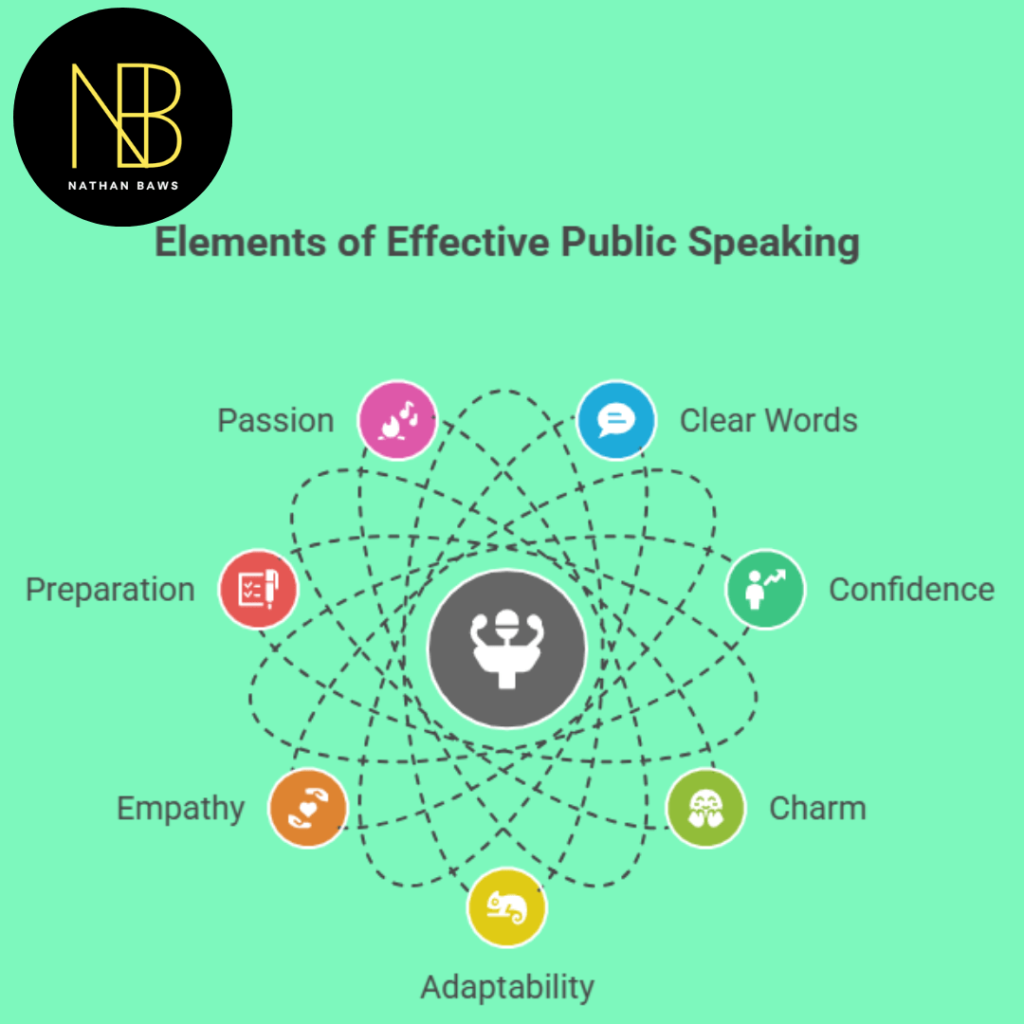
In our work with leaders and presenters, we focus on the key attributes of a good public speaker that consistently produce memorable, persuasive and confident presentations. The attributes of a good public speaker include clarity, connection, preparation, presence and adaptability. In this article, we outline these attributes of a good public speaker in detail, offer actionable guidance, and invite you to connect with Nathan Baws for tailored coaching to develop these attributes in your own practice.
Key Takeaways
- The attributes of a good public speaker blend skill, mindset and craft.
- We provide practical exercises to develop tone, pacing and presence.
- Coaching accelerates mastery of the attributes of a good public speaker.
- Audience-centred preparation and feedback loops are essential attributes of a good public speaker.
Understanding the Core Attributes of a Good Public Speaker
What do we mean by the attributes of a good public speaker
When we describe the attributes of a good public speaker, we refer to observable abilities and internal qualities: vocal control, structured content, emotional intelligence, audience awareness and adaptability. These attributes of a good public speaker create trust and influence.
Why the attributes of a good public speaker matter
The attributes of a good public speaker shape outcomes from motivating teams to winning clients. Mastering these attributes of a good public speaker reduces anxiety and increases impact.
How do we assess the attributes of a good public speaker
We evaluate the attributes of a good public speaker through rehearsal, audience feedback and objective metrics such as clarity and engagement. This helps us create a personalised development plan for each speaker.
Attribute 1: Clarity and Structure
Define your message
The first attribute of a good public speaker is a clear, concise message. Define the central idea, express it early and repeat it. We advise writing a one-sentence thesis to anchor your talk.
Logical flow and signposting
Structure your talk with a beginning, middle and end. Use signposts to guide listeners. Organise points so they build logically. This is an attribute of a good public speaker that ensures comprehension.
Actionable practice
Exercise: Draft your talk outline with three main points and rehearse transitions. Time each section and refine. This practical step reinforces the attribute of a good public speaker: clarity of structure.
Attribute 2: Vocal Technique and Delivery
Pitch, pace and pause
One essential attribute of a good public speaker is vocal variety. Modulate pitch, control pace and use pauses deliberately to emphasise key points. We guide you through vocal exercises to develop these skills.
Articulation and projection
Clear articulation and appropriate projection are attributes of a good public speaker. Practise consonant clarity and breath support to maintain energy without strain.
Actionable practice
Exercise: Record a minute of speech and evaluate pitch variation, pace and clarity. Repeat with focused breathing drills. This builds the attribute of a good public speaker: confident vocal delivery.
Attribute 3: Presence and Confidence
Non-verbal communication
Presence is a visible attribute of a good public speaker. Body language, posture and facial expression convey confidence. We teach posture alignment and purposeful movement to enhance presence.
Mindset and preparation
Confidence stems from preparation. The attributes of a good public speaker include rehearsal, familiarity with the material, and mental readiness. Adopt routines that prime focus and calm nerves.
Actionable practice
Exercise: Practice a two-minute opening with deliberate posture and eye contact. Record and review to refine presence. This directly improves a good public speaker’s attributes.
Attribute 4: Audience Connection and Empathy
Know your audience
An attribute of a good public speaker is audience awareness. Research your audience’s needs, use relevant examples, and align your message with their interests.
Engage through questions and stories
Connection grows when we invite participation. Use questions, stories and relatable language to make your attributes of a good public speaker apparent through connection.
Actionable practice
Exercise: Prepare two audience prompts and one short story that illustrates your core message. Use these to practice the attribute of a good public speaker: genuine connection.
Attribute 5: Adaptability and Handling Challenges
Read the room
Adaptability is an attribute of a good public speaker. Monitor engagement and adjust pace, content or tone in response to audience signals.
Manage interruptions and questions
Prepared responses and a calm demeanour are attributes of a good public speaker when facing interruptions. Use bridging phrases and repeat questions to maintain control.
Actionable practice
Exercise: Simulate interruptions in rehearsal and practise concise, composed replies. This strengthens the attribute of a good public speaker: graceful adaptability.
Attribute 6: Authenticity and Credibility
Be genuine
Authenticity is a defining attribute of a good public speaker. Share an appropriate personal experience and align your words with your values. Authentic delivery builds trust and credibility.
Use evidence and stories
Support claims with evidence, examples and stories. A good public speaker balances logic and emotion to persuade effectively.
Actionable practice
Exercise: Identify one personal anecdote and one data point to anchor your next talk. Practice delivering both with sincerity. This cultivates the attribute of a good public speaker: credible authenticity.
Attribute 7: Preparation and Continuous Improvement
Design rehearsals
Preparation is an essential attribute of a public speaker. Rehearse with a focus on timing, transitions and audience engagement. Use video reviews to refine performance.
Seek feedback and iterate
Feedback loops help us improve. Collect audience feedback and execute small changes. The attribute of a good public speaker is sustained by iterative refinement.
Actionable practice
Exercise: After each presentation, note three improvements and one strength. Implement these in your next rehearsal to strengthen your public-speaking skills.
Applying the Attributes of a Public Speaker in Different Contexts
Corporate presentations
In corporate settings, the attributes of a public speaker include concise messaging, stakeholder alignment and measurable outcomes. We recommend adapting language to executive audiences and emphasising ROI.
Keynote and conference speaking
For keynotes, the attributes of a public speaker emphasise narrative arc, emotional impact and audience takeaway. Craft a memorable opening and a clear call to action.
Workshops and training
In workshops, the attributes of a public speaker focus on interaction, clarity and practical exercises. Facilitate learning with structured activities and immediate application.
Practical Tools and Exercises to Develop the Attributes of a Public Speaker
Daily vocal routine
Practice humming, breath control and articulation for ten minutes daily to develop the attribute of a public speaker: consistent vocal quality.
Story bank
Create a story bank of personal anecdotes and case studies. Having prepared stories makes it easier to demonstrate the attribute of a public speaker on demand.
Feedback framework
Use a simple feedback framework: start, stop, continue. This helps us target improvements and keep the attribute of a good public speaker on a clear trajectory.
How Nathan Baws Can Help You Develop the Attributes of a Public Speaker
Personalised coaching
We offer one-on-one coaching that targets the attributes of a good public speaker most relevant to your goals. Through targeted practice, we accelerate confidence and skill.
Group workshops
Our workshops focus on practical application and peer feedback. These sessions cover the attributes of a public speaker with exercises that transfer directly to your presentations.
Ongoing support
We provide follow-up resources and progress reviews to help you embed the attributes of a public speaker in your professional toolkit.
Conclusion
We have explored the attributes of a public speaker in depth: clarity, vocal technique, presence, connection, adaptability, authenticity and preparation. Each attribute of a public speaker can be practised and refined with discipline and the right guidance. If you are ready to develop the attributes of a good public speaker and deliver presentations that persuade and inspire, connect with Nathan Baws. Reach out to us for tailored coaching and workshops focused on measurable improvement in public-speaking attributes.
Contact Nathan Baws today to begin strengthening the attributes of a good public speaker in your professional life.
Frequently Asked Questions
What are the most important attributes of a good public speaker?
The most important attributes of a good public speaker include clarity of message, vocal control, presence, audience connection, adaptability and authenticity. We emphasise daily practice and feedback to develop these attributes of a good public speaker.
How long does it take to develop the attributes of a good public speaker?
Development varies by individual. With focused coaching and regular rehearsal, you can see measurable improvement in weeks. Sustained refinement of the attributes of a good public speaker occurs over months.
Can anyone learn the attributes of a good public speaker?
Yes. The attributes of a good public speaker are developed skills and mindsets. With structured practice and feedback, anyone can acquire these attributes of a good public speaker.
What exercises help build the attributes of a good public speaker?
Useful exercises include vocal drills, timed outlines, recorded rehearsals, audience prompts and simulated interruptions. Each exercise targets a specific attribute of a good public speaker.
How do I improve audience connection, an essential attribute of a good public speaker?
Research your audience, use relatable examples and invite participation. Practise empathy and active listening to strengthen the attribute of a good public speaker: audience connection.
Is authenticity necessary among the attributes of a good public speaker?
Absolutely. Authenticity builds trust and is a core attribute of a good public speaker. Share genuine experiences and align your message with your values.
How do I manage nerves, an obstacle to the attributes of a good public speaker?
Prepare thoroughly, use breathing techniques and small rehearsals to build familiarity. Rituals and mental rehearsal are practical ways to mitigate nerves and support the attributes of a good public speaker.
Should I memorise my speech when adopting attributes of a good public speaker?
Memorisation can hamper natural delivery. Instead, internalise the structure and key lines while allowing flexibility. This approach preserves spontaneity, an attribute of a good public speaker.
How does feedback improve the attributes of a good public speaker?
Feedback highlights blind spots and confirms strengths. Use structured feedback to make targeted improvements and accelerate the development of the attributes of a good public speaker.
How can Nathan Baws specifically help with the attributes of a good public speaker?
Nathan Baws provides personalised coaching, practical exercises and follow-up support to develop your attributes of a good public speaker. We tailor our approach to your context, ensuring the attributes of a good public speaker translate into real-world impact.
For coaching and workshops that enhance the attributes of a good public speaker, contact Nathan Baws and let us help you present with clarity, confidence and connection.