Introduction
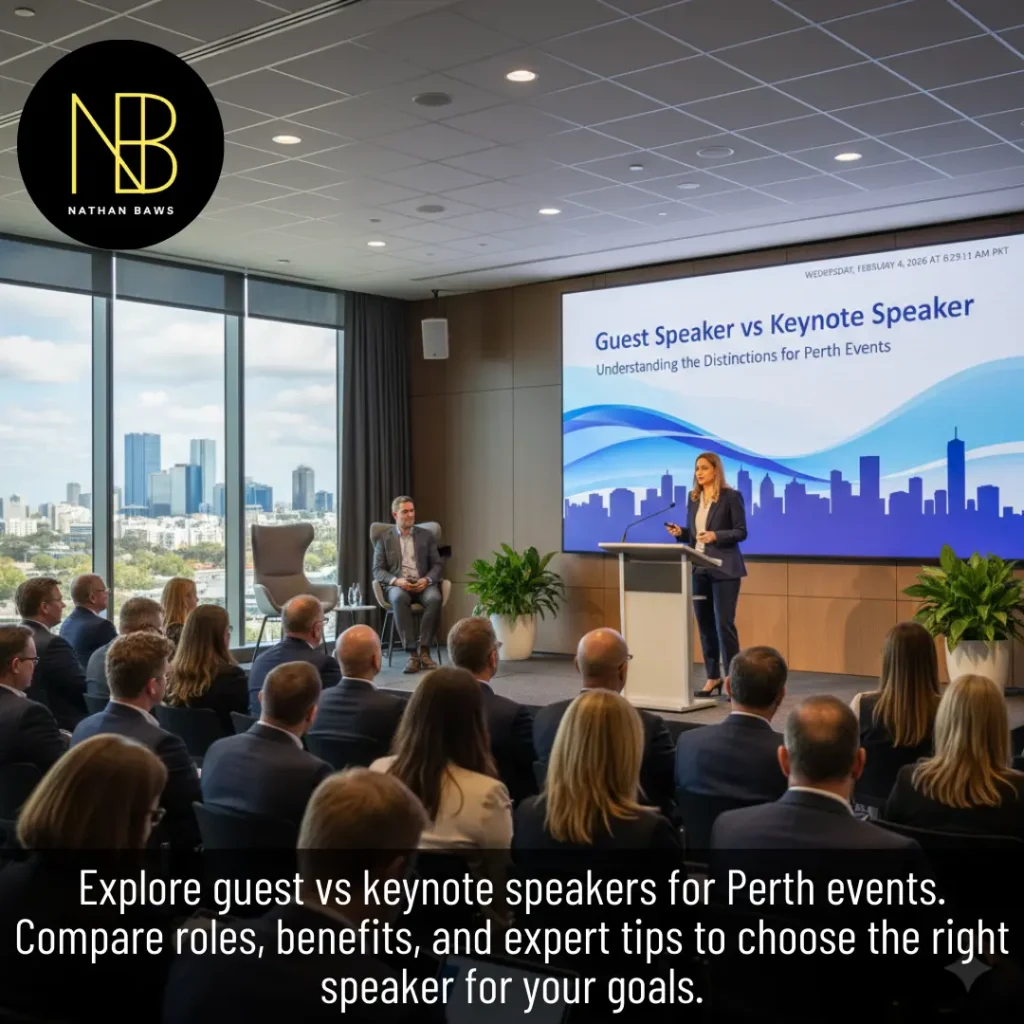
Whether you are organising a corporate retreat in the Perth CBD or a large-scale industry conference at the Perth Convention and Exhibition Centre, choosing the right voice for your stage is a critical decision. In the event planning world, the terms are often used interchangeably, but there is a distinct difference when comparing a guest speaker vs keynote speaker.
Understanding these nuances ensures that your event’s message is not only heard but felt. This guide explores the unique roles of each, how they function within a Western Australian event context, and how to choose the right professional to meet your specific objectives.
Defining the Roles: Keynote vs Guest Speaker
At first glance, both roles involve a person standing at the front of a room sharing insights. However, the scope of their responsibility and the timing of their appearance differ significantly.
What is a Keynote Speaker?
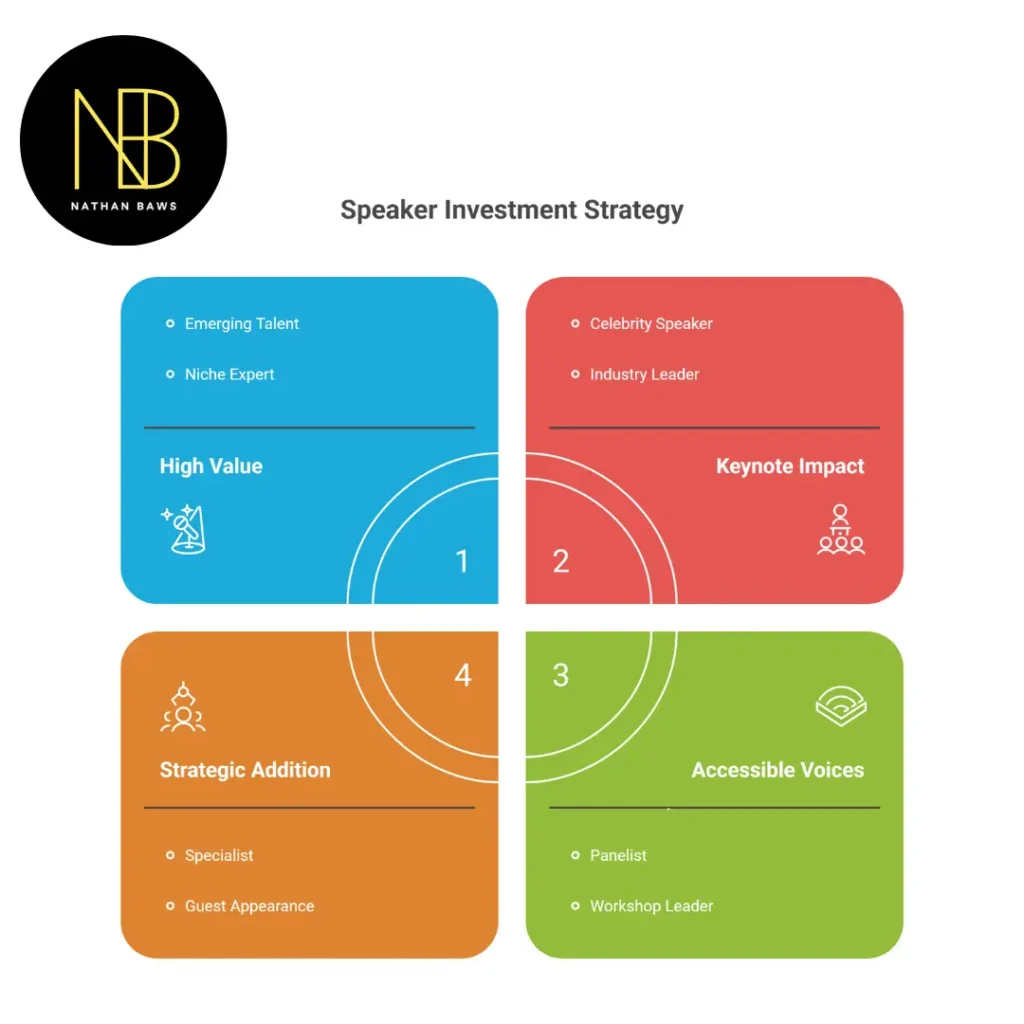
A keynote speaker is the “north star” of your event. Their primary job is to set the underlying tone or “keynote” of the entire gathering. They are typically scheduled at the very beginning to build momentum or at the very end to provide a powerful call to action. In Perth’s competitive business landscape, a keynote speaker is often a known expert or thought leader – someone like Nathan Baws – who brings a high-level perspective on growth, mindset, or industry innovation. Their speech is less about a list of “to-dos” and more about shifting the audience’s perspective and unifying them under a single theme.
What is a Guest Speaker?
A guest speaker is often a subject matter expert brought in to provide specific, “meat-and-potatoes” information on a particular topic. While a keynote speaker focuses on the big picture, a guest speaker might dive into the granular details. For example, at a marketing summit, a guest speaker might lead a session specifically on SEO trends or digital lead generation. They are usually part of a wider roster of speakers and provide variety and depth to the day’s schedule.
The Strategic Impact on Your Perth Event
The choice between a guest speaker and a keynote speaker often comes down to what you want the audience to do after they leave the room.
Setting the Tone with a Keynote
When comparing guest speaker vs keynote speaker, remember that the keynote is the “hook” that draws people in. If you are promoting a ticketed event in WA, the name of your keynote speaker is often your biggest marketing asset. They provide the credibility and “pull” required to fill seats. Professionally, they are expected to be highly polished, engaging, and capable of holding the attention of a large room for 45 to 90 minutes without losing the audience’s interest.
Adding Practical Depth with Guest Speakers
Guest speakers are the educators. They are perfect for breakout sessions where the audience wants to learn a specific skill. While they may not have the same “star power” as a keynote, their value lies in their practical expertise. In a corporate setting, you might hire several guest speakers to cover different departments, while one keynote speaker addresses the entire company at the start of the day to align everyone’s mindset.
Core Differences in Delivery and Customisation
One of the biggest distinctions between a guest speaker vs keynote speaker is the level of customisation and the style of delivery.
- Engagement Level: Keynote speakers are often hired for their ability to tell stories and evoke emotion. They use professional speaking techniques to ensure their message is memorable. Guest speakers may rely more on data, slides, and technical information to get their point across.
- Breadth vs. Depth: A keynote speaker covers broad themes like “Mindset Mastery” or “Dopamine Creation for Business Success.” These themes are applicable to everyone in the room, regardless of their job title. A guest speaker focuses on depth, providing specific solutions for specific problems.
- Logistics and Pricing: In Perth, the cost of a keynote speaker is generally higher because you are paying for their brand, their unique intellectual property, and their ability to anchor an event. Guest speakers are often more budget-friendly and can be booked in groups to provide a well-rounded educational experience.
Why the Distinction Matters for Western Australian Businesses
Perth has a unique business culture – one that values both high-level innovation and practical, “no-nonsense” advice. If you are running an event for a mining company, a tech startup, or a local school, you must balance these two needs.
If your team is feeling burnt out and needs a morale boost, a keynote speaker focused on resilience and mindset is the right choice. However, if your team is struggling with a new software implementation or a specific sales hurdle, a guest speaker with technical expertise in that field will provide more immediate ROI.
Combining Both for a Seamless Event Experience
The most successful events in Perth often don’t choose one over the other; they use both strategically. You might start the morning with a high-energy keynote address that gets everyone excited about the future of the company. Following this, you can break the audience into smaller groups where guest speakers provide the specific training needed to reach those future goals.
When you book a local Perth speaker like Nathan Baws, you often get the best of both worlds. As a business strategist, he can deliver a high-impact keynote that sets the stage, but he can also pivot into a workshop-style guest speaker role to help teams implement those strategies on the ground.
Choosing the Right Fit: A Checklist for Organisers
Before you make a booking, ask yourself these three questions:
- What is the primary goal? Is it to inspire (Keynote) or to inform (Guest)?
- What is the audience size? Large crowds usually require the “big room” energy of a keynote. Smaller groups benefit from the intimacy of a guest speaker.
- What is the budget? If you have a limited budget, a highly skilled local guest speaker can provide incredible value without the premium price tag of a global keynote “star.”
Conclusion
Navigating the world of event planning requires a clear understanding of the tools at your disposal. By recognising the unique strengths of a guest speaker vs keynote speaker, you can tailor your event to deliver maximum impact. Whether you need to spark a cultural shift within your organisation or provide your team with the latest industry tactics, choosing the right voice for the right moment is the key to a successful Perth event.
If you are ready to elevate your next gathering with a speaker who understands the Perth market and delivers both inspiration and actionable strategy, reach out to Nathan Baws to discuss your event’s specific needs.
Read Also: Decoding the Guest Speaker Cost in Australia: A Guide for Perth Event Organisers
Frequently Asked Questions (FAQs)
Can a guest speaker also be a keynote speaker?
Yes, many professional speakers are capable of doing both. However, their approach will change depending on the slot they are filling. A keynote address is usually more motivational and thematic, while a guest speaker slot is more educational and instructional.
How long should a keynote speech be compared to a guest speaker session?
A typical keynote is between 45 and 60 minutes, often followed by a short Q&A. Guest speaker sessions can vary wildly, from 20-minute “TED-style” talks to two-hour deep-dive workshops.
Is it better to hire a local Perth speaker?
There are significant advantages to hiring locally. Beyond the obvious savings on travel and accommodation, a Perth-based speaker understands the local market, the economic climate of WA, and the specific challenges faced by businesses in the region.
Which role is better for a school incursion?
For a school setting, a keynote style is often best for a whole-school assembly to inspire the students. For specific classroom-based entrepreneurship programs, such as “Shark Tank” style workshops, a guest speaker who can facilitate and teach specific skills is often more effective.
What is the main keyword to remember when hiring?
When searching for talent, keep the guest speaker vs keynote speaker distinction in mind to ensure your brief matches the professional’s skill set. If you want a “wow” factor, ask for a keynote. If you want “how-to” results, ask for a guest speaker.
Does a keynote speaker always speak at the start of an event?
While traditionally used to open an event, a “closing keynote” is also very common. This speaker’s role is to synthesise the day’s learnings and send the audience home with a high level of energy and a clear sense of purpose.
Are guest speakers less experienced than keynote speakers?
Not necessarily. A guest speaker may be a world-leading scientist or a top-tier CEO who doesn’t speak professionally as their main career. Their value comes from their current, high-level expertise in a specific niche, whereas a keynote speaker is often a professional orator.
How do I know if I need a keynote speaker?
If your event has a specific theme or a major goal – such as a company merger, a brand relaunch, or an annual awards night – you need a keynote speaker to anchor that theme and ensure the “big message” hits home.
Can I have multiple keynote speakers?
For multi-day conferences, it is common to have one keynote per day. However, for a single-day event, having more than two can dilute the impact of the message. It is usually better to have one strong keynote and multiple guest speakers.
What information should I provide when booking?
Whether you are hiring a keynote or a guest speaker, provide a clear brief: the audience demographics, the specific problems you want to solve, the venue location in Perth, and the desired outcome you want the audience to achieve.