Introduction
Choosing a great presenter is the single most important decision when planning an annual company gathering, a deep training session, or a major industry conference anywhere across Australia. The right person can change how people look at their daily work, encourage them to take bold action, and make sure your entire event is a massive success. However, the true practical challenge for event organisers lies in figuring out how to find a speaker whose real-world knowledge and presentation style match your corporate goals and the specific people in your audience.
As an active professional presenter who has spoken to audiences in major metropolitan cities and regional areas across Australia, I understand that this decision carries significant weight. My main goal is to give event planners a highly dependable, logical framework for selecting their next presenter. Understanding how to find a speaker shouldn’t rely on guesswork or superficial online searches. This comprehensive guide provides actionable advice and clear steps to help you secure the ideal voice for your stage.
Key Steps for Securing Your Speaker:
- Identify Clear Objectives First: Your presenter must actively help you reach a specific organisational or cultural goal for your event.
- Understand Your Audience Demographics: The person you choose must deeply understand and naturally connect with the unique mindset of an Australian audience.
- Evaluate Real-World Track Records: Don’t just look at a glossy video clip; actively seek out solid proof of past audience success and check professional client reviews.
- Establish Clear Communication Early: Building a strong professional relationship requires a highly detailed topic plan and a clear shared agreement on event expectations.
By focusing on these core steps, you can transform your selection process. Learning how to find a speaker effectively means focusing your time and budget on professionals who provide real value rather than simple, passing entertainment.
Knowing What Your Event Needs and Wants
Before you begin reaching out to potential candidates, you must define exactly why you are bringing an external voice onto your stage. A professional presenter is a powerful tool designed to shift minds and drive specific business outcomes, not just someone who provides general entertainment. Taking the time to outline your objectives completely transforms the way you approach the problem of how to find a speaker for your organisation.
Setting the Main Message and Key Takeaways
What is the single most important idea you want your audience members to remember six months after the event concludes? Is your goal to introduce a new way of thinking about digital disruption in retail? Perhaps you need to deliver a clear, actionable framework for improving workplace mental safety under changing Australian labour laws.
Once you isolate your core message, discovering how to find a speaker becomes infinitely easier because your search shifts from generic browsing to targeting specialists. A targeted approach saves hours of vetting time and ensures your content aligns perfectly with your company’s broader strategic trajectory.
Understanding Cost and Planning Needs
Professional presenters, especially those with recognised national or global business expertise, charge professional fees that reflect their marketplace value. Establishing a realistic budget early in the planning lifecycle narrows down your options to realistic candidates.
Furthermore, you must consider practical logistics such as flights and accommodation, particularly if your corporate event takes place in a remote location or requires cross-state travel. Experienced organisers know that understanding how to find a speaker requires total transparency regarding logistical limitations, which immediately builds trust with true professionals.
Deciding What You Want the Audience to Do
Do you want to motivate your team, teach them new skills, or provide high-level industry entertainment? For a specialised technical training day, you require an expert who teaches through real-world case studies and practical frameworks. Conversely, for an annual national sales event, high-energy motivation and strategic vision are the primary requirements.
The exact behavioural outcome you seek determines the precise level of expertise you need to find. Ultimately, knowing how to find a speaker means knowing exactly what a successful audience reaction looks like to your executive leadership team.
Innovative Ways to Start Looking for a Speaker
The traditional approach of relying solely on standard speaker agencies is no longer the only path to success. Today, discovering how to find a speaker who truly resonates requires a mix of smart direct sourcing methods, professional networking, and active observation.
Using Your Professional and Industry Contacts
Your current colleagues, board members, or industry association peers are often your absolute best sourcing tools. A direct recommendation from a trusted peer who has watched a presenter move an audience is worth far more than any promotional brochure.
Make it a habit to attend events run by industry partners or competitors to watch how their chosen presenters handle the crowd. This hands-on observation is a powerful method when you are looking into how to find a speaker who understands your market realities.
Using Speaker Agencies and Professional Lists
Speaker agencies maintain curated rosters of checked professionals and can take care of contract negotiation and travel logistics for your team. While agencies charge commission fees, the logistical certainty and safety they provide can be a highly efficient use of your corporate budget.
However, you must maintain a hands-on approach: never hand over the final selection choice entirely to a third-party agent. Use agency lists as a high-quality starting point for your research, rather than the final step in your decision-making process.
Looking for Leaders in Your Field
Look closely at specialised Australian industry magazines, corporate podcasts, online business videos, and professional networking platforms to find people who are driving conversations in your space. A highly sought-after presenter is usually an active industry authority or a published author.
Their consistent volume of professional content proves their deep subject-matter knowledge and highlights their ability to communicate complex ideas clearly. Identifying these active thought leaders is a brilliant answer to the question of how to find a speaker who brings genuine authority to your platform.
Checking a Speaker’s Experience and Presentation Style
A presenter’s career biography can look incredibly impressive on paper, but their true value is proven on stage. A disciplined vetting process must look past written resumes to evaluate real-world delivery style, crowd control, and general professional suitability.
Watching Videos and Presentation Examples
Always request at least two high-quality, unedited videos of the presenter speaking before an audience. One video can be a classic, fast-paced promotional showreel designed to show their high-energy highlights.
The second video, however, should show at least 15 minutes of uninterrupted presentation from a real corporate event. This allows you to evaluate their true speaking rhythm, see how they connect with the room, and determine if their tone matches your formal brand standards. Learning how to find a speaker requires looking past clever video editing to see how a person holds an audience’s attention over time.
Checking Reviews and Client References
Never rely solely on the curated testimonial quotes displayed on a presenter’s personal website. Request direct contact details for at least three client references from corporate events held within the last twelve months.
Speaking directly with a fellow event organiser who hired that specific presenter for a similar business challenge is the single most accurate way to predict future success. This simple step is an indispensable part of learning how to find a speaker who consistently delivers on their promises.
Checking How Deep Their Knowledge Is
A charming presenter who only delivers broad, generic concepts rarely provides the long-term impact that a specialised industry authority offers. For instance, if your conference focuses on the future of supply chain logistics across regional Western Australia, you require an expert with deep operational experience in that specific field.
A generic motivational talk simply will not hit the mark for a sophisticated audience. Ensuring this level of subject-matter depth is central to mastering the process of finding a speaker who leaves a lasting legacy.
The Interview: Asking the Important Questions
Once you narrow your search down to a shortlist of strong candidates, scheduling a formal video interview is an absolute necessity. This conversation serves as your primary tool for evaluating a presenter’s professionalism, commercial alignment, and willingness to adapt their core material for your crowd.
Talking About Changing Content and Flexibility
A true professional will never simply dust off a generic slide deck they created years ago to deliver it word-for-word to your team. They should ask targeted questions about your audience’s current daily challenges and outline exactly how they plan to customise their talk.
When figuring out how to find a speaker, look for someone who easily volunteers to integrate local case studies, regional market conditions, or current national economic developments into their presentation.
Understanding Technical and Equipment Needs
Ask clear questions regarding their exact technical requirements, moving beyond simple travel arrangements to discuss the technical setup on the day. Do they prefer a wireless lapel microphone or a handheld roamer? Do they require a specific stage configuration, or do they run their slide decks from a particular software system that requires audio integration?
Discovering how to find a speaker who values professional execution means identifying individuals who provide clear technical data sheets well ahead of time, preventing costly technical glitches during production.
Clarifying What Happens After the Event
Does the presenter’s fee include an interactive question-and-answer session with the audience, a post-event book signing, or copies of their digital frameworks for your team? The true organisational value of a speaker often extends well beyond their time on stage.
Discussing follow-up opportunities during the initial interview ensures you extract maximum return on investment. This focus on long-term value is a hallmark of understanding how to find a speaker who truly partners with your brand.
Getting the Speaker Agreement and Brief Right
A truly successful presentation stands on a foundation of a solid, legally clear agreement and a highly detailed audience brief. Never allow a project to move forward into production without both documents signed and completed.
Securing a Full, Clear Contract
A professional contract must outline every single variable of the engagement clearly to protect both parties. Ensure the document includes the exact professional fee, the deposit schedule, explicit travel expenses, and a clear cancellation policy.
It should also cover recording rights if you plan to share the talk on your internal company intranet. Having clear legal paperwork prevents misunderstandings and is an essential operational standard when learning how to find a speaker in the corporate arena.
Creating a Detailed Content and Audience Plan
This operational document serves as the presenter’s roadmap for success. A world-class event brief should always contain the following structured data points:
The depth and accuracy of the information you share in this document directly dictate the accuracy of the performance you receive on stage. It is a critical component of knowing how to find a speaker who delivers a perfectly targeted corporate message.
Setting a Communication Schedule Before the Event
Establish a formal, organised communication schedule leading up to your presentation date. A standard professional timeline involves an initial alignment call immediately upon booking, a mid-point review call roughly four weeks out to inspect customised content, and a final alignment check in the week of the event. This structured communication prevents last-minute surprises and guarantees that the presenter arriving at your venue is fully prepared.
Thinking Long-Term: Building Professional Partnerships
Securing the ideal presenter for a single conference is a fantastic achievement; however, converting that transaction into a long-term professional partnership yields massive compounding returns for your organisation over time.
Feedback and Professional Conduct After the Event
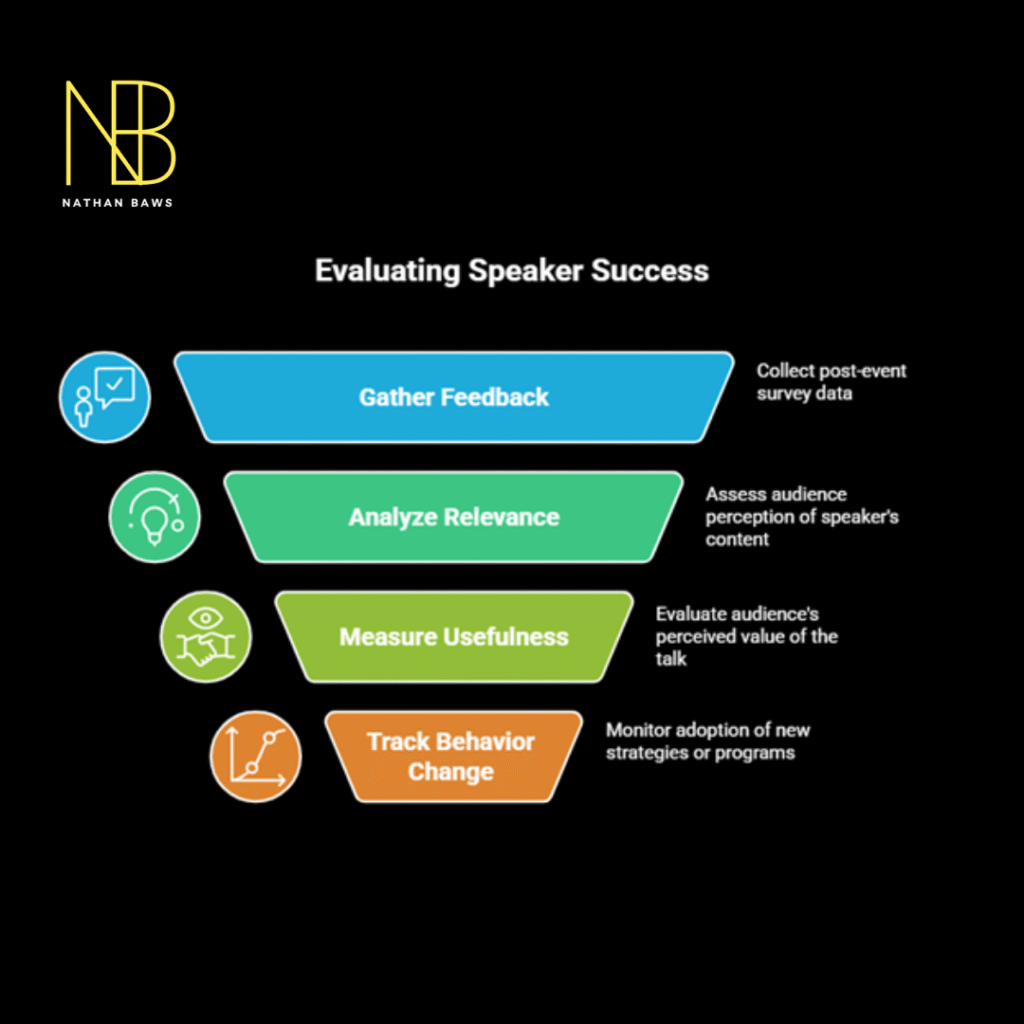
As soon as your event concludes, provide the presenter with honest, detailed feedback regarding audience reactions and internal survey scores. True professionals welcome data-driven insights because they allow them to continuously refine their delivery.
Simultaneously, ensuring your finance department processes its final invoice quickly is a powerful sign of corporate respect. This professional courtesy goes a long way toward establishing a reliable relationship with top-tier talent.
Checking Success Beyond Audience Applause
The true business value of an external presenter can never be measured solely by how loudly the room applauds when they step off the stage. Real success must be tracked through concrete, measurable outcomes in the weeks and months that follow.
Did your management team actively implement the productivity frameworks introduced during the session? Did your internal sales figures show a measurable shift? Did employee sentiment tracking improve? Shifting your focus to these hard operational metrics completely redefines your approach to finding a speaker for future corporate initiatives.
Becoming a Speaker’s Supporter
When a presenter beats your highest expectations and drives real change within your company, advocate for them across your broader business network. Personal word-of-mouth recommendations are the absolute lifeblood of the professional speaking market.
Sharing a testimonial or introducing them to fellow organisers is a powerful way to build a strong partnership. Mastering the art of how to find a speaker means understanding that mutual professional respect creates long-term value across the entire Australian business community.
Conclusion: Making a Smart, Informed Choice
Discovering how to find a speaker who can elevate your corporate conference or educational session requires careful research, deep checking, and total clarity of purpose. By stepping away from superficial search practices and instead adopting a deliberate, strategic sourcing process focused on measurable goals, rigorous vetting, and ironclad contracts, you ensure your chosen presenter becomes a powerful tool for your organisation.
The person you choose to put on your stage acts as a direct reflection of your company’s values, vision, and internal standards. I encourage you to approach this choice with a high degree of professional discipline, ensuring that their message delivers a lasting, transformative impact across your entire audience.
If you are currently evaluating your options for an upcoming corporate event and require an experienced voice to deliver high-value, straight-talking business insights, I invite you to reach out directly to discuss your goals. I am deeply committed to helping event organisers navigate the process of finding a speaker to take their corporate programs to the next level.
To discuss your upcoming presentation needs and discover how to build an unforgettable experience for your audience, connect with Nathan Baws directly.
FAQs
What is the best timeline for looking for a speaker?
When looking into how to find a speaker for a major corporate conference, you should ideally begin your search six to twelve months before your event date. Top-tier industry authorities and business experts book out their calendars far in advance. Starting early secures your chosen date and provides plenty of time for customised content creation.
Should I use an agency or contact a presenter directly?
Both paths are highly effective depending on your internal team’s time and resources. A dedicated speaker agency streamlines the entire process by handling contract law, deposit management, and travel details, making it an efficient option for busy corporate teams. Contacting a presenter directly via their official website often allows for faster alignment on content and direct communication from day one.
How much customisation should I expect from a presenter?
A highly professional presenter will gladly customise their core presentation to align with your theme. They will naturally weave in your specific company goals, industry jargon, and relevant regional market trends. However, you should never expect an expert to build an entirely new subject-matter presentation completely from scratch.
Does a presenter’s social media following matter?
While an impressive digital footprint can indicate strong market relevance, it should remain a minor factor when learning how to find a speaker for an executive audience. A large online following does not automatically guarantee a powerful physical stage presence, clear delivery, or deep business knowledge. Prioritise verified client references and deep industry experience over superficial follower counts.
What are the most critical elements of a speaker’s brief?
Your event brief must be highly detailed to guarantee success. It must clearly outline your exact target audience demographics (such as job titles, average age, and current industry stress points), your primary organisational goals, precise timing requirements, and any sensitive internal company topics that the presenter must avoid.
What is the standard payment structure for corporate speakers?
The standard professional practice within the Australian corporate market requires a 50% upfront deposit upon signing the contract to secure the calendar date. The remaining 50% balance is typically invoiced immediately following the successful delivery of the presentation, with standard corporate payment terms ranging from seven to thirty days.
How can I verify a presenter’s genuine subject expertise?
To check a candidate’s authority, look past their promotional showreel and bio. Search for solid external evidence such as published business books, academic credentials, active corporate advisory roles, or long histories of running successful companies. Ask for specific case studies that show how their strategic advice delivered measurable financial results for past corporate clients.
Is it acceptable to negotiate a speaker’s corporate fee?
It is entirely professional to ask about fee structures, especially if you are booking multiple events, representing a registered non-profit, or hosting a short virtual session. However, you should be aware that highly sought-after professional presenters usually maintain fixed corporate rates that reflect their demand and marketplace value.
What happens if a presenter cancels due to an emergency?
This exact scenario highlights why an explicit, professionally drafted contract is completely non-negotiable. A robust corporate agreement must include a clear “force majeure” or emergency cancellation clause that outlines the immediate return of your deposit or details how the presenter will assist you in securing a vetted, high-quality replacement.
How do I measure the success of a presentation?
To track success accurately, your post-event metrics must match your initial goals. Use detailed electronic post-event surveys to have attendees score the presentation on practical usefulness and relevance. Follow up weeks later by tracking internal operational changes, such as the adoption of new frameworks or changes in team performance metrics.